

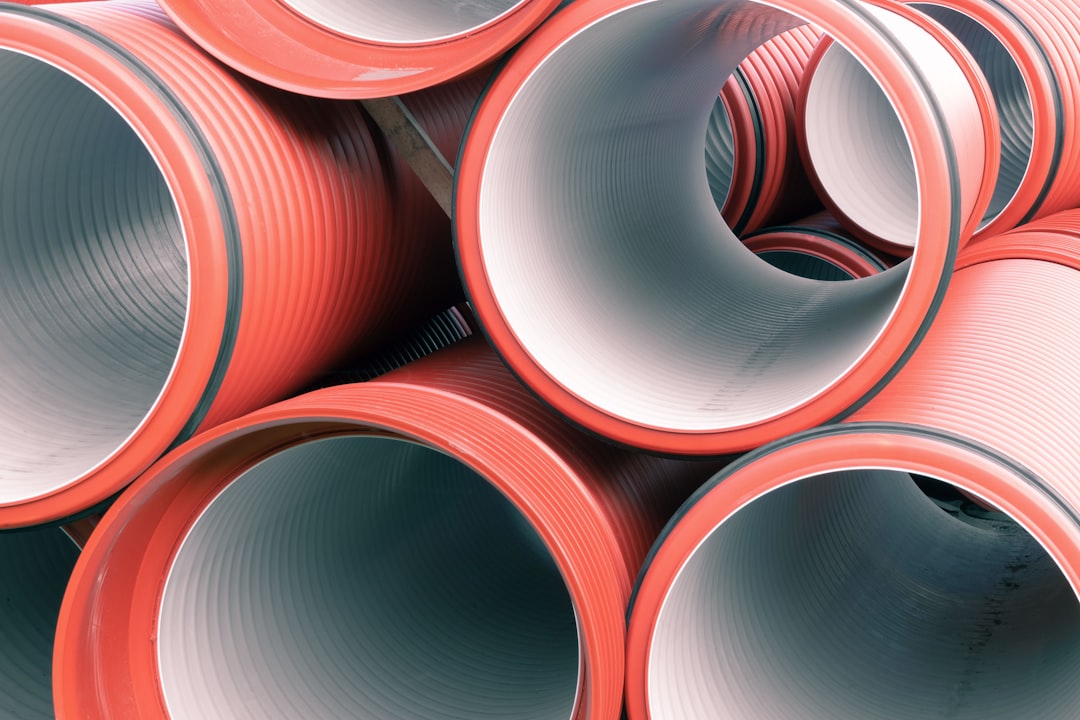

2205 Duplex Stainless Steel Pipe Factory: Thick Walled Schedule 80, 160, XXS
TeCarve is a manufacturing-backed 2205 duplex stainless steel pipe factory specializing in thick walled pipe in Schedule 80, 160, and XXS. Certified to ASTM A312 and ASME SA312, these pipes offer high strength and corrosion resistance. TeCarve supplies grades 304, 316L, 310S, and 2205 duplex, with annual capacity of 10,000 tons and MOQ as low as 100 kg. Visit tecarvepipes.com for technical specifications.
Chemical Composition of 2205 Duplex Stainless Steel
According to ASTM A312, 2205 duplex stainless steel contains a minimum of 21.0% chromium, 2.5% molybdenum, and 4.5% nickel. Carbon content is limited to 0.030% max. This composition yields a ferritic-austenitic structure with a pitting resistance equivalent (PRE) of at least 35, making it suitable for chloride-containing environments up to 300°C.
Mechanical Properties of Thick Walled Pipe
TeCarve’s thick walled pipe in Schedule 160 and XXS meets minimum tensile strength of 620 MPa and yield strength of 450 MPa for 2205 duplex. For 304, tensile strength is 515 MPa; for 316L, 485 MPa; and for 310S, 515 MPa. Elongation in 2 inches is 25% for all grades, ensuring ductility under high pressure.
Dimensional Specifications for Schedule 80, 160, XXS
Thick walled pipe is available in nominal diameters from 1/2 inch to 12 inches. Schedule 80 wall thickness ranges from 0.109 to 0.406 inches; Schedule 160 from 0.147 to 0.844 inches; XXS from 0.188 to 1.000 inches. TeCarve offers custom lengths up to 12 meters with tolerances per ASTM A312 (+0.5%, -0.3%).
Corrosion Resistance of 2205 Duplex vs. 316L
2205 duplex stainless steel exhibits a critical pitting temperature (CPT) of 35°C in 6% FeCl3, compared to 15°C for 316L. In chloride stress corrosion cracking tests, 2205 resists cracking up to 300°C, while 304 fails above 60°C. This makes 2205 ideal for heat exchangers and offshore platforms.
Heat Treatment and Surface Finishes
TeCarve supplies thick walled pipe in the annealed condition. 2205 duplex is annealed at 1040-1100°C followed by rapid cooling. Standard surface finishes include pickled and annealed, polished up to 400 grit, and mirror finish. Custom finishes are available per EN 10216-5 requirements.
Quality Control and Testing
Each pipe undergoes hydrostatic testing at 1.5 times the design pressure per ASME SA312. Eddy current testing is performed for surface defects. Chemical analysis and mechanical testing are documented in EN 10204 3.1/3.2 mill certificates. TeCarve’s factory in Wenzhou, China, is ISO 9001 certified.
| Grade | C% max | Ni% | Cr% | Key Property | Best For |
|---|---|---|---|---|---|
| 304 | 0.08 | 8.0-10.5 | 18.0-20.0 | Good formability | General corrosive service |
| 316L | 0.03 | 10.0-14.0 | 16.0-18.0 | Excellent pitting resistance | Marine & chemical processing |
| 310S | 0.08 | 19.0-22.0 | 24.0-26.0 | High temperature strength | Furnace & heat treatment |
| 2205 | 0.03 | 4.5-6.5 | 21.0-23.0 | High strength & SCC resistance | Offshore & oil & gas |
How to Choose the Right Grade for Your Application
- Identify the operating temperature: For temperatures above 500°C, choose 310S; for cryogenic, 304 or 316L; for up to 300°C, 2205 is optimal.
- Assess chloride concentration: In environments with >1000 ppm chlorides, 316L or 2205 is required; 2205 offers superior resistance above 2000 ppm.
- Determine pressure rating: For high-pressure systems (above 20 MPa), select thicker schedules like XXS and grades with higher yield strength, such as 2205 (450 MPa).
- Evaluate corrosion risk: If stress corrosion cracking is a concern in hot chloride environments, 2205 is preferred over 304 or 316L.
- Consider fabrication requirements: 304 offers the best weldability and formability; 2205 requires controlled welding procedures per AWS D1.6.
- Check availability and cost: 304 is the most economical; 2205 costs approximately 30-50% more but offers longer service life in aggressive conditions.
Industry Applications
- Oil & Gas: Used in downhole tubing and flowlines where high strength and resistance to H2S cracking are critical.
- Chemical & Petrochemical: Ideal for reactors and heat exchangers handling chlorides and acids at elevated temperatures.
- Marine & Shipbuilding: Seawater piping systems benefit from 2205’s pitting resistance and high strength-to-weight ratio.
- Energy & Power: Superheater tubes in power plants use 310S for oxidation resistance up to 1100°C.
- Pharmaceutical & Medical: 316L is standard for sterile piping due to its low carbon content and corrosion resistance.
Standards & Certifications
- ASTM A312 / ASME SA312: Standard specification for seamless, welded, and heavily cold-worked austenitic stainless steel pipe.
- EN 10216-5: European standard for seamless stainless steel tubes for pressure purposes.
- ISO 9001: Quality management system certification for TeCarve’s manufacturing facilities.
- EN 10204 3.1/3.2: Mill test certificates with chemical and mechanical properties.
- GOST 9941: Russian standard for seamless stainless steel pipes.
Frequently Asked Questions
What is the difference between Schedule 80 and Schedule 160 thick walled pipe?
Schedule 80 has a standard wall thickness for moderate pressure applications, while Schedule 160 is thicker, providing higher pressure ratings. For 2-inch nominal pipe, Schedule 80 wall is 0.218 inches, Schedule 160 is 0.344 inches, and XXS is 0.436 inches. The pressure rating increases proportionally with wall thickness.
Can 2205 duplex stainless steel be welded?
Yes, 2205 duplex can be welded using filler metal ER2209 per AWS A5.9. Preheating is not required, but interpass temperature must be kept below 150°C. Post-weld heat treatment is generally not needed. Heat input should be controlled between 0.5-2.5 kJ/mm to maintain balanced ferrite-austenite ratio.
What is the maximum operating temperature for 310S stainless steel pipe?
310S can operate continuously up to 1100°C in oxidizing atmospheres. Its high chromium (24-26%) and nickel (19-22%) content provides excellent oxidation resistance. However, for intermittent service, the maximum temperature is 1035°C. Above these temperatures, scaling becomes excessive.
How does 316L compare to 304 in terms of corrosion resistance?
316L contains molybdenum (2-3%), which greatly improves pitting resistance in chloride environments. In a 5% salt spray test at 35°C, 316L shows no pitting after 1000 hours, while 304 may pit within 200 hours. 316L is preferred for marine and chemical applications where chlorides are present.
What is the minimum order quantity for thick walled pipe from TeCarve?
TeCarve’s standard MOQ is 100-300 kg per size and grade. Smaller trial orders are available for customer qualification. For Schedule 80, 160, and XXS, typical lead time is 10-25 days after deposit. Payment terms include T/T, L/C, and Bill of Lading.
What is the yield strength of 2205 duplex stainless steel pipe?
The minimum yield strength of 2205 duplex is 450 MPa (65 ksi) per ASTM A312. This is approximately double that of 304 (205 MPa) and 316L (170 MPa). This higher strength allows for thinner walls in pressure applications, reducing weight and cost.
Are 304 and 316L pipes suitable for high-pressure applications?
Yes, when used in thicker schedules like 160 and XXS, 304 and 316L can handle high pressures. For example, 2-inch Schedule 160 304 pipe has a pressure rating of 22.4 MPa at 100°C. However, for the highest pressures, 2205 duplex is preferred due to its higher yield strength.
What certifications does TeCarve provide with its pipes?
TeCarve provides EN 10204 3.1 or 3.2 mill test certificates, including chemical analysis, mechanical properties, hydrostatic test results, and eddy current testing. The pipes are manufactured in ISO 9001 certified facilities and comply with ASTM A312 and ASME SA312.
Can thick walled pipe be supplied in custom lengths?
Yes, TeCarve offers custom lengths up to 12 meters with tolerances per ASTM A312. Standard random lengths are 6 meters, but specific cut lengths can be ordered. There is no additional charge for custom lengths within standard manufacturing capabilities.
What is the difference between seamless and welded thick walled pipe?
Seamless pipe is formed from a solid billet and has no weld seam, offering higher pressure integrity. Welded pipe is made from coils and has a longitudinal weld. For thick walled schedules like XXS, seamless is more common due to the heavy wall. Both types meet ASTM A312 requirements.
According to a 2023 market report, the global duplex stainless steel market is projected to grow at a CAGR of 5.2% from 2024 to 2030, driven by demand in oil & gas and chemical industries. Thick walled pipe accounts for approximately 18% of the stainless steel pipe market by revenue.
—
TeCarve Stainless supplies thick walled pipe certified to ASTM A312, ASME SA312.
Sizes: Schedule 80, 160, XXS
Grades: 304, 304L, 316, 316L, 321, 310S, 201, 430, 904L, Duplex 2205 | MOQ: 100–300 kg (smaller trial orders available) | Lead Time: 10–25 days after deposit
Email: sales@tecarve.com
WhatsApp: +86-189-6804-2695
Website: https://tecarvepipes.com/thick-walled-pipe/
Response within 24 hours.