


ISO 9626 Stainless Needle Tubing: Controlled Temper for Clean Bevel Grinding
Medical needle cannula tubing in grades 304 and 316L with thin walls and controlled temper from our partner factory.


Get Your Needle Tube Specification Quote
Sourcing stainless steel cannula and needle tubing conforming to ISO 9626 dimensional gauges (6G to 34G, RW / TW / UTW)? Contact our technical sales desk for custom cut-to-length tubing, burr-free end finishing, and prototype sample requests for industrial and laboratory dispensing applications.
Regular (RW), Thin (TW), and Ultra-Thin (UTW) wall options across 6G to 34G gauges in 304, 304L, and 316L grades.
Sample cut lengths available for automated feeding verification, tensile testing, and end-beveling trial tooling.
Standard needle tube trial orders start from 500 pieces per gauge/spec. Prototype and custom-processing requirements are reviewed per project.
Standard EN 10204 3.1 Mill Test Certificates detailing chemical analysis, tensile strength, hardness, and dimensional tolerance.
For medical and analytical micro-tubing requirements, review our partner-factory verification procedures, precision gauge inspection, dimensional tolerance control, and clean packaging standards.
Needle Tube Inspection & Packaging Photos
Real product, inspection, packaging and loading photos.
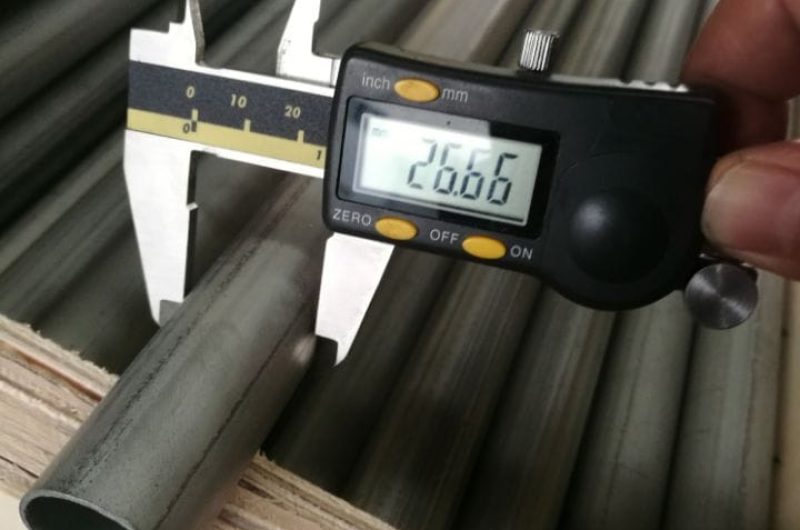
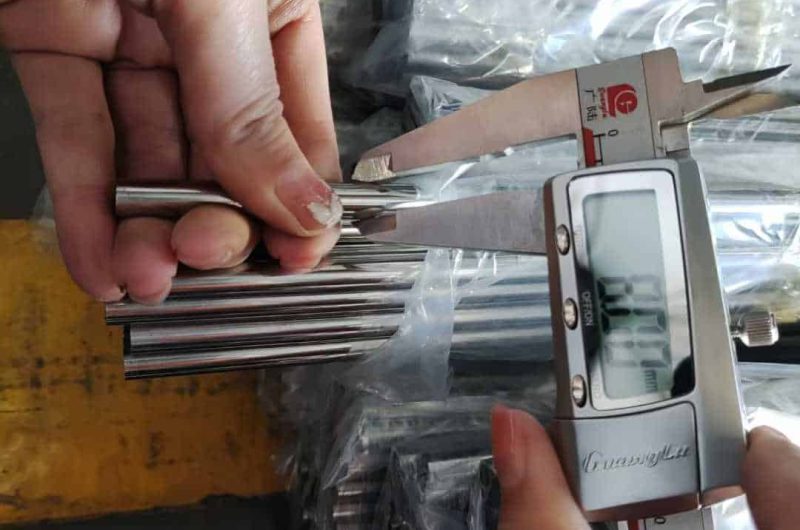
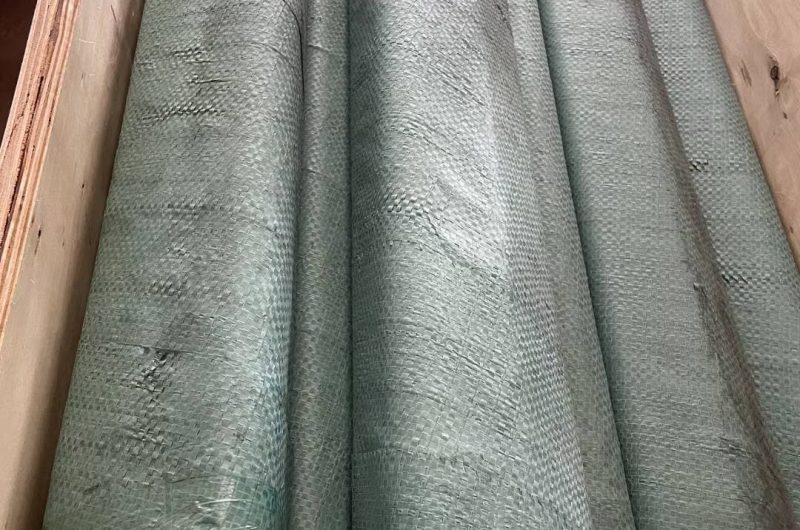
How your order is made, checked and shipped

Tube forming at the partner factory

Heat treatment (annealing)

Dimensional inspection

Alloy verification with a handheld analyzer

Export packing

Container loading
What Global Buyers Say About TeCarve Tubing
“I've received the goods and everything is fine.”
“The goods already send to customers. I am waiting for the next order from them.”
“…there is no need of inspection this time… I trust in your product.”
Frequently Asked Questions
What is stainless steel needle tube (hypodermic tube)?
Stainless steel needle tube, also called hypodermic tubing, is precision thin-wall tube used to manufacture medical needles, cannulas, and syringes. It is manufactured to ISO 9626 for dimensional and mechanical requirements for needle tubing.
What gauge sizes does TeCarve supply for needle tube?
TeCarve supplies stainless steel needle tube within the published product specification range: outer diameter 0.3 mm to 6 mm and wall thickness 0.1 mm to 1.0 mm. Non-standard OD and wall combinations can be reviewed against the drawing and application requirements.
What material grade is specified for hypodermic needle tubing?
ISO 9626 specifies grade 304 and 316L stainless steel for hypodermic tubing. Grade 316L is preferred for prolonged or implantable body contact due to its improved corrosion resistance and superior biocompatibility.
How is needle tube different from capillary tube?
Needle tube (hypodermic tubing) is produced to the ISO 9626 gauge system specifically for medical needle manufacturing with very thin walls and precise tolerances. Capillary tube covers a broader size range for industrial, scientific, and medical use outside the hypodermic gauge system.
What tip processing and surface treatments are available?
TeCarve supplies needle tube cut-to-length with plain, deburred, or ground-bevel ends. Custom tip geometry (bevel, lancet, back-bevel), electropolishing, and passivation per ASTM A967 are all available.
Can TeCarve supply full-hard temper needle tubing?
Yes. Our partner factories perform controlled cold drawing to achieve full-hard temper for needle cannula tubing, maintaining ductility for bevel grinding.
Does TeCarve hold ISO 13485 or CE mark for medical needles?
TeCarve holds ISO 9001, 14001, and 45001. We supply raw needle cannula tubing rather than finished medical devices, so CE/ISO 13485 device marks do not apply. Every batch includes EN 10204 3.1 MTC with verified chemistry and mechanical properties for client regulatory filing.
What end finishing options are offered for needle tubes?
We supply needle tubes cut to length with plain, deburred, or rotary cut ends per customer drawing and order requirements.