

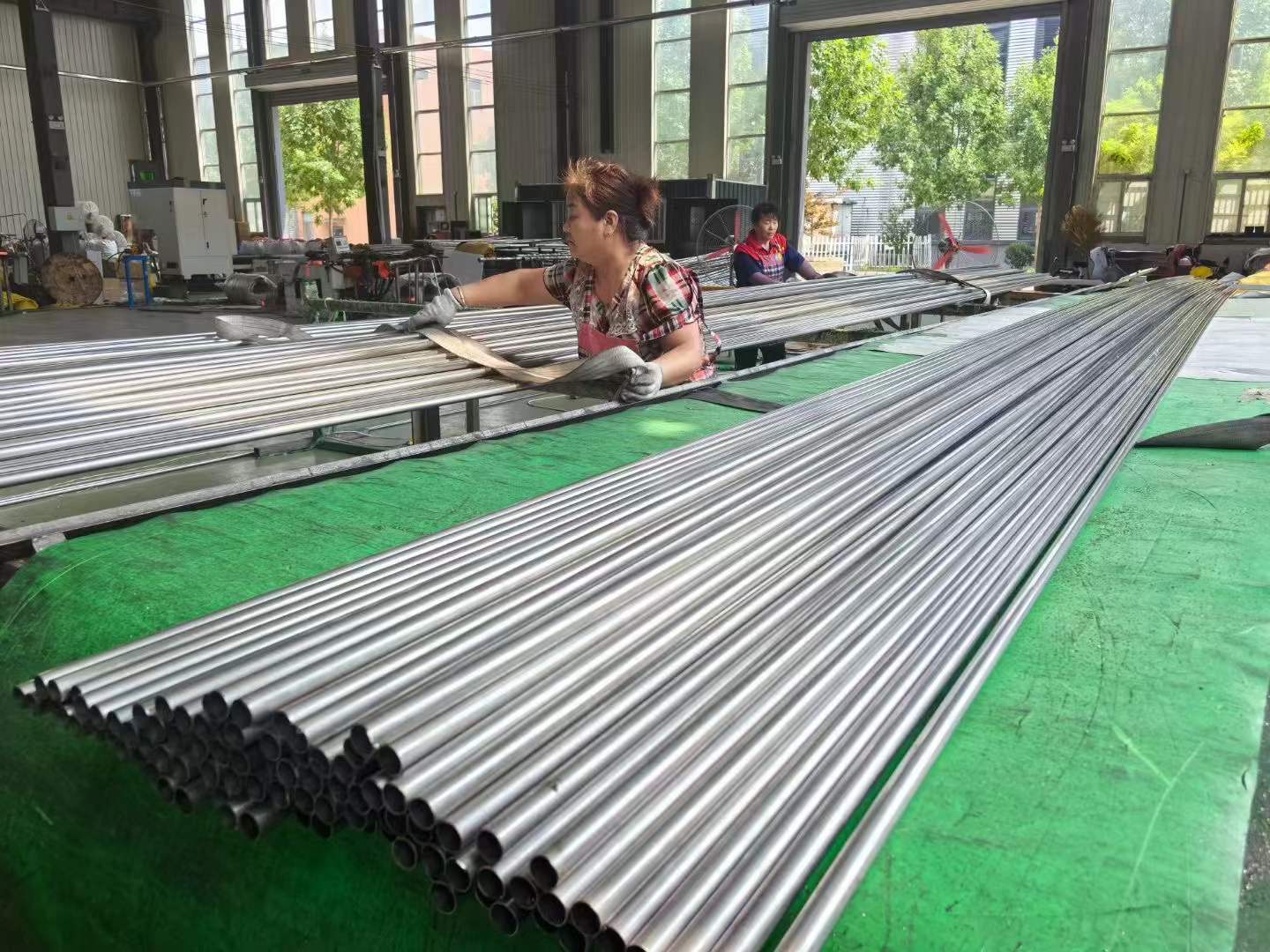

Capillary Tube vs Needle Tube: Precision Stainless Steel Tubing Guide
Capillary tubes are precision-drawn stainless steel tubes with outer diameters (OD) from 0.5 mm to 12 mm and wall thicknesses from 0.05 mm to 2 mm, manufactured to ASTM A269 and DIN 17458 standards. TeCarve supplies capillary tubes in grades 304, 316, and 316L for applications requiring high precision and corrosion resistance. Unlike needle tubes, which are typically used for medical injections, capillary tubes are designed for fluid transfer, pressure sensing, and instrumentation in industrial and laboratory settings. For purchasing specifications and available sizes, review our 304 stainless steel capillary tube product range.
What Is a Capillary Tube?
A capillary tube is a small-diameter tube that relies on capillary action or precise flow control for its function. According to ASTM A269, capillary tubes must pass hydrostatic testing at pressures up to 20 MPa and eddy current testing to ensure wall integrity. TeCarve supplies capillary tubes with OD tolerances of ±0.05 mm and surface finishes as smooth as 0.4 μm Ra, making them ideal for chromatography and medical devices.
Capillary Tube vs Needle Tube: Key Differences
The primary difference between a capillary tube and a needle tube lies in their end geometry and application. Capillary tubes have open ends and are used for continuous flow systems, while needle tubes feature a beveled tip for piercing. For example, a 316L capillary tube with 1.6 mm OD and 0.2 mm wall can withstand 35 MPa burst pressure, whereas a needle tube of similar size is designed for injection at lower pressures (below 5 MPa).
Stainless Steel Grades for Capillary Tubes
TeCarve offers capillary tubes in 304, 316, and 316L stainless steel. Grade 304 contains 18-20% chromium and 8-10.5% nickel, providing good corrosion resistance in atmospheric conditions. Grade 316 adds 2-3% molybdenum, improving pitting resistance in chloride environments (e.g., seawater). Grade 316L has a maximum carbon content of 0.03%, preventing sensitization during welding and ensuring intergranular corrosion resistance per ASTM A262.
Manufacturing Standards and Tolerances
Capillary tubes are produced to ASTM A269 and DIN 17458, which specify seamless or welded construction with strict dimensional tolerances. For OD below 3 mm, ASTM A269 allows ±0.05 mm; for wall thickness below 0.5 mm, tolerance is ±0.03 mm. TeCarve performs chemical analysis, mechanical testing (tensile strength ≥ 515 MPa for 316L), and hydrostatic testing at 7 MPa minimum to certify each lot.
Surface Finishes and Mechanical Properties
Capillary tubes are available in pickled and annealed (2B), polished (180-400 grit), or bright annealed (BA) finishes. A polished finish reduces friction and improves flow for viscous fluids. Typical yield strength for 304 capillary tube is 205 MPa, with elongation of 40% in 50 mm. For 316L, yield strength is 170 MPa with 40% elongation, offering better formability for bending into coils.
Why TeCarve for Capillary Tubes?
TeCarve supplies capillary tubes from partner factories in Foshan and Wenzhou with a combined annual capacity of 10,000 tons. As the sole export channel of two partner factories, exporting since 2019, TeCarve delivers consistent quality with EN 10204 3.1 mill certificates. For technical inquiries, visit tecarvepipes.com to access detailed datasheets and request custom sizes with lead times as short as 10 days.
| Grade | C% max | Ni% | Cr% | Key Property | Best For |
|---|---|---|---|---|---|
| 304 | 0.08 | 8.0-11.0 | 18.0-20.0 | Good general corrosion resistance | General fluid transfer, instrumentation |
| 316 | 0.08 | 10.0-14.0 | 16.0-18.0 | Molybdenum addition improves pitting resistance | Chemical processing, marine environments |
| 316L | 0.03 | 10.0-14.0 | 16.0-18.0 | Low carbon prevents sensitization during welding | Welded assemblies, pharmaceutical equipment |
How to Choose the Right Grade for Your Application
- Identify the operating environment: For chloride-rich or acidic media, select 316 or 316L; for dry or neutral fluids, 304 suffices.
- Determine required mechanical strength: For pressures above 10 MPa, choose 304 (higher yield strength); for forming into tight coils, 316L offers better ductility.
- Assess welding needs: If welding is required, use 316L to avoid intergranular corrosion; 304 may need post-weld annealing.
- Check temperature range: 304 performs up to 870°C in intermittent service; 316L up to 925°C. For cryogenic applications, 304 retains impact resistance down to -196°C.
- Consider surface finish: For cleanroom or food contact, specify polished (Ra ≤ 0.8 μm) or bright annealed finish.
- Verify availability: TeCarve stocks 304 and 316L capillary tubes from 0.5 mm to 12 mm OD with MOQ from 100 pieces per size/spec.
Industry Applications
- Medical devices: Capillary tubes in 316L for hypodermic needles, catheters, and surgical instruments where biological-evaluation requirements for the finished device may apply; the applicable ISO 10993 evaluation and testing scope must be confirmed for each project.
- Chemical processing: 316 capillary tubes for sampling lines and injection of catalysts under pressures up to 20 MPa.
- Pharmaceutical manufacturing: 316L tubes for chromatography columns and fluid transfer in cleanrooms with 0.2 μm filtration.
- Oil and gas: 304 capillary tubes for pressure sensing lines in downhole tools operating at 150°C and 35 MPa.
- Automotive: 304 capillary tubes for fuel injection systems and brake lines requiring corrosion resistance and burst strength above 50 MPa.
- Food and beverage: 304 or 316L tubes for beverage dispensing and dairy processing with 3A sanitary standards.
Standards & Certifications
- ASTM A269: Standard specification for seamless and welded austenitic stainless steel tubing for general service.
- DIN 17458: German standard for seamless circular stainless steel tubes for precision applications.
- ISO 9001: Quality management system certification held by TeCarve.
- EN 10204 3.1/3.2: Mill test certificates with traceable chemical and mechanical properties.
- ASME SA269: Equivalent to ASTM A269 for pressure equipment in the US.
Frequently Asked Questions
What is the difference between a capillary tube and a needle tube?
A capillary tube has a uniform bore and open ends, designed for fluid flow or pressure transmission. A needle tube has a beveled tip for piercing, typically used for injections. Capillary tubes are made to tighter tolerances (OD ±0.05 mm) and higher pressure ratings (up to 35 MPa), whereas needle tubes prioritize sharpness and biocompatibility.
What are the standard sizes for stainless steel capillary tubes?
According to ASTM A269, capillary tubes range from 0.5 mm to 12 mm outer diameter with wall thicknesses from 0.05 mm to 2 mm. Common sizes include 1.6 mm OD x 0.2 mm wall, 3 mm OD x 0.5 mm wall, and 6 mm OD x 1 mm wall. TeCarve can supply custom sizes within these ranges.
Which grade of stainless steel is best for capillary tubes in medical applications?
316L stainless steel is preferred for medical capillary tubes due to its low carbon content (0.03% max), which prevents sensitization, and its molybdenum addition (2-3%) that enhances corrosion resistance against bodily fluids. For finished medical devices, ISO 10993 biological-evaluation requirements are application-specific and must be confirmed for each project.
Can capillary tubes be used for high-pressure applications?
Yes, capillary tubes can withstand high pressures. For example, a 316L tube with 1.6 mm OD and 0.2 mm wall has a burst pressure of approximately 35 MPa. Hydrostatic testing per ASTM A269 is routinely performed at 7 MPa to ensure integrity. Always verify the working pressure with the manufacturer.
What surface finishes are available for capillary tubes?
TeCarve offers pickled and annealed (2B), polished (180/240/320/400 grit), mirror (bright annealed), matte, and satin finishes. For chromatography, a polished finish with Ra ≤ 0.4 μm is recommended. For general instrumentation, 2B finish is standard.
How do I order a sample of capillary tube?
Contact TeCarve at sales@tecarve.com with your required size (OD, wall, length), grade, and quantity. Small trial orders from 100 pieces per size/spec are accepted. Samples can be provided for qualified projects with a lead time of 10-15 days.
What certifications come with TeCarve capillary tubes?
Each shipment includes EN 10204 3.1 mill test certificates with chemical analysis and mechanical properties. 3.2 certificates (third-party inspection) are available on request. TeCarve also provides material traceability per ISO 9001.
Are capillary tubes seamless or welded?
Both types are available. For OD below 6 mm, seamless tubes are common (per DIN 17458). Welded tubes are suitable for larger diameters and are produced to ASTM A269 with full penetration welds. TeCarve’s Wenzhou partner factory specializes in seamless capillary tubes.
What is the lead time for capillary tube orders?
Standard lead time is 10-25 days after deposit, depending on size and quantity. For urgent orders, TeCarve can expedite within 10 days for stocked sizes. Capillary tube trial orders start from 100 pieces per size/spec. Standard needle tube trial orders start from 500 pieces per gauge/spec. Custom precision requirements are confirmed after technical review.
Can capillary tubes be bent or coiled?
Yes, 304 and 316L capillary tubes can be bent or coiled due to their good ductility (elongation ≥ 40%). TeCarve offers coiled tube up to 100 meters in length. Minimum bend radius is typically 3 times the OD for annealed tubes.
According to a 2023 market report, the global capillary tube market is projected to grow at 5.2% CAGR through 2030, driven by demand in medical devices and analytical instrumentation. In HPLC systems, 316L capillary tubes with 0.1 mm ID are used to achieve flow rates of 0.1-2 mL/min at pressures up to 40 MPa.
TeCarve supplies capillary tube manufactured to ASTM A269, DIN 17458.
Sizes: OD 0.5mm-12mm, Wall 0.05mm-2mm
Grades: 304, 304L, 316, 316L, 321, 310S, 201, 430, 904L, Duplex 2205 | Capillary Tube Trial MOQ: 100 pieces per size/spec; custom precision requirements confirmed after technical review | Lead Time: 10–25 days after deposit
Email: sales@tecarve.com
WhatsApp: +86 189 6804 2695
Website: https://tecarvepipes.com/products/stainless-steel-capillary-tube/
Response within 24 hours.