


High-Efficiency Thermal Transfer: Integral Stainless Low Fin Tubes on ASTM A213 / A249


Get Your Low-Fin Tube Quote
Sourcing integral low-finned stainless steel tubing for shell-and-tube heat exchangers, chillers, condensers, or oil coolers? Contact our thermal engineering desk for live factory pricing, integral fin profiles (19–28 FPI), unfinned end/land sections, and flexible trial orders (100–300 kg MOQ supported).
Fast mill pricing, production tooling availability, and raw tube lead times directly from engineering within 2 hours.
Finned tube sample sections provided for fin height/density verification, expansion test, and metallurgical check.
Verify tube bundle sliding, baffle fit-up, or tubesheet expansion with low-MOQ trial batches.
100% eddy-current and hydrostatic testing of base tubes, pneumatic testing after finning (A498-type practice), and EN 10204 3.1 certification.
For enhanced-surface heat transfer projects, review how to verify our low-fin rolling process, root diameter inspection, un-finned land integrity, and hydro-testing before placing orders.
Low Fin Tube Factory & Inspection Photos
Real product, inspection, packaging and loading photos.

How your order is made, checked and shipped

Tube forming at the partner factory

Heat treatment (annealing)

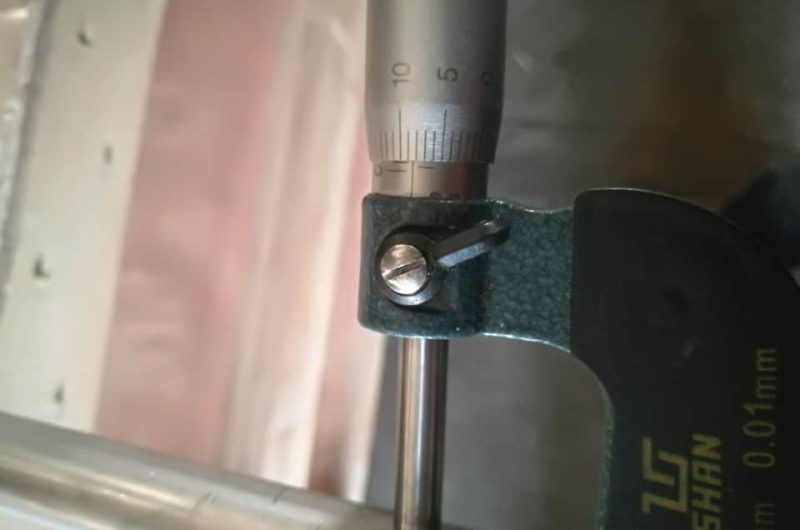
Dimensional inspection

Alloy verification with a handheld analyzer

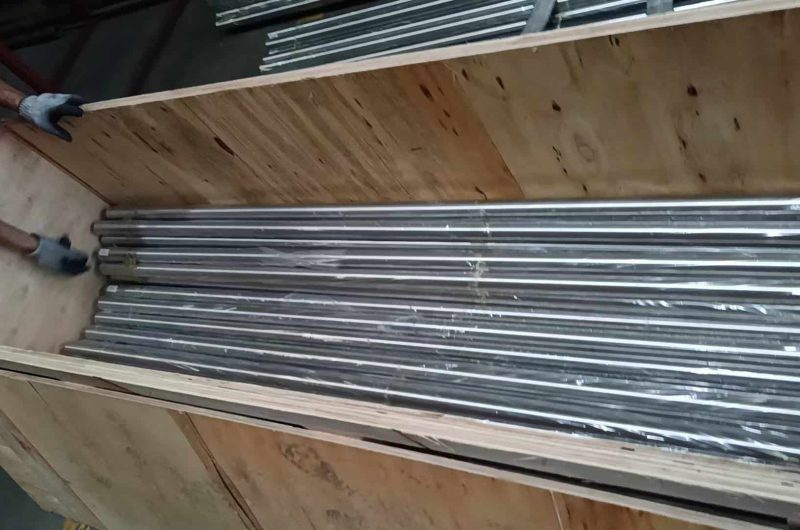
Export packing

Container loading
What Overseas Buyers Say About TeCarve Tubing
“I've received the goods and everything is fine.”
“The goods already send to customers. I am waiting for the next order from them.”
“…there is no need of inspection this time… I trust in your product.”
Frequently Asked Questions
What is a low fin tube and how does it improve heat exchanger performance?
A low fin tube is an integral heat exchanger tube with external helical fins cold-formed directly from the parent tube wall without an interfacial thermal gap, increasing external surface area by 2.5–3.5× (up to ~3.8× for high-density fins) versus plain tube of the same outer diameter. Because the fin outer diameter does not exceed the plain tube diameter, it is dimensioned to pass through TEMA standard baffle holes, reducing shell-side thermal resistance and boosting heat exchanger duty by 40–60% or enabling 30–50% more compact condenser bundles.
What fin specifications does TeCarve supply?
TeCarve supplies stainless steel integral low fin tubes (A498-type fin geometry) in base outer diameters from 12.7 mm (1/2 in) to 38.1 mm (1-1/2 in), with wall thicknesses from 0.8 mm to 2.5 mm. Standard fin densities include 19 FPI (1.34 mm pitch, ideal for fouling-prone fluids), 26 FPI (0.98 mm pitch, standard for HVAC/R chillers), 28 FPI, and 32 FPI (0.79 mm pitch, for high-vacuum clean condensing), with fin heights from 0.8 mm to 1.45 mm. Custom fin geometry, intermediate baffle lands, and unfinned end lengths are manufactured to engineering drawings.
What grades of stainless steel are available for low fin tubes?
Low fin tubes are available in austenitic grades 304, 304L, 316, 316L, 321, and duplex stainless steel 2205 (UNS S31803 / S32205). Grade 316L is preferred for chemical process condensers, acid gas coolers, and marine heat exchangers, while Duplex 2205 provides exceptional resistance to chloride stress corrosion cracking (SCC) and pitting in high-temperature brines.
What standards apply to stainless steel low fin tubes?
TeCarve stainless steel low fin tubes are made from base tubes conforming to ASTM A213 (seamless) or ASTM A249 (welded). Fin geometry, dimensional inspection and pneumatic testing follow ASTM A498 / A498M practice; A498 itself formally covers carbon steel base tubes (A179, A214, A334), so fin configuration is agreed per order. International specifications include EN 10216-5, DIN 28178, JIS G3463, and GB/T 24593. Every production lot undergoes 100% hydrostatic and eddy current non-destructive testing, dimensional checks, and is supplied with a fully traceable EN 10204 3.1 Mill Test Certificate.
When should I choose low fin tube over plain tube in a heat exchanger?
Low fin tube is preferred when the heat transfer coefficient on the shell-side (e.g., condensing refrigerant, condensing steam, viscous hydrocarbon, or gas cooling) is significantly lower than on the tube-side (e.g., cooling water). By expanding the external area by 2.5–3.5×, the controlling shell-side resistance is dramatically lowered. Furthermore, because integral low fin tubes have outer fin diameters no larger than the plain tube ends, existing shell-and-tube condensers can be directly retubed during maintenance turnarounds to increase throughput without modifying the shell, tubesheets, or piping connections.
How do you prevent wall thinning and bursting under the fin root?
Base tube wall thickness under fin grooves is inspected during rolling at our partner factories. Ordered minimum wall is kept within +18%/-0% and average wall within ±9% following A498-type practice, backed by 100% hydrostatic and eddy-current testing.
What custom plain end lengths and intermediate unfinned sections are available?
We provide custom unfinned plain end lengths (land sections) and intermediate unfinned sections fabricated to your equipment drawings on base tube ODs from 12.7 to 38.1 mm.