
Shaver Blades
Used in orthopedic and arthroscopic surgeries to cut, shave, or remove soft tissue and bone with precision, ensuring clear visualization during minimally invasive procedures.

 Professional Stainless Steel Tubing Solutions
Used in orthopedic and arthroscopic surgeries to cut, shave, or remove soft tissue and bone with precision, ensuring clear visualization during minimally invasive procedures.

Designed for single-use in endoscopic procedures, these accessories assist in obtaining tissue samples safely and hygienically, minimizing the risk of cross-contamination.

Applied in endoscopy to control bleeding by mechanically clamping blood vessels or tissue, offering an effective hemostasis solution without surgery.

Primarily used in gastrointestinal endoscopy, these snares capture and remove polyps or other abnormal tissue growths efficiently and safely. Available in stainless steel and brass.

A wide range of supportive components that enhance the functionality of endoscopes, such as cleaning, sealing, and connection parts, ensuring smooth operation and patient safety.

Used in endoscopic and laparoscopic applications for irrigation and cleaning, these fittings deliver fluids effectively to maintain clear visualization during procedures.

Standardized connectors that provide secure, leak-proof connections between syringes, tubing, and other medical devices, ensuring reliable fluid transfer in clinical use.

A variety of instruments and components that support dental procedures, including cleaning, restorative, and surgical applications, helping maintain oral health and precision treatment.

Specialized surgical tools used in thoracic surgery for procedures involving the lungs, heart, or chest cavity, designed to facilitate accuracy and minimize patient trauma.

Interchangeable or fixed jaws designed for laparoscopic tools, enabling precise grasping, cutting, and dissecting of tissue during minimally invasive abdominal surgeries.

Comprehensive instruments used in bone and joint surgeries, including cutting, drilling, and fixation tools, essential for trauma care and reconstructive orthopedic procedures.
Send your drawing or sample with material, tolerances and quantity. We reply within 24 hours.

Sourcing precision stainless steel tubing or machined components manufactured to print for medical instruments, surgical devices, diagnostic assemblies, or lab equipment? Contact our technical engineering desk for material composition review (304, 304L, 316L, ASTM F899), tight-tolerance machining (down to ±0.01 mm), and flexible prototype trial orders.
Engineering review of customer-supplied 2D/3D technical drawings, dimensional tolerances (down to ±0.01 mm), and surface finish parameters.
First-article prototype samples and short evaluation batches provided for dimensional fit-up, assembly verification, and metallurgical review.
Raw tubing and semi-finished OEM components can be quoted for prototype and pilot quantities after review of drawings, materials, tolerances, finishing, and documentation requirements.
Full material heat traceability, ladle chemical composition, mechanical tensile/yield reports, and non-destructive testing data.
For precision medical device manufacturing, review how OEM buyers can verify our cleanroom handling, micro-machining tolerances, passivation testing, and material traceability.
Real product, inspection, packaging and loading photos.
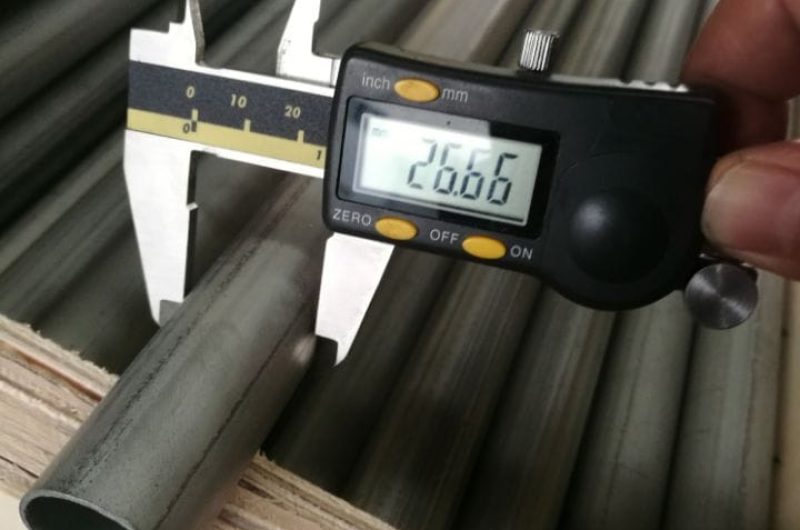
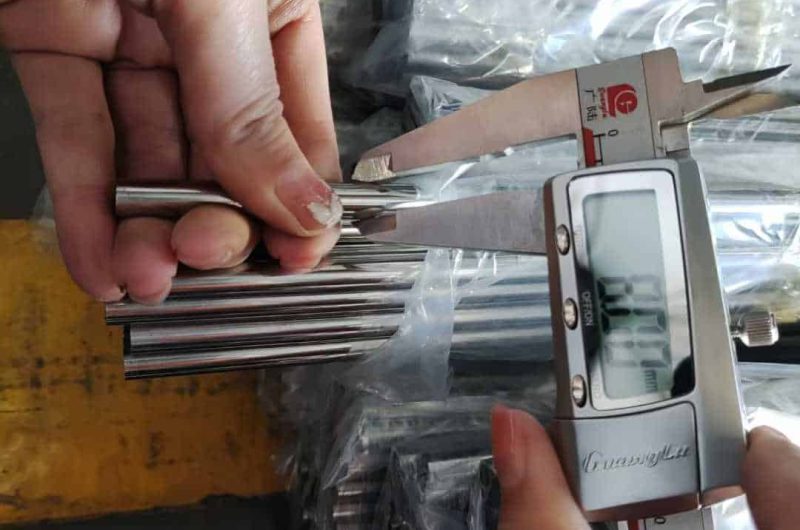
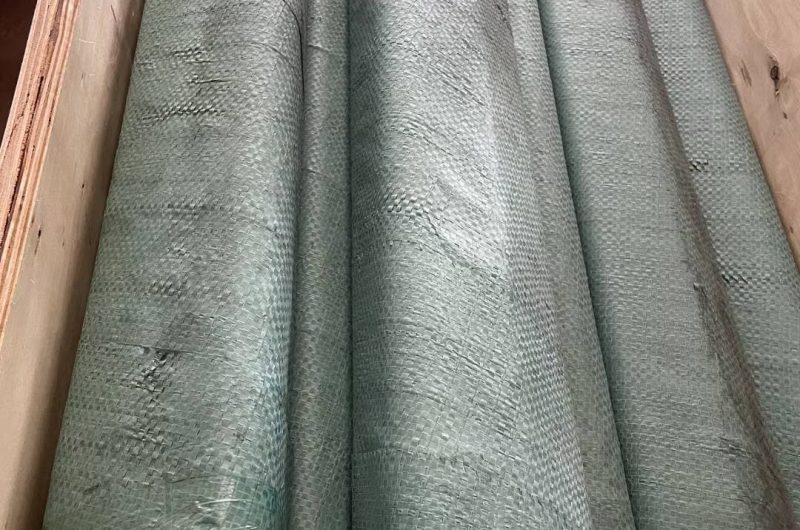

Tube forming at the partner factory

Heat treatment (annealing)

Dimensional inspection

Alloy verification with a handheld analyzer

Export packing

Container loading
“I've received the goods and everything is fine.”
“The goods already send to customers. I am waiting for the next order from them.”
“…there is no need of inspection this time… I trust in your product.”
What is the difference between TeCarve’s medical device categories?
TeCarve organizes medical components into three categories: Category A covers semi-finished tubular blanks and cannula stock for needles, catheter stiffeners, and endoscope shafts; Category B covers OEM components such as radiopaque markers and titanium/nickel alloy tubes, rods, and wires for surgical use; Category C covers accessories and assemblies such as stainless steel flexible hoses for medical fluid handling.
Does TeCarve hold ISO 13485 or FDA medical registrations?
No. TeCarve holds ISO 9001, 14001, and 45001 certifications. We supply precision raw tubes and sub-components per ISO 9626 material specifications to medical device manufacturers. Final device sterilization and regulatory filings remain the client's responsibility.
What cutting tolerances and end-face finishes can be achieved?
Cut length and end finish are confirmed per drawing; ends are deburred for downstream assembly.
What materials does TeCarve supply for medical device components?
TeCarve supplies stainless steel, titanium, and nickel alloys for surgical applications, along with radiopaque markers in stainless steel, platinum-iridium, tantalum, and niobium, depending on the component’s intended use and required imaging visibility.
What standards apply to TeCarve’s medical device components?
Depending on the component, material, and intended use, relevant project references may include the ISO 10993 series for biological evaluation, ASTM F67 and ASTM F136 for titanium implant materials, ASTM F75 for cobalt-chromium alloy castings, EN ISO 9626 for stainless steel needle tubing, and ASTM F899 for wrought stainless steels used in surgical instruments. Applicability and material conformity must be confirmed for each order.
What is the MOQ and lead time for medical device components?
For raw tubing and semi-finished OEM components, prototype and pilot quantities are supported; MOQ is confirmed after technical review of material, dimensions, tolerances, cut length, surface finish, documentation, and required processing. In-stock standard sizes ship within 7–10 days. Custom specifications typically ship within 10–25 days after deposit. The full cycle—from inquiry and drawing confirmation through sampling, production, inspection, and dispatch—typically takes 33–55 days for custom items.
Does TeCarve provide documentation for material traceability?
Yes. Documentation requirements vary by component, material, intended use, and destination market. TeCarve confirms available material and inspection documentation, including traceability records, against the applicable specification before quotation.


