

Unlike generic bulk tubing suppliers, TeCarve delivers fully welded end assemblies (fixed/floating ANSI/DIN/JIS flanges, BSP/NPT threaded male/female fittings, camlocks, and quick couplings) and pressure-tests finished assemblies per the applicable standard or order before dispatch.

Flexible Corrugated Stainless Steel Pipes for Fluid & HVAC Systems


Get Your Corrugated Pipe & Hose Quote
Sourcing flexible stainless steel corrugated pipe, annular hoses, or expansion joints for gas lines, HVAC plumbing, solar thermal systems, or vibration isolation? Contact our engineering sales desk for live factory pricing, corrugation pitch options, custom braided jacketing, and flexible trial orders (100–300 kg MOQ supported).
Instant pricing, tooling setup, and raw strip material availability directly from our sales desk within 2 hours.
Short corrugated pipe samples provided for flexibility bending tests, pitch inspection, and end-fitting swaging trials.
Verify dynamic fatigue resistance, fitting welding, or assembly line fit with low-MOQ trial quantities.
Pressure testing per the applicable standard or order, with complete EN 10204 3.1 traceability.
For flexible piping and vibration-absorbing lines, see how to verify our corrugation forming lines, pressure testing, and raw material certificates.
Corrugated Pipe Workshop & Shipping Photos
Real product, inspection, packaging and loading photos.

How your order is made, checked and shipped

Tube forming at the partner factory

Heat treatment (annealing)

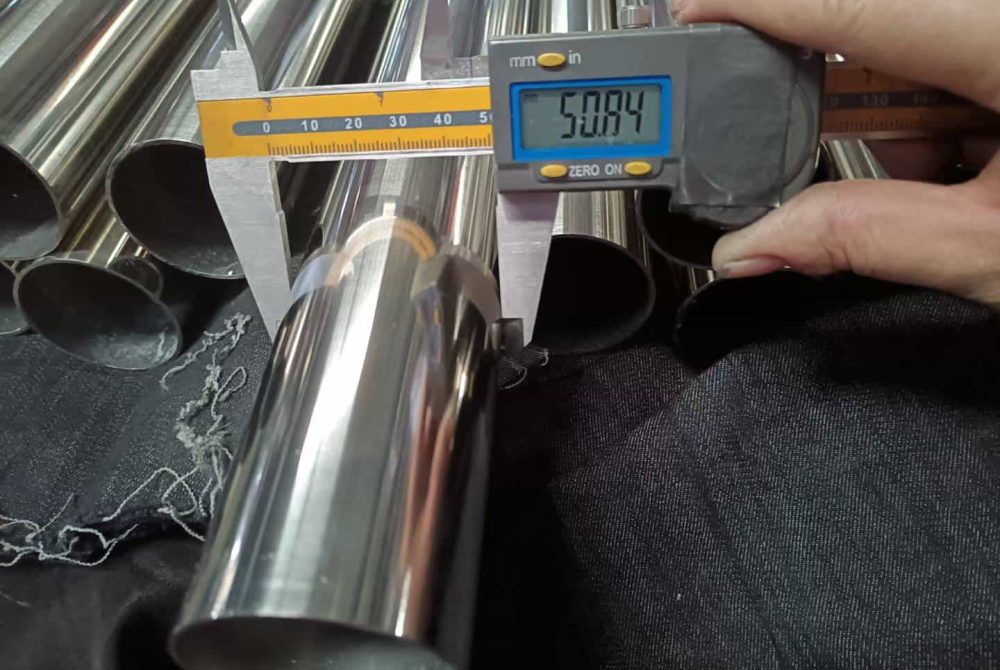
Dimensional inspection

Alloy verification with a handheld analyzer

Export packing

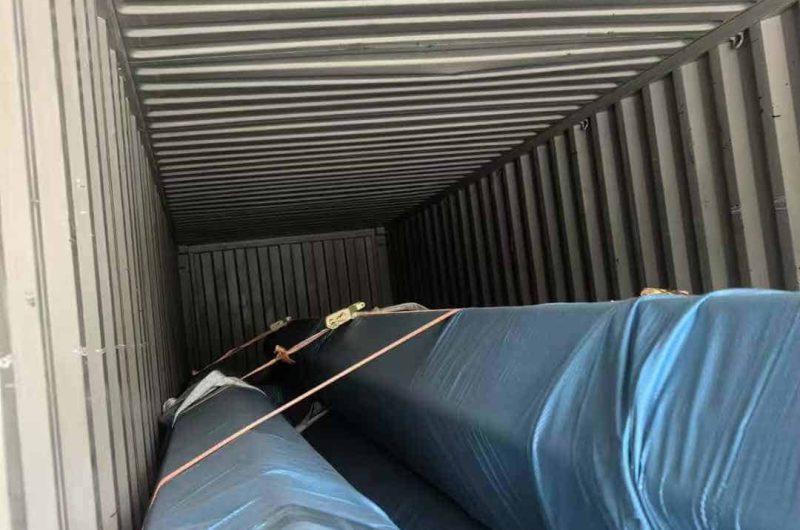
Container loading
What Overseas Buyers Say About TeCarve Tubing
“I've received the goods and everything is fine.”
“The goods already send to customers. I am waiting for the next order from them.”
“…there is no need of inspection this time… I trust in your product.”
Frequently Asked Questions
What is stainless steel corrugated pipe?
Stainless steel corrugated pipe features annular or helical corrugations that provide axial flexibility, absorb thermal expansion, reduce vibration transmission, and increase flow turbulence for heat transfer enhancement. It is used in flexible couplings, exhaust flex joints, and compact heat exchangers.
What grades are used for stainless steel corrugated pipe?
Corrugated pipe is available in grades 304, 316L, and 321. Grade 316L is preferred for chemical and seawater service. Grade 321 is used for high-temperature exhaust and boiler applications rated up to 850°C continuous service.
What sizes are available for corrugated stainless steel pipe?
Corrugated pipe is available in OD from 6 mm to 2000 mm with wall thickness from 0.15 mm to 25 mm. Corrugation pitch ranges from 2–5 mm for heat transfer enhancement to 8–20 mm for high-flexibility and expansion-joint applications. Custom corrugation geometry engineered to pressure and flexibility requirements.
How much axial and angular flexibility does corrugated stainless steel pipe provide?
Corrugated stainless steel pipe typically allows axial compression and extension of 10–30% of free length and angular deflection of 5–30° depending on wall thickness and corrugation geometry. This makes it ideal for vibration isolation and compensating pipe misalignment.
What are the main applications for corrugated stainless steel pipe?
Key applications include residential and commercial gas flex connectors, marine and automotive exhaust flex joints, heat exchanger tubes for turbulent-flow enhancement, corrugated stainless steel tube (CSST) underground gas distribution, and industrial vibration-damping pipe connections.
What standards govern TeCarve corrugated stainless steel pipes?
Corrugated pipe sizes are supplied to ISO 10380 dimensional guidelines (minimum bore ≥ 98% of DN). Base raw tubes conform to ASTM A269 in 304 and 316L. Rigid pressure pipe standards like ASTM A249 do not apply to flexible corrugated geometries.
What material test certificates are supplied with corrugated pipe orders?
Every shipment includes an EN 10204 3.1 Mill Test Certificate issued by the producing partner factory's QC department, verifying chemical composition and mechanical properties.