

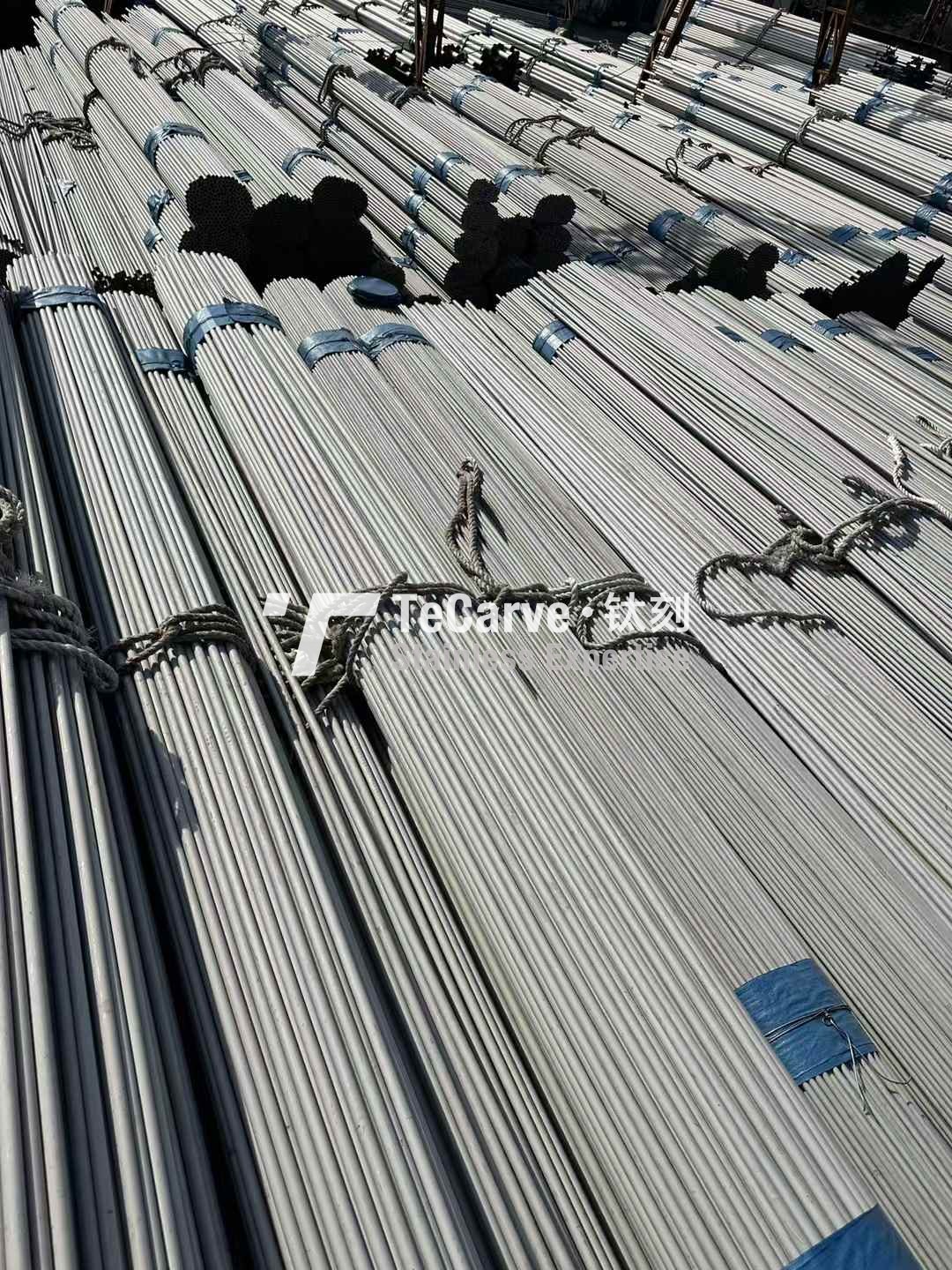

Seamless pipe and tube for the petrochemical industry are manufactured without a welded seam, ensuring superior strength and leak-proof performance under high pressure and temperature. According to ASTM A312 and ASTM A213, these pipes are produced in austenitic and duplex stainless steel grades such as 304, 316L, 321, 310S, 2205, and 904L. TeCarve, a manufacturing-backed supplier with partner factories in Foshan and Wenzhou, China, offers seamless pipe in OD 6mm–610mm and wall thickness 0.5mm–50mm, manufactured to EN 10216-5. With an annual capacity of 10,000 tons and exports worldwide, TeCarve delivers trust and speed for global petrochemical projects.
High-Temperature Strength in Cracking Units
In ethylene cracking furnaces, seamless pipes must withstand temperatures up to 1100°C and pressures of 10–20 MPa. Grade 310S (25% Cr, 20% Ni) offers oxidation resistance up to 1150°C, while 321 (stabilized with titanium) resists intergranular corrosion up to 900°C. ASTM A213 mandates minimum tensile strength of 515 MPa for 310S. TeCarve supplies these grades with EN 10204 3.1 mill certificates, ensuring traceability for critical cracking unit applications.
Corrosion Resistance in Hydroprocessing Reactors
Hydrodesulfurization (HDS) reactors operate with hydrogen sulfide at 300–450°C and 5–15 MPa. Duplex 2205 (22% Cr, 5% Ni, 3% Mo) provides a pitting resistance equivalent number (PREN) of ≥35, outperforming 316L (PREN ≈ 25). According to ISO 15156, 2205 is approved for sour service. TeCarve’s seamless pipes for this application undergo hydrostatic testing at 1.5× design pressure and eddy current testing per ASTM E309.
Low-Temperature Ductility in Cryogenic Services
For liquefied petroleum gas (LPG) and ethylene storage at –104°C, seamless pipes must retain impact toughness. Grade 304L (0.03% C max) exhibits Charpy V-notch impact energy > 60 J at –196°C, as per ASTM A312. EN 10216-5 requires 27 J minimum at –196°C for 304L. TeCarve offers seamless pipe in 304L with full mechanical testing reports, ensuring compliance with petrochemical cryogenic standards.
Stress Corrosion Cracking Resistance in Amine Units
Amine gas treating units expose pipes to wet H2S and CO2 at 40–120°C. Duplex 2205 and 904L (25% Ni, 4.5% Mo) resist chloride-induced stress corrosion cracking (SCC). ASTM G48 method A tests pitting corrosion at 22°C; 2205 shows no pitting after 24 hours in 6% FeCl3. TeCarve’s seamless pipe for amine service is supplied with intergranular corrosion testing per ASTM A262 Practice E.
Oxidation and Carburization Resistance in Reformers
Steam methane reformers (SMR) operate at 800–950°C with carburizing atmospheres. Grade 310S (0.08% C max) forms a protective Cr2O3 scale, while 800H (32% Ni, 21% Cr) offers additional creep strength. According to API 530, 310S has a maximum allowable stress of 14 MPa at 900°C. TeCarve provides seamless pipes with solution annealing at 1100°C, followed by rapid quenching to prevent carbide precipitation.
Erosion Resistance in Catalyst Transfer Lines
Fluid catalytic cracking (FCC) units transfer catalyst particles at velocities up to 30 m/s and temperatures of 650–750°C. Hardened grades like 310S or 253MA (21% Cr, 11% Ni, rare earth additions) reduce erosion rates by 40% compared to 304H. TeCarve’s seamless pipes for this service are supplied with a polished internal surface (Ra ≤ 0.8 µm) to minimize friction and particle buildup.
Seamless Pipe Dimensions and Tolerances per ASTM A312
ASTM A312 specifies seamless pipe in OD 6mm–610mm with wall thickness schedule 5S through XXS. Tolerances for OD ≤ 48.3 mm are ±0.4 mm; for larger diameters, ±1% of OD. Wall thickness tolerance is +20% / –12.5% for schedules up to 10S. TeCarve stocks seamless pipe in 6-meter random lengths and can cut to custom lengths (1–12 m) per project requirements. All pipes are marked with grade, heat number, and ASTM standard.
Seamless Pipe Grade Comparison Table
| Grade | C% max | Ni% | Cr% | Key Property | Best For |
|---|---|---|---|---|---|
| 304 | 0.08 | 8.0–10.5 | 18.0–20.0 | Good corrosion resistance, weldability | General process piping |
| 304L | 0.03 | 8.0–12.0 | 18.0–20.0 | Low carbon, resists sensitization | Welded piping, cryogenic |
| 316 | 0.08 | 10.0–14.0 | 16.0–18.0 | Mo addition, good pitting resistance | Chemical processing |
| 316L | 0.03 | 10.0–14.0 | 16.0–18.0 | Low carbon, improved weldability | Sour service, pharmaceuticals |
| 321 | 0.08 | 9.0–12.0 | 17.0–19.0 | Ti stabilized, 815°C service | High temperature cracking |
| 310S | 0.08 | 19.0–22.0 | 24.0–26.0 | Oxidation resistance to 1150°C | Furnace tubes, reformers |
| 2205 | 0.03 | 4.5–6.5 | 22.0–23.0 | Duplex, high strength, SCC resistance | H2S, chloride environments |
| 904L | 0.02 | 23.0–28.0 | 19.0–23.0 | Super austenitic, PREN > 40 | Severe corrosion, sea water |
How to Choose the Right Grade for Your Application
- Identify operating temperature range: For temperatures above 500°C, select 321 or 310S. For cryogenic below –50°C, use 304L or 316L.
- Determine corrosive environment: For H2S or chlorides, choose 2205 or 904L. For general corrosion, 316L suffices.
- Assess pressure requirements: Use ASME B31.3 to calculate wall thickness. Duplex 2205 offers yield strength 450 MPa vs. 170 MPa for 304L.
- Evaluate welding needs: Low-carbon grades (304L, 316L) avoid sensitization. For 321, post-weld heat treatment is not required.
- Check standard compliance: Specify ASTM A312 for general service, ASTM A213 for boiler/superheater tubes, or EN 10216-5 for European projects.
- Consider cost vs. lifecycle: 904L has higher initial cost but extends service life in aggressive media by 3–5 times compared to 316L.
- Request mill test certificates: TeCarve provides EN 10204 3.1 or 3.2 reports with chemical and mechanical data for each heat.
Industry Applications
- Petrochemical Refining: Seamless pipes are used in crude distillation, catalytic cracking, hydrocracking, and coking units, handling temperatures from –100°C to 1100°C and pressures up to 20 MPa.
- Chemical Processing: In reactors, heat exchangers, and transfer lines for acids, alkalis, and solvents, grades 316L and 904L resist corrosion at 200–400°C.
- Oil & Gas Upstream: Downhole tubing and flowlines for sour gas (H2S) use 2205 or 28% Cr super duplex.
- Pharmaceutical & Biotech: Sanitary seamless tubes (316L, Ra ≤ 0.5 µm) for clean steam, WFI, and CIP systems, meeting ASME BPE.
- Power Generation: Superheater and reheater tubes (321H, 310S) in coal and gas-fired boilers at 600–700°C.
- Food & Beverage: 304/304L seamless pipes for dairy, brewery, and edible oil lines, requiring 3-A sanitary standards.
- Marine & Desalination: 316L and 904L for seawater cooling, reverse osmosis, and ballast water treatment, resisting chloride pitting.
Standards & Certifications
- ASTM A312 / A312M: Standard specification for seamless, welded, and heavily cold-worked austenitic stainless steel pipe.
- ASTM A213 / A213M: Standard for seamless ferritic and austenitic alloy-steel boiler, superheater, and heat-exchanger tubes.
- EN 10216-5: European standard for seamless stainless steel tubes for pressure purposes – austenitic and duplex grades.
- ASME B31.3: Process piping code covering design, materials, fabrication, and testing.
- ISO 9001:2015: Quality management system certification held by TeCarve for consistent product quality.
- / ISO 15156: Material selection for sour gas environments (H2S).
- EN 10204 3.1 / 3.2: Inspection certificates with test results and material traceability.
Frequently Asked Questions
What is the difference between seamless and welded pipe for petrochemical use?
Seamless pipe is manufactured by extruding a solid billet, resulting in no longitudinal weld seam. This eliminates weld-related defects and provides uniform strength. For petrochemical applications operating above 400°C or in corrosive environments, seamless pipe is preferred because the weld zone in welded pipe may be prone to preferential corrosion or reduced creep strength. ASTM A312 covers both types, but seamless is specified for critical services.
Which stainless steel grade is best for high-temperature petrochemical piping?
For continuous service above 800°C, grade 310S (25% Cr, 20% Ni) is best due to its oxidation resistance to 1150°C. For temperatures up to 900°C, grade 321 (Ti-stabilized) or 347 (Nb-stabilized) are used to prevent sensitization. For creep strength at 600–700°C, 321H or 347H with higher carbon content (0.04–0.10%) are specified. Always consult API 530 for allowable stress values.
What is the maximum pressure rating for ASTM A312 seamless pipe?
The maximum allowable working pressure depends on pipe schedule, grade, and temperature. For example, Sch 40S 316L pipe (OD 6″) has a pressure rating of 12.5 MPa at 100°C per ASME B31.3. For higher pressures, use Sch 80S (17.2 MPa) or duplex 2205 (yield strength 450 MPa) which allows thinner walls. TeCarve can provide custom wall thicknesses up to 50 mm for extreme pressures.
Can seamless pipe be used for cryogenic service in petrochemical plants?
Yes, austenitic stainless steels like 304L and 316L retain excellent toughness at cryogenic temperatures down to –269°C. They have a face-centered cubic structure that does not undergo ductile-to-brittle transition. For LNG service (–162°C), 304L is commonly used with Charpy impact test requirements per ASTM A312 (typically 27 J at –196°C). TeCarve supplies cryogenic-grade seamless pipe with certified impact properties.
How do I prevent stress corrosion cracking in petrochemical piping?
Stress corrosion cracking (SCC) occurs in the presence of tensile stress, chlorides, and temperature > 60°C. To prevent SCC, select high-alloy grades: 904L (PREN > 40) or duplex 2205 (PREN ≥ 35) for chloride environments. For H2S SCC, use NACE-compliant grades like 316L or 2205. Additionally, solution annealing after welding reduces residual stresses. TeCarve offers post-weld heat treatment services per customer specifications.
What is the minimum order quantity for seamless pipe from TeCarve?
TeCarve’s standard MOQ is 100–300 kg per grade and size. Smaller trial orders (as low as 50 kg) are available for new customers. This flexibility allows petrochemical companies to test materials before committing to large volumes. Lead time is 10–25 days after deposit, depending on size and quantity. For urgent projects, express production can be arranged.
What certifications do you provide with seamless pipe shipments?
Every shipment includes EN 10204 Type 3.1 mill test certificates (MTC) showing chemical composition, mechanical properties, and heat treatment details. Type 3.2 certificates (witnessed by an independent inspector) are available on request. TeCarve holds ISO 9001:2015; for European pressure equipment, PED 2014/68/EU conformity is assessed at the equipment or system level, not on the tube itself. All pipes are marked with grade, heat number, and standard.
How does TeCarve ensure quality of seamless pipes?
TeCarve employs multiple QC methods: chemical analysis (spectrometer), mechanical testing (tensile, hardness, impact), hydrostatic testing at 1.5× design pressure, eddy current testing per ASTM E309, and dimensional inspection using laser micrometers. For petrochemical orders, we also perform intergranular corrosion testing (ASTM A262) and ferrite measurement for duplex grades. All procedures are documented and traceable.
What surface finishes are available for seamless petrochemical pipes?
Standard finish is pickled and annealed (2B) with a matte surface. For reduced fouling in heat exchangers, a polished finish (180–400 grit) is available with Ra ≤ 0.8 µm. Mirror finish (bright annealed) is used for sanitary applications. For high-temperature service, a black oxide finish can be applied. Custom finishes, such as shot blasting or coating, are available on request. TeCarve can also supply pipes with beveled ends for welding.
Can you supply seamless pipe in duplex grades like 2205?
Yes, TeCarve supplies seamless pipe in duplex 2205 (UNS S32205) and super duplex 2507 (UNS S32750). Duplex 2205 offers yield strength 450 MPa, twice that of 316L, and excellent resistance to chloride SCC and pitting. It is widely used in petrochemical amine units, offshore platforms, and desalination plants. All duplex pipes are supplied with ferrite content measurement (40–60%) and impact testing at –40°C per ASTM A923.
According to a 2023 report by Grand View Research, the global stainless steel seamless pipe market for petrochemical applications is projected to reach USD 8.2 billion by 2030, growing at a CAGR of 5.1%. Ethylene crackers alone account for 30% of demand, with high-temperature grades (321, 310S) representing 45% of seamless pipe consumption in refining. TeCarve’s ability to supply custom sizes and small MOQs supports the growing trend of modular petrochemical plant construction.
TeCarve Stainless supplies seamless pipe manufactured to ASTM A312, ASTM A213, EN 10216-5.
Sizes: OD 6mm-610mm, Wall 0.5mm-50mm
Grades: 304, 304L, 316, 316L, 321, 310S, 201, 430, 904L, Duplex 2205 | MOQ: 100–300 kg (smaller trial orders available) | Lead Time: 10–25 days after deposit
Email: sales@tecarve.com
WhatsApp: +86 189 6804 2695
Website: https://tecarvepipes.com/products/stainless-steel-seamless-pipe-tube/
Response within 24 hours.