



Seamless stainless steel pipe is a long, hollow tube produced without a welded seam, which makes it the preferred product for high-pressure refinery furnaces, heat exchangers, and transfer lines where weld failure could cause downtime. According to ASTM A312, seamless stainless steel pipe must meet specific dimensional tolerances, chemical composition limits, and mechanical property requirements for high-temperature general service. TeCarve (钛刻), a manufacturing-backed supplier with manufacturing partners in Foshan and Wenzhou, China, exports seamless pipe in grades from 304 to 316L and beyond, with annual capacity of 10,000 tons and MOQ as low as 100–300 kg. All products can be supplied with EN 10204 3.1 or 3.2 mill test certificates.
Why seamless pipe outperforms welded alternatives in refinery service
Refinery processes that involve hydrogen, sulfur compounds, and temperatures above 400 °C demand a tube that is metallurgically homogeneous. Seamless stainless steel pipe is formed by extruding a solid billet, so it contains no longitudinal weld zone that could become a preferential corrosion or fatigue crack initiation site. This inherent structural uniformity is why ASTM A312 specifies seamless manufacturing as an option for critical high-temperature service, alongside welded (EFW) pipe. For furnace tubes and heater transfer lines in oil and gas applications, seamless is the default choice when design codes require a higher Larson-Miller creep life.
Which grade resists oxidation and creep at refinery temperatures?
ASTM A312 covers austenitic stainless grades with distinct temperature ceilings: 304L is commonly rated up to 425 °C for continuous service, while 316L offers better pitting resistance because of its molybdenum content (2.0–3.0%). For long-term exposure above 550 °C, alloys with higher chromium and nickel, such as 310S (24–26% Cr, 19–22% Ni), should be evaluated. Because refinery heaters often run at tube metal temperatures of 600–900 °C, grade selection must be based on both the design temperature and the partial pressure of the process atmosphere, not just the chemical composition. A proper engineering assessment of creep rupture data is required before specifying a grade for furnace service.
How does EN 10216-5 supplement ASTM A312 for pressure service?
According to EN 10216-5, seamless stainless steel tubes for pressure purposes are delivered with specified mechanical properties verified by tensile tests at room temperature and, where necessary, at elevated temperatures. The EN standard defines tolerance classes, non-destructive testing options, and the required content of the EN 10204 inspection documents. In European-refinery projects, purchasers often require both ASTM A312 and EN 10216-5 compliance, along with a third-party inspection agency. TeCarve supplies products that can be manufactured to both standards, with a full metals chemistry report and a hydrostatic test record. This dual certification simplifies export to the USA, Germany, UAE, Brazil, and India.
What is the maximum carbon content you should specify in 304 and 316L?
Carbon control is the single most important factor in avoiding sensitization during long-term high-temperature operation. Standard 304 permits a carbon content up to 0.08%, while 304L limits carbon to 0.03% to prevent intergranular corrosion after welding; the same logic applies to 316 versus 316L. For refinery equipment where welding and stress relief are involved, low-carbon grades (L grades) are normally specified. Some engineers specify 321 stainless steel, which adds titanium for stabilization, or use 347 for higher creep strength, but 304L and 316L remain the workhorses for temperatures below 500 °C.
How is quality verified for seamless pipe delivered from China?
ISO 9001 quality management systems are common among tier-one Chinese pipe manufacturers, but the real evidence lies in the material test certificate. A complete EN 10204 3.1 certificate includes heat number, chemical composition, tensile strength, yield strength, elongation, hardness, and hydro test pressure. TeCarve also offers eddy current testing and dimensional inspection as standard for every heat of seamless pipe, and a 3.2 certificate is available when an independent third-party inspector is required. This level of traceability is exactly what procurement engineers check before approving a supplier for refinery projects. For a detailed product catalog and examples of EN 10204 3.1 certificates, visit tecarvepipes.com.
What is the MOQ and lead time for engineered seamless pipe sizes?
Manufacturing-backed stockists in China typically offer a lower barrier to entry than large mill groups. TeCarve’s MOQ is 100–300 kg for trial orders, while regular production runs of custom diameters and wall thicknesses have a lead time of 10–25 days after deposit. Payment terms are T/T or L/C, and incoterms include FOB, CIF, CFR, and DDP. Because TeCarve straddles two factory hubs — welded and heat exchanger tube in Foshan, seamless and thick-walled in Wenzhou — buyers can combine multiple product types in one shipment. For cost-sensitive refinery maintenance orders, stock availability of common sizes in 304 and 316L is worth checking before a full production slot is booked.
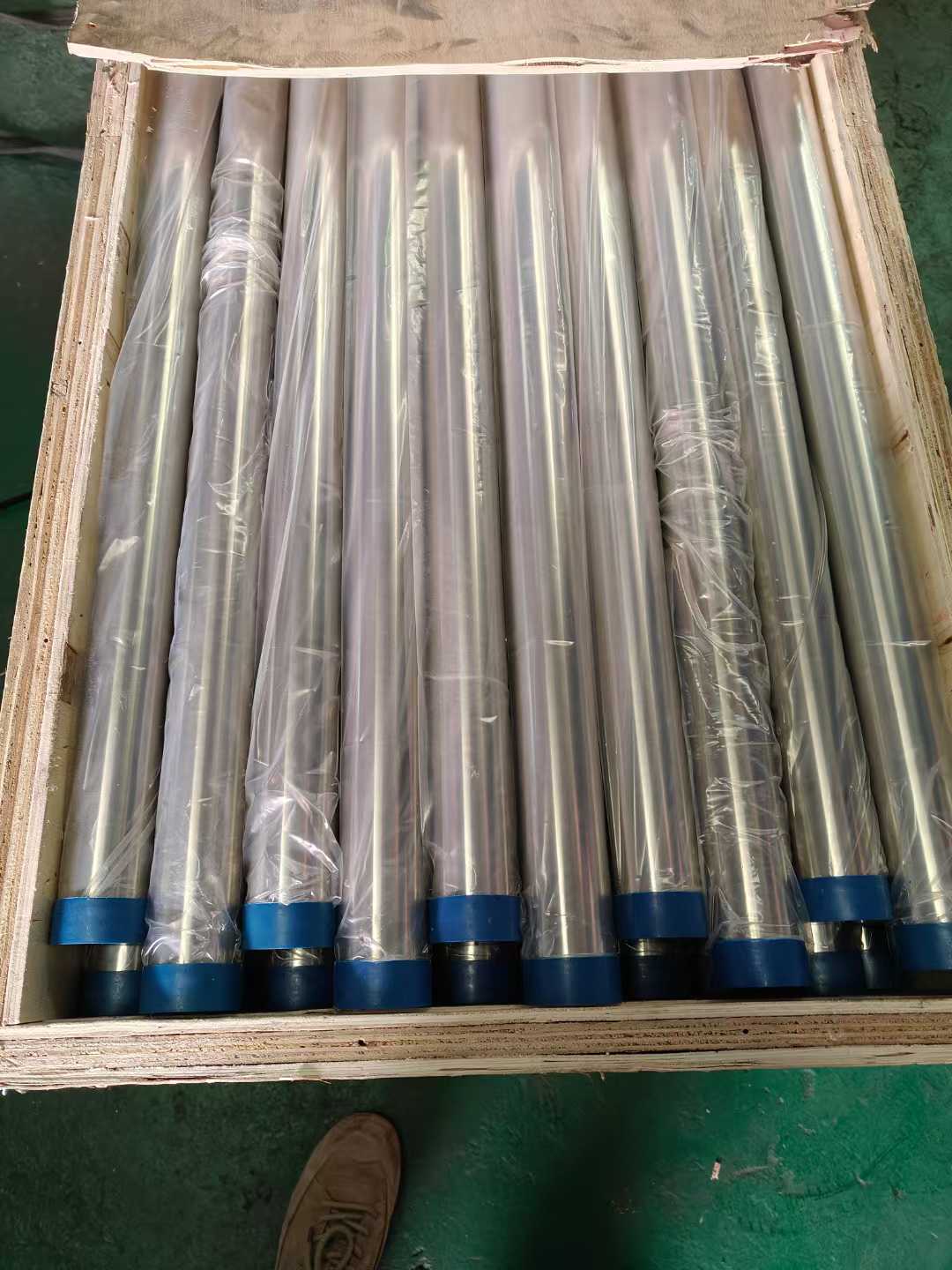
Stainless Steel Seamless Pipe Grade Comparison
| Grade | C% max | Ni% | Cr% | Mo% | Key Property | Best For |
|---|---|---|---|---|---|---|
| 304 | 0.08 | 8.0–11.0 | 18.0–20.0 | – | Excellent formability and weldability | General refinery piping and process lines |
| 304L | 0.03 | 8.0–12.0 | 18.0–20.0 | – | Resistant to intergranular corrosion after welding | Welded heat exchangers and storage tanks |
| 316 | 0.08 | 10.0–14.0 | 16.0–18.0 | 2.00–3.00 | Added molybdenum improves pitting corrosion resistance | Chemical petrochemical and seawater cooling loops |
| 316L | 0.03 | 10.0–14.0 | 16.0–18.0 | 2.0–3.0 | Low carbon plus Mo for chloride-rich environments | High-temp refinery equipment exposed to chlorides |
| 321 | 0.08 | 9.0–12.0 | 17.0–19.0 | – | Titanium stabilization prevents chromium carbide precipitation | Furnace tubes and expansion joints in 400–800 °C |
| 310S | 0.08 | 19.0–22.0 | 24.0–26.0 | – | High-temperature oxidation resistance and creep strength | Radiant tubes and heat treatment furnace parts |
How to Choose the Right Grade for Your Application
- Define the maximum operating metal temperature of the component based on the refining process.
- Determine the corrosive environment — look for the presence of chlorides, sulfur, polythionic acid, or caustic media.
- Select the minimum metal temperature for impact testing if the code requires low-temperature toughness.
- Choose the base grade: start with 304L for mild environments below 425 °C, move to 316L for chloride or pitting risk, and consider 321 or 310S above 550 °C.
- Verify that the selected grade is available in seamless form under ASTM A312 or EN 10216-5 with the required wall thickness and tolerances.
- Confirm the mill test certificate type (EN 10204 3.1 or 3.2) and the non-destructive testing requirements (hydro, eddy current).
Applications Across Industries
- Oil & Gas: downhole tubing, process piping, and high-pressure manifolds in sour service.
- Chemical & Petrochemical: heater tubes, reformer effluent lines, and reactor internals exposed to hydrogen.
- Power & Energy: superheater tubes, boiler feed water piping, and geothermal well tubing.
- Food & Beverage: sanitary tube for CIP lines and heat exchanger plates with hygienic surface finishes.
- Pharmaceutical & Medical: ultra-clean 316L tubes for sterile utilities and bioprocess skids.
- HVAC & Heat Exchangers: condenser tubes and flooded evaporator tubes using 304/316L.
- Marine & Shipbuilding: seawater cooling lines and exhaust systems using 316L or duplex 2205.
Standards & Certifications
- ASTM A312 — seamless and welded stainless steel pipe for high-temperature and general corrosive service.
- ASTM A213 — seamless ferritic and austenitic alloy steel boiler, superheater, and heat-exchanger tubes.
- ASTM A269 — seamless and welded austenitic stainless steel tubing for general service.
- EN 10216-5 — seamless stainless steel tubes for pressure purposes.
- ISO 9001 — quality management system certification.
- ASME SA312 — boiler and pressure vessel code adoption of ASTM A312.
Frequently Asked Questions
Which stainless steel seamless pipe grade is best for high-temperature refinery equipment?
In refineries, 316L is the most versatile grade for temperatures up to ~500 °C because it combines low carbon (max 0.03%) with molybdenum (2–3%) for chloride resistance. For higher furnace temperatures, 321 or 310S are commonly used. ASTM A312 allows all these grades, and EN 10216-5 covers their mechanical verification.
Is 304L or 316L better for a refinery heat exchanger?
316L is usually chosen when the cooling water or process fluid contains chlorides or high sulfides, because molybdenum improves pitting resistance. 304L has similar strength but lower corrosion resistance. For heat exchanger tubes, 304L works in clean service, but 316L extends tube life and reduces the risk of chloride stress corrosion cracking.
What is the difference between ASTM A312 and ASTM A213 for seamless pipe?
ASTM A312 covers seamless and welded stainless steel pipe used in general high-temperature service, while ASTM A213 covers seamless ferritic and austenitic alloy steel boiler, superheater, and heat-exchanger tubes. A213 calls for tighter dimensional tolerances and more rigorous testing for inner pressure service. Both standards are commonly used in refinery procurement.
Need pricing, mill test certificates, or a custom Seamless Pipe & Tube quote? Contact TeCarve’s engineering team.
Can I purchase seamless stainless steel pipes from China with an ASTM A312 certificate?
Yes. TeCarve supplies seamless pipes in 304 and 316L with a complete EN 10204 3.1 certificate that states chemical composition, mechanical properties, and hydrotest results. The same material is documented as meeting ASTM A312 specification. You can request a 3.2 certificate if a third-party inspection is required.
What is the minimum order quantity for stainless steel seamless pipe from TeCarve?
TeCarve sets an MOQ of 100–300 kg for trial orders. For a standard production order, a full heat lot is more cost-efficient. For custom sizes, the MOQ is one metric ton or one heat of material, whichever yields a better price. Smaller batches are accepted for stock grades such as 304L and 316L.
How long does it take to deliver seamless stainless steel pipe from China?
Lead time is 10–25 days after deposit depending on the grade, size, and surface finish. Stocked common sizes can ship within 10 days. Custom seamless pipe produced at TeCarve’s Wenzhou partner factory typically takes 20–25 days including eddy current testing and certificate preparation.
What surface finishes are available for sanitary and food-grade stainless steel pipe?
For sanitary tube, TeCarve offers polished finishes from 180 to 320 grit, mirror finish (bright annealed), and matte or satin finish. For chemical or refinery applications, pickled and annealed is standard. You can specify an internal roughness Ra ≤ 0.8 μm for clean service.
What is the maximum test pressure for hydrotesting stainless steel pipe per ASTM A312?
ASTM A312 does not set a single global pressure; the minimum hydrostatic test pressure is calculated from the pipe wall stress, typically when the combined stress reaches 50% of the specified yield strength at room temperature. TeCarve’s hydro test records show all tested pipes satisfy this rule without leaking.
Are TeCarve’s stainless steel seamless pipes suitable for high-pressure hydrogen service?
Hydrogen service requires a material with adequate resistance to hydrogen embrittlement. 316L is commonly used below 350 °C, while 321 is chosen for higher temperatures. Confirm the working temperature, partial pressure, and hardness limits with the engineer. TeCarve can provide hardness testing and tensile data for the selected heat.
How do I get a quotation for a custom seamless pipe size for an oil & gas project?
Email sales@tecarve.com with the desired OD (e.g., 25–600 mm), wall thickness, grade (e.g., 316L), quantity in kilograms, and required certificate. You can also send a drawing or call WhatsApp +86 189 6804 2695. TeCarve responds within 24 hours.
When selecting a high-temperature seamless pipe for refinery equipment, start with ASTM A312 and EN 10216-5 as your contractual backbone. Then confirm that the Chinese supplier offers full chemistry traceability, eddy current testing, and a mill test certificate that matches the ordered grade. TeCarve combines manufacturing experience in Foshan and Wenzhou with a 10,000-ton annual capacity, and the company is comfortable serving 50+ countries with export documentation and flexible incoterms. For a quick estimate, send your OD, wall thickness, grade, and quantity to sales@tecarve.com.
TeCarve Stainless supplies stainless steel pipes and tubes manufactured to ASTM / EN / GB.
Sizes: custom
Grades: 304, 304L, 316, 316L, 321, 310S, 201, 430, 904L, Duplex 2205 | MOQ: 100–300 kg (smaller trial orders available) | Lead Time: 10–25 days after deposit
Email: sales@tecarve.com
WhatsApp: +86 189 6804 2695
Website: https://tecarvepipes.com
Response within 24 hours.
Related Resources
- Seamless Pipe vs Welded for High-Pressure Boilers
- ASTM A312 Stainless Pipe Supplier ISO-Certified
- Stainless Welded Pipe Grades for Refinery Pipelines
- Seamless Pipe vs Welded for High-Pressure Boilers
Need pricing, mill test certificates, or a custom Seamless Pipe & Tube quote? Contact TeCarve’s engineering team.