

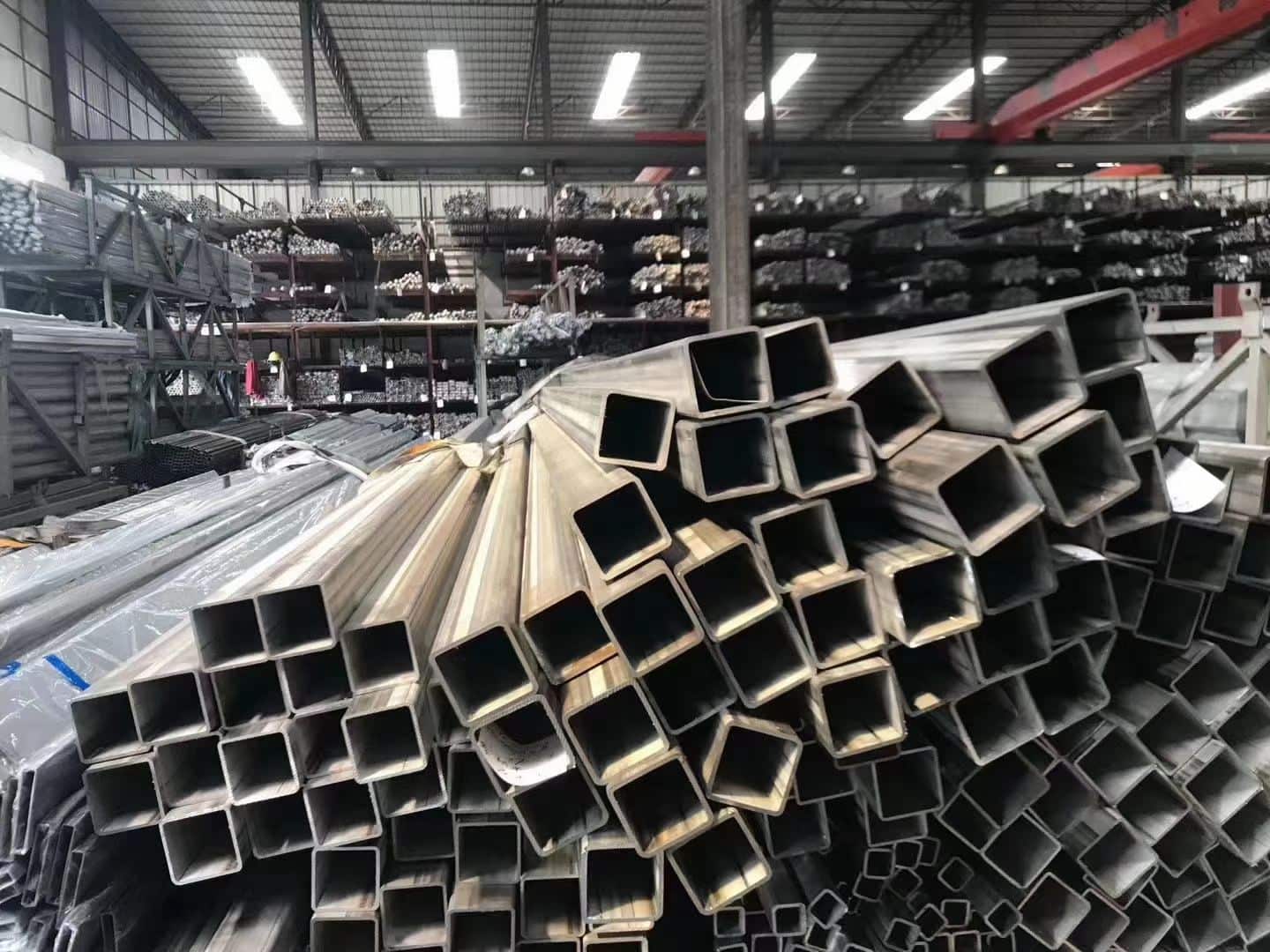

Stainless steel structural and ornamental tubing plays a vital role in modern construction and architectural engineering. From soaring curtain wall mullions and airport terminal canopies to precision balustrades, commercial storefronts, and bespoke interior installations, architects, structural engineers, and procurement managers rely on hollow structural sections (HSS) and decorative tubing to deliver both structural integrity and enduring aesthetics. Unlike process piping designed strictly for pressurized fluid containment, architectural tubing must satisfy a rigorous balance of mechanical strength, deflection limits, dimensional accuracy, weld seam integrity, and surface finish uniformity under diverse atmospheric conditions.
Selecting the optimal stainless steel profile—whether square pipe, rectangular tube, or decorative ornamental section—requires a comprehensive understanding of alloy metallurgy, manufacturing standards, corner radius geometry, surface finishing techniques, and fabrication behaviors. This technical guide outlines the engineering criteria, international standard specifications, grade selection matrices, and practical procurement considerations for stainless steel tubing across architectural and construction projects.
Key Architectural & Structural Applications
In commercial and residential construction, stainless steel tubing is deployed across several critical application categories, each presenting distinct mechanical loads and environmental exposure profiles:
1. Curtain Wall Façades & Glazing Support Framing
Modern building envelopes utilize glass curtain wall systems that require slender, high-strength structural profiles capable of resisting heavy wind loads while maximizing transparency. Rectangular and square stainless steel hollow sections serve as vertical mullions, horizontal transoms, and secondary support frameworks. The structural section must resist torsional forces and lateral deflection under peak gust pressures while maintaining tight straightness and twist tolerances to ensure weather-tight seal alignment and prevent point-loading on glass panels.
2. Structural Canopies, Space Frames & Atrium Trusses
Large-span architectural structures—such as airport entrance canopies, sports stadium concourses, railway terminal roofs, and glass-covered central atriums—rely on square and rectangular hollow sections for primary structural columns, rafters, and space trusses. Stainless steel HSS profiles offer a high strength-to-weight ratio, allowing engineers to design lighter, more efficient frameworks that eliminate the ongoing maintenance and repainting costs associated with coated carbon steel in hard-to-reach overhead locations.
3. Balustrades, Guardrails & Handrail Systems
Pedestrian barriers, staircase railings, and balcony balustrades in commercial centers, transit stations, and residential developments demand a synthesis of structural load resistance and tactile aesthetics. Handrails and posts must withstand mandated horizontal design loads (often 0.75 kN/m to 1.5 kN/m depending on local building codes) while presenting flawless, weld-conditioned surfaces free from sharp edges or visible seam imperfections. In outdoor public infrastructure and coastal boardwalks, resistance to chloride pitting and atmospheric staining is paramount.
4. Interior Partitions, Shopfront Framing & Decorative Metalwork
Luxury retail shopfronts, hotel lobbies, corporate partitions, display cases, and elevator surrounds frequently utilize decorative stainless steel tubing. Here, visual perfection, precise corner geometry, and specialized surface finishes—such as brushed hairline, 8K mirror polish, or PVD colored coatings—drive the specification process. Tight dimensional tolerances are essential to achieve seamless mitered joints and flush interfaces with surrounding glass, stone, and woodwork.
TeCarve Product Profiles, Dimensions & Technical Standards
TeCarve supplies three primary categories of stainless steel tubing engineered specifically for structural, mechanical, and architectural construction. All profiles are manufactured with controlled dimensional tolerances, precise wall thickness distribution, and fully conditioned weld seams.
| Product Category | Available Grades | Standard Dimension Ranges | Manufacturing Standards |
|---|---|---|---|
| Square Pipe & Tube | 304, 304L, 316, 316L, 201 | 10 mm × 10 mm to 200 mm × 200 mm; custom wall thicknesses from 0.5 mm to 8.0 mm | ASTM A554, ASTM A312, EN 10296-2, EN 10210-1, JIS G3446, JIS G3466, GB/T 18705, GB/T 19228 |
| Rectangular Pipe & Tube | 304, 304L, 316, 316L, 201, 430 | Width: 10 mm to 200 mm; Height: 10 mm to 100 mm; custom wall thicknesses from 0.6 mm to 8.0 mm | ASTM A554, ASTM A312, EN 10296, EN 10217-7, JIS G3446, JIS G3468, GB/T 12770, GB/T 18705 |
| Decoration Pipe & Tube | 201, 304, 304L, 316, 316L | Square, rectangular, round, and custom ornamental profiles; wall thicknesses from 0.4 mm to 3.0 mm | ASTM A554, EN 10088-2, JIS G3446, GB/T 18705 |
International Standards Overview
Navigating global building codes requires compliance with regional and international specifications:
- ASTM A554: The standard specification for welded stainless steel mechanical tubing. Covers as-welded, annealed, and cold-finished ornamental and structural tubing where appearance, mechanical properties, and formability are critical.
- ASTM A312: Specified when structural hollow sections are integrated into heavy-duty architectural load-bearing columns or industrial building structures requiring pressure containment ratings and rigorous non-destructive testing.
- EN 10296-2 / EN 10210-1 / EN 10217-7: European harmonized standards governing welded non-circular tubes for structural and mechanical engineering, establishing yield strength classes, impact properties, and geometrical tolerances for CE-compliant construction.
- JIS G3446 / JIS G3466 / JIS G3468: Japanese industrial standards specifying stainless steel pipes for machine, architectural, and general structural purposes, standardizing section modulus properties and corner radii.
- GB/T 18705 / GB/T 12770: Chinese national standards covering welded stainless steel tubes for decoration, mechanical structures, and general architectural applications.
Metallurgical Grade Selection Matrix for Building Envelopes
Selecting the correct stainless steel alloy is the most crucial decision in architectural specification. Corrosion resistance, mechanical yield strength, weldability, and lifecycle cost vary significantly across austenitic, ferritic, and lower-nickel grades.
| Grade | Alloy Type | Nominal Composition | Corrosion Resistance | Typical Architectural Application |
|---|---|---|---|---|
| 304 / 304L | Austenitic | 18% Cr, 8% Ni (304L: C ≤ 0.03%) | High (Urban, rural, climate-controlled interiors) | Curtain wall transoms, indoor balustrades, canopy trusses, structural columns, decorative screens |
| 316 / 316L | Austenitic (Mo-alloyed) | 16-18% Cr, 10-14% Ni, 2-3% Mo | Superior (Marine atmospheres, coastal zones within 5 km of sea, swimming pool enclosures, deicing salt exposure) | Coastal balustrades, exterior façade mullions, bridge railings, marine terminal canopies, outdoor light poles |
| 201 | Austenitic (Mn-substituted) | 14-16% Cr, 3.5-5.5% Ni, 5.5-7.5% Mn | Moderate (Dry, climate-controlled indoor environments only) | Interior furniture frames, dry indoor retail displays, decorative ceiling baffles, indoor partition framing |
| 430 | Ferritic | 16-18% Cr, 0% Ni | Moderate (Indoor, non-condensing commercial spaces) | Interior trim, non-structural decorative panel framing, appliance and elevator accent profiles |
Understanding Atmospheric Exposure Zones
Rural and Urban Interiors: Standard Grade 304 provides decades of maintenance-free service in dry, indoor, or mild suburban environments. For welded structural assemblies with wall thickness exceeding 3 mm, Grade 304L is recommended to prevent chromium carbide precipitation (sensitization) in the heat-affected zone (HAZ), preserving intergranular corrosion resistance without post-weld solution annealing.
Coastal, Marine & Heavy Industrial Environments: Airborne chlorides in coastal atmospheres (typically within 5 to 10 km of the shoreline) aggressively attack passive chromium oxide films, causing localized pitting and crevice corrosion known as "tea staining." Grade 316/316L contains 2% to 3% molybdenum, significantly elevating the Pitting Resistance Equivalent Number (PREN) to withstand chloride-laden fog and coastal winds. For outdoor public infrastructure, highway overpasses exposed to deicing salts, or water-park structures, 316/316L is the baseline engineering standard.
Economic Interior Alternatives: Grade 201 substitutes manganese and nitrogen for a portion of nickel, offering higher tensile yield strength at a lower material cost. However, because of reduced chromium and nickel content, Grade 201 must strictly be confined to dry, climate-controlled indoor spaces. Exposure to outdoor humidity, condensation, or exterior rain will result in surface rust and staining.
Architectural Surface Finishes & Aesthetic Treatments
In architectural metalwork, the surface finish defines both the visual identity of the building and its long-term resistance to atmospheric contaminants. Surface roughness (Ra) directly correlates with cleanability and corrosion performance—smoother finishes offer fewer microscopic crevices for airborne particulates and salts to accumulate.
| Finish Name | Surface Description | Typical Ra Value | Key Architectural Applications |
|---|---|---|---|
| Hairline (HL) / Brushed | Continuous unidirectional linear grinding grain | 0.3 – 0.6 μm | Commercial handrails, door frames, escalator cladding, column covers, elevator jambs |
| Satin / No. 4 | Short, non-directional fine grit polish (180–320 grit) | 0.2 – 0.5 μm | Curtain wall framing, public transit handrails, architectural bollards, lobby partitions |
| Mirror (8K / Super Mirror) | Highly reflective, specular, defect-free optical finish | < 0.1 μm | Luxury retail façades, ceiling feature canopies, decorative column wraps, sculpture armatures |
| Etched / Patterned | Chemical or mechanical micro-textured decorative relief | Varies by pattern | Elevator cab interiors, feature wall panels, decorative screening, architectural privacy grilles |
| Embossed | Mechanically rolled geometric 3D surface textures | Varies by depth | High-traffic wall cladding, vandal-resistant kick plates, tactile architectural accents |
| PVD Colored (Titanium Coated) | Physical Vapor Deposition coating (Gold, Rose Gold, Black Titanium, Bronze, Champagne) | Maintains base Ra | High-end hotel interiors, luxury brand shopfronts, custom architectural screens, signage framing |
Protective Packaging & Surface Film Management
Structural Section Geometry, Tolerances & Fabrication
Structural engineers designing with stainless steel square and rectangular hollow sections must account for geometric properties that differ from standard round pipe:
Corner Radius Control
The external corner radius (R) of square and rectangular tubing influences both structural aesthetics and section modulus properties. Standard ASTM A554 and EN 10210 profiles typically exhibit a corner radius between 1.5t and 3.0t (where t is the nominal wall thickness). For high-end architectural curtain wall transoms requiring sharp, clean aesthetic lines, TeCarve can supply small-radius profiles (R ≈ 1.0t to 1.5t) through specialized precision roll-forming dies.
Section Modulus & Deflection Efficiency
Rectangular hollow sections (RHS) provide superior moment of inertia (Ix) along the major axis compared to square sections of equivalent weight. When specified as curtain wall vertical mullions subject to perpendicular wind pressure, orienting the deeper section dimension parallel to the wind load optimizes deflection performance while minimizing visible frame sightlines from inside the building.
Weld Seam Conditioning
All structural and decorative tubing manufactured by TeCarve undergoes high-frequency induction (HFW) or automated TIG welding. For architectural and decorative applications (ASTM A554 / GB/T 18705):
- External Weld Bead: Flushed smooth and planished inline, followed by continuous abrasive grinding to blend seamlessly into the adjacent tube face.
- Internal Weld Bead: Maintained controlled or rolled flat where internal structural sleeves, spigots, or connectors are inserted during site installation.
- Weld Integrity: 100% inline eddy current testing ensures complete weld fusion, preventing splitting during subsequent 90-degree bending, flanging, or hole punching.
Quality Verification & Mill Documentation for EPC Contractors
Engineering, Procurement, and Construction (EPC) contractors and façade fabricators require complete material traceability and third-party validation to satisfy project quality assurance plans. TeCarve provides comprehensive mill test certification with every shipment:
- EN 10204 Type 3.1 Material Test Certificates: Validating exact heat-number traceability, ladle chemical analysis (Cr, Ni, Mo, C, S, P, Mn, Si, N), and mechanical test results (tensile strength, yield strength, percentage elongation, and Rockwell/Vickers hardness).
- Dimensional Inspection Reports: Comprehensive verification of outer cross-sectional dimensions, wall thickness tolerances, squareness of sides (90° ± 0.5°), twist tolerances (≤ 1.5 mm/m), and straightness (≤ 1.0 mm/m).
- Corrosion Testing: Intergranular corrosion test reports according to ASTM A262 Practice E where specified for welded structural configurations.
- Third-Party Inspection (TPI): Full coordination with independent inspection agencies (such as SGS, BV, or TÜV) for pre-shipment witness testing, dimensional audit, and loading supervision.
Application-to-Specification Quick Reference Guide
Use the following summary matrix when preparing tender specifications or purchasing requisitions for building and architectural projects:
| Application Scenario | Recommended Profile Type | Standard Specification | Recommended Grade | Surface Finish |
|---|---|---|---|---|
| Curtain Wall Mullions & Transoms | Rectangular Hollow Section (RHS) | ASTM A554 / EN 10210-1 | 304L (Inland) / 316L (Coastal) | Satin No. 4 / Hairline |
| Atrium Canopies & Space Trusses | Square Hollow Section (SHS) | ASTM A554 / ASTM A312 | 304 / 304L / 316L | Mill Finish / Satin 240 Grit |
| Commercial Balustrades & Railings | Square & Rectangular Mechanical Tube | ASTM A554 / GB/T 18705 | 304 (Interior) / 316 (Exterior) | Hairline / 600 Grit Satin |
| Luxury Retail Shopfront Framing | Decorative Square & Rectangular Tube | ASTM A554 / EN 10088-2 | 304 / 316 | 8K Mirror / PVD Titanium Gold / Black |
| Interior Partition Grilles & Screens | Decorative Profile Tubing | ASTM A554 / GB/T 18705 | 201 / 304 | Hairline / PVD Rose Gold / Bronze |
Every architectural project involves unique engineering constraints, span requirements, and atmospheric exposure profiles. Sourcing the right tubing begins with confirming your structural dimensions, aesthetic finish specifications, and project environmental parameters. Contact TeCarve's engineering sales team to request material test reports, finish sample swatches, or a formal project quotation.
Related reading
Stainless Steel Square Pipe & Tube: Specifications, Grades, and Dimensions | Stainless Steel Rectangular Pipe & Tube: Structural and Ornamental Sections | Stainless Steel Decoration Pipe & Tube: Finishes, Colors, and Patterns | Square Pipe & Tube vs Rectangular Pipe & Tube: Key Differences