

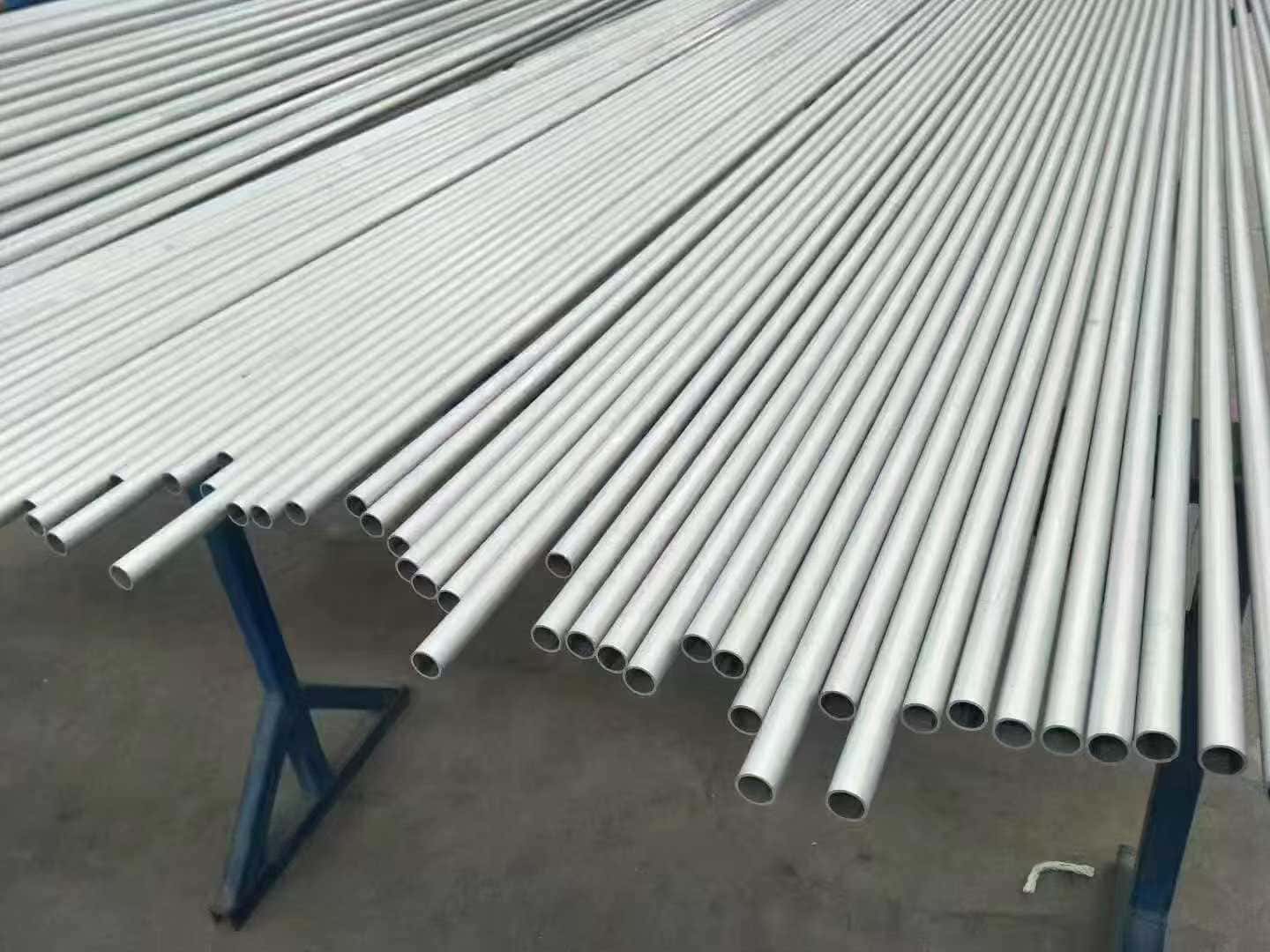

Stainless Steel Tube for Energy & Power Generation: Grades, Standards, and Selection Guide
Power generation runs on tight margins between “working” and “failing.” A boiler tube that creeps past its rated stress, a steam header weld that sensitizes during fabrication, or a geothermal gathering line that pits after eighteen months in chloride-rich brine — each of these is a forced outage, not a maintenance note. Stainless steel earns its place in this environment because it holds mechanical strength at temperature, resists steam and flue-gas oxidation, and — in the right grade — survives corrosive process fluids that would eat plain carbon steel in a single operating season.
This guide maps where stainless tube and pipe actually sit inside an energy or power generation facility, which standards and grades apply to each zone, and what to verify before specifying material for a project.
Where Stainless Tube Shows Up in a Power Plant
Boiler, superheater, and heat-exchanger tubes. Small-OD, thin-to-medium-wall seamless tube carries steam and combustion heat through the highest-stress zones of a conventional or waste-to-energy boiler — superheater and reheater banks, economizer coils, and feedwater heater bundles. These tubes run at the intersection of high pressure and high temperature, which is exactly the service ASTM A213 was written for.
Steam headers and high-pressure distribution pipe. Once steam leaves the boiler, it moves through larger-diameter, thick-wall pipe to turbines and downstream process equipment. This is a welded-pipe application, not a small-tube one — wall thickness and joint integrity matter more than surface finish.
Condensers and feedwater heaters. On the low-temperature side of the steam cycle, tube bundles handle continuous wet/dry cycling and, in coastal or brackish-water-cooled plants, chloride exposure from cooling water. Grade selection here leans on general corrosion resistance more than creep strength.
Flue-gas and economizer zones. Combustion byproducts — especially in biomass, waste-to-energy, and coal-adjacent facilities — carry sulfur and chlorine compounds that attack standard austenitic grades at elevated temperature. This is where higher-alloy grades earn their premium.
Geothermal gathering and reinjection lines. Geothermal brine is hot, saline, and often carries dissolved H2S and CO2 — a combination that makes chloride stress corrosion cracking the dominant failure mode for undersized stainless selections.
Solar-thermal receiver and header tube. Concentrated solar power plants use stainless tube as the working fluid conduit inside the receiver, where it faces high radiative heat flux plus thermal cycling from daily startup/shutdown, rather than continuous steady-state load.
Grades and Standards TeCarve Supplies for This Sector
| Standard | Coverage | Typical form |
|---|---|---|
| ASTM A213 | Seamless ferritic/austenitic boiler, superheater, and heat-exchanger tube | Small-OD seamless tube |
| ASTM A358 | Electric-fusion-welded pipe for high-temperature and general service | Thick-wall welded pipe |
| ASTM A511 | Seamless stainless steel mechanical tubing | Seamless tube |
| ASTM A789 | Seamless and welded ferritic/austenitic-ferritic (duplex) tubing | Seamless/welded tube |
| ASTM A999 | General requirements for wrought stainless steel pipe and tube | Cross-reference standard |
| EN 10216 / EN 10217 | Seamless / welded steel tubes for pressure purposes | Seamless & welded pipe |
| DIN 17456 | Stainless steel tube — technical delivery conditions | Seamless & welded tube |
| GB/T 14976 | Seamless stainless steel tube for fluid transport | Seamless tube |
| JIS G3459 | Stainless steel pipe | Seamless & welded pipe |
Grades: 304 / 304L, 316 / 316L, 317 / 317L, 309, 310, 321.
304/304L and 316/316L cover the majority of feedwater, condenser, and general steam-cycle service. 321 (titanium-stabilized) is the standard answer where fabrication involves sustained exposure in the 425–870°C sensitization range — more on why that matters below. 309 and 310 step up chromium and nickel content specifically for oxidation resistance at higher temperatures, which is the deciding factor in flue-gas and economizer zones rather than general corrosion resistance.
Why Sensitization Drives the Grade Decision, Not Just Temperature
Standard 304/316 stainless holds up well across most of the steam cycle, but welding — or sustained service — in the 425–870°C (800–1600°F) range carries a specific risk: chromium carbides precipitate at the grain boundaries, pulling chromium away from the adjacent metal and leaving it locally depleted. That depleted zone loses its corrosion resistance even though the bulk material tests fine, and it shows up later as intergranular attack right along the weld heat-affected zone — exactly where a superheater header or thick-wall EFW pipe joint can least afford it.
Two standard responses to this, both already in TeCarve’s grade lineup: low-carbon L-grades (304L, 316L, 317L), which starve the carbide-precipitation reaction of carbon in the first place, and titanium-stabilized 321, which ties up carbon as titanium carbide before chromium depletion can occur. Which one applies depends on the fabrication welding procedure and post-weld thermal history for the specific project — this is a decision made with the EPC or fabricator’s welding engineer, not a default we apply universally.
For A358 thick-wall pipe specifically, Class 1 construction — double-welded with complete radiographic (X-ray) inspection of the full weld length — is the configuration most commonly specified for high-pressure, high-temperature steam service. Lower inspection classes exist in the standard for less demanding general applications, but Class 1 is the baseline worth asking for when the line is carrying live steam.
Oxidation Resistance: Where 309/310 Earn Their Place
304 and 316 are corrosion-resistant, not oxidation-resistant at combustion-zone temperatures. Once flue gas or economizer surface temperatures push past roughly 870°C, standard austenitic grades start to scale. 309 and 310 carry meaningfully higher chromium (309: ~23%, 310: ~25%) and, in 310’s case, higher nickel, which forms a more stable protective oxide layer under sustained high-temperature, sulfur- and chlorine-bearing combustion atmospheres. In practice: specify 304/316 for the steam-side and water-side surfaces across most of the cycle, and reserve 309/310 for the fire-side or flue-gas-contact surfaces in biomass and waste-to-energy boilers where standard grades would scale prematurely.
Geothermal and Solar-Thermal: Two Different Failure Modes, One Shared Constraint
Geothermal brine failure is corrosion-driven — chloride stress corrosion cracking, accelerated by dissolved H2S/CO2 and elevated temperature, is the mechanism operators actually see in the field. 316L is the practical upper end of TeCarve’s current grade lineup for this service; duplex grades (2205/2507) are the industry’s usual answer for the most aggressive brine chemistries, but duplex is outside our current product range, so any project with confirmed high-chloride, high-temperature brine should have its chemistry checked against 316L’s limits before specification, not assumed to be a fit.
Solar-thermal receiver tube sees a different stress: daily thermal cycling from startup/shutdown plus concentrated radiative flux, rather than continuous corrosive exposure. Here the constraint is closer to the boiler-tube case — standard austenitic grades in seamless form (A213/A511) handle the thermal cycling and pressure containment; the corrosion side of the equation is a secondary consideration compared to a geothermal line.
Certification: What TeCarve Supplies vs. What the Project Requires
Boiler and pressure-piping projects typically call out ASME Boiler & Pressure Vessel Code (BPVC) compliance or, for European projects, the Pressure Equipment Directive (PED). These are system- and fabrication-level certifications that apply to the finished pressure component or the EPC/fabricator’s quality program — not something a tube and pipe mill holds independently. TeCarve supplies mill-level documentation (chemical/mechanical test reports, EN 10204 3.1 material certificates, third-party inspection where specified) that feeds into the fabricator’s BPVC/PED compliance file; buyers sourcing for a boiler or pressure-vessel project should confirm exactly which certificate package their code stamp requires before finalizing an order.
Matching TeCarve Product Lines to Power-Sector Applications
| Zone | TeCarve product line | Standard | Typical grade |
|---|---|---|---|
| Superheater / reheater / economizer tube | Seamless Pipe & Tube | ASTM A213 | 304/321-type service |
| Steam header / high-pressure distribution | Thick-walled Pipe | ASTM A358 | 304/304L, 316/316L |
| Feedwater heater / condenser bundle | Seamless Pipe & Tube | ASTM A213 / A511 | 304/316, L-grades for weld-heavy assemblies |
| Flue-gas / fire-side surfaces (biomass, WtE) | Seamless Pipe & Tube | ASTM A213 / A511 | 309/310 |
| Geothermal gathering line | Seamless Pipe & Tube | ASTM A312 / A999 | 316L |
| Solar-thermal receiver / header tube | Seamless Pipe & Tube | ASTM A213 / A511 | 304/316 |
Every project in this sector starts with the same three questions: what’s the design temperature and pressure, what’s actually in contact with the tube surface (steam, brine, flue gas), and what fabrication process will the tube go through before it’s in service. Send us those three answers and we’ll confirm the grade, standard, and mill documentation package before quoting.
Related reading
304 vs 316 vs 316L Stainless Steel Tube Selection Guide | Seamless Pipe & Tube for Oil & Gas Industry: Grades, Standards, and Selection Guide