

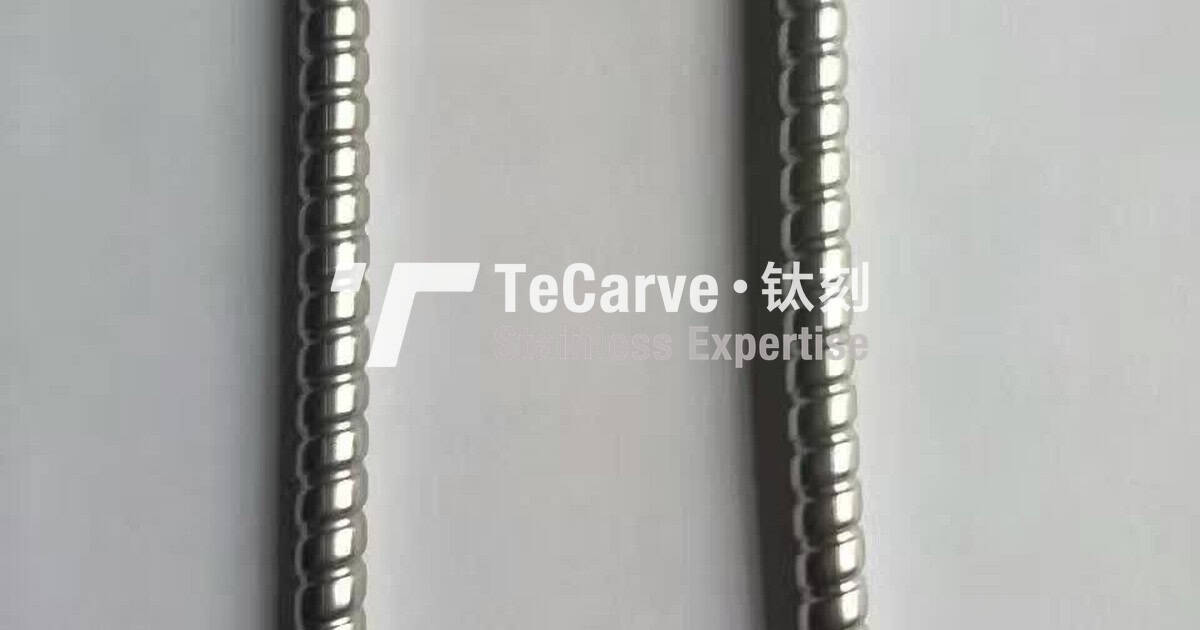

When it comes to heat exchanger tube procurement, China offers a complex mix of capable manufacturers and opportunistic traders. For a procurement engineer, the primary challenge is separating legitimate, traceable production from inconsistent or informal operations. This guide focuses on verified suppliers: companies with stable public records, documented manufacturing footprints, and a clear product range relevant to stainless steel heat exchanger tubes. We deliberately avoid ranking suppliers or using inflated “top ten” lists. Instead, each company is presented as a different sourcing solution, depending on your volume, application, and required certifications. The list is intentionally limited to organizations that can be cross-checked through public corporate data or credible industry references.

What to Look for in a Chinese Heat Exchanger Tube Supplier
When evaluating Chinese suppliers, first confirm the quality management system is certified to ISO 9001 and, if your project requires it, PED 2014/68/EU or ASME BPVC accreditation. Ask whether the manufacturer can supply grades such as 304/304L, 316/316L, 321, 310S, and duplex 2205 in both seamless and welded constructions. Dimensional tolerance is critical for tube-to-tubesheet joints; request tolerance statements to ASTM A213 or EN 10216-5. Wall thickness consistency affects heat transfer and collapse pressure, so ask for ultrasonic or eddy-current testing records. Also evaluate delivery time, MOQ flexibility, and export documentation: a complete package should include a mill test certificate (MTC) to EN 10204 3.1, certificate of analysis, and hydraulic pressure test reports.
Verified China Stainless Steel Heat Exchanger Tube Manufacturers and Suppliers
The following manufacturers are included because they have verifiable public records and relevant product lines for stainless steel heat exchanger tubes. They are intentionally not ranked; each serves a different procurement profile. Use the notes to decide which supplier fits your project size and technical requirements.
Zhejiang Guanyu Steel Tube (Songyang / Wenzhou, Zhejiang)
Zhejiang Guanyu Steel Tube is a specialist in heat-exchanger and precision tubing, with operations in Songyang and Wenzhou, Zhejiang province. The company is also associated with the public tubingchina.com platform, which makes it easier to locate product specifications and contact channels. For procurement engineers, this is a middle-market option that can respond to custom ODM orders and small- to medium-sized batches. Because Guanyu’s core focus is tube production, you can reasonably expect dedicated cold-drawing, testing, and finishing lines. If you are sourcing small quantities for prototype or maintenance, Guanyu’s flexibility may be an advantage. Before ordering, request a full MTC and verify that the material complies with the specific ASTM A213 or EN 10216-5 grade you need.
Zhejiang Jiuli Hi-Tech Metals (Huzhou, Zhejiang)
Zhejiang Jiuli Hi-Tech Metals, part of the Jiuli Group, was founded in 1987 and is a publicly listed group based in Huzhou, Zhejiang. It is a large producer of stainless steel and special alloy pipe and tube, including products suitable for heat exchangers, boilers, and pressure piping. The company’s listed status means it publishes audited financial results and maintains a formal enterprise governance structure, which can simplify vendor qualification for large projects. The group’s scale also gives it leverage in raw material procurement, which can stabilize pricing on long-term contracts. When sourcing heat exchanger tubes from Jiuli, clarify whether the specific plant is certified for ASME or PED, and request project-specific material test reports and welding procedure qualification records if welded tubing is ordered.
Baosteel (Shanghai)
Baosteel, headquartered in Shanghai, is one of China’s largest state-owned steel groups. Its scale and public corporate records make it a credible source for high-volume stainless steel procurement, though heat exchanger tube buyers may need to work through a trading subsidiary or specialty pipe division. Baosteel’s production spans many steel families, so it is best used as a second-source or baseline for pricing large tonnages. For buyers who need large volumes and are willing to work within the mills’ sales structure, Baosteel’s supply chain is difficult to match. For heat exchanger tube applications, confirm that the specific product line is seamless or welded, request the relevant grade designation (e.g., TP316L per ASTM A213), and ask for batch-level chemical and mechanical test reports rather than assuming a general mill certificate covers your order.
TISCO / Taiyuan Iron & Steel (Taiyuan, Shanxi)
TISCO, or Taiyuan Iron & Steel, is a large state-owned stainless steel group based in Taiyuan, Shanxi province. It supplies a broad range of stainless steel flat and long products, and it is frequently involved in large infrastructure and energy projects. For a procurement engineer, TISCO is a viable option when you need consistent supply of common austenitic grades such as 304L and 316L, and when your project can work within the lead times and minimum order quantities of a major mill. Because TISCO also produces stainless steel slabs and coils, a full traceability chain back to melting can be established. Since TISCO is not a dedicated tube manufacturer, you should request details on the specific converting mill or trading entity, and require an MTC that ties the heat number back to the original stainless steel feedstock.
Walsin Lihwa / Changshu Walsin Specialty Steel (Changshu, Jiangsu)
The Walsin Lihwa group operates specialty steel production facilities in Changshu, Jiangsu province. The company has publicly stated an annual capacity of around 30,000 tons for its specialty steel unit, indicating a meaningful production scale. Walsin Lihwa is known for stainless and special alloy products, and its long history in wire and rod manufacturing also gives it access to raw material streams that support tube production. This makes Walsin Lihwa a reasonable option when your design calls for specialty grades or when you want a supplier with a strong upstream metal background. When considering this supplier for heat exchanger tubes, verify the exact product scope and whether the Changshu facility produces finished tubing or semi-finished tube shell, then request samples to confirm surface quality and dimensional consistency.
Note on due diligence: The companies listed above are credible starting points, but a “verified supplier” is not the same as a pre-qualified supplier. Even a large state-owned group can have inconsistent quality across different subsidiaries. Always request a sample order, audit the production line, and require a detailed MTC before placing a production order. Never rely solely on an online profile or a trading agent’s claim.
Overall, the supplier market consists of three tiers: specialist tube mills that offer flexibility and technical focus, large integrated producers that provide purchasing power and traceability, and specialty alloy producers that cover niche grades. Your choice should be driven by project size, required certifications, and whether you need custom tubing sizes. The verification notes in this guide are meant to help you identify which tier matches your RFQ.

How to Evaluate and Select a Heat Exchanger Tube Supplier
Use the following criteria to build a shortlist and secure the right supplier for your application. These points are written specifically for stainless steel heat exchanger tubing in pressure service.
- Request a completed traceability matrix: for every heat number, require the chemical composition, mechanical properties, hydrostatic test pressure, and any heat-treatment parameters.
- Specify the governing procurement standard, such as ASTM A213/A213M for seamless tubes or ASTM A249/A249M for welded tubes, and state the grade and UNS number (e.g., S31603) on your RFQ.
- For austenitic grades in chemical service, ask for intergranular corrosion testing per ASTM A262 Practice E (Copper-Copper Sulfate) or equivalent, and require written acceptance criteria.
- Check wall thickness consistency by reviewing prior batch inspection reports; ask about continuous eddy-current testing or ultrasonic testing coverage for welded and seamless tubes respectively.
- Demand that all welded tubes be produced from annealed and pickled strip, and require a weld seam finishing procedure (e.g., cold worked, solution annealed, pickled) to match your heat exchanger design.
- Evaluate the supplier’s packaging and export documentation: stainless steel tubes should be bundled with plastic caps, steel pallets, and moisture-protective wrapping; documents must include an MTC per EN 10204 3.1 and a certificate of origin.
- Ask about sample policy and pilot production: for critical heat exchanger bundles, it is reasonable to order a single tube or small batch for dimensional and metallurgical verification before full production.
- Confirm financial and corporate standing by checking the business license number and, if listed, the annual report; use public databases such as the National Enterprise Credit Information Publicity System for unlisted companies.
Once you have narrowed your list, request a documented quality plan that includes incoming material inspection, in-process checks, final destructive and non-destructive tests, and packing and marking details. For heat exchanger tubes, pay particular attention to the internal surface condition; a rough bore can increase fouling and pressure drop. Ask the supplier to confirm the surface roughness average, usually expressed as Ra in micrometres, and whether the tubes are supplied in annealed or pickled condition.
Need pricing, mill test certificates, or a custom Heat Exchanger Tube quote? Contact TeCarve’s engineering team.
Frequently Asked Questions
What material grades are commonly used for stainless steel heat exchanger tubes?
Common grades include TP304, TP304L, TP316L, TP321, TP310S, and duplex 2205 (UNS S32205). Selection depends on service temperature, corrosive media, and applicable design code. Always specify the UNS designation alongside the conventional name to avoid variation between Chinese and Western commercial grades. For urea or high-temperature service, you may also specify TP310S or alloy 800H.
What standards apply to stainless steel heat exchanger tubes?
For seamless tubes, ASTM A213/A213M is the most widely used specification. Welded tubes are often supplied to ASTM A249/A249M, while ASTM A312 covers general stainless pipe. In Europe, EN 10216-5 governs seamless stainless pressure tubes. Always reference the specific standard and edition year in your PO; standards update frequently and a strict requirement will avoid disputes.
What is the difference between seamless and welded heat exchanger tubes?
Seamless tubes are pierced from a solid billet and have a uniform, continuous wall. Welded tubes are formed from strip and longitudinally welded; they can offer tighter wall tolerances and lower cost. For heat exchanger service, welded-and-drawn or welded-and-annealed tubes are common, and the weld seam must be tested by eddy current or X-ray if required by the specification.
How do I verify a Chinese supplier’s mill test certificate?
Require an MTC to EN 10204 3.1 or 3.2 that includes the heat number, chemical composition, mechanical properties, and hydrostatic test result. Cross-check the heat number on the tube and compare values against your specification. For critical orders, hire an independent agency such as SGS or Bureau Veritas to witness testing and perform random identity checks on packing.
What is the typical wall thickness tolerance for heat exchanger tubes?
ASTM A213 specifies wall thickness tolerance of ±10% for most seamless austenitic stainless tubes. Precision cold-drawn tubes can achieve ±0.05 mm across the wall. Confirm the tolerance class in your purchase order because it directly impacts tube-to-tubesheet joint fit and heat transfer performance. For thermal performance, a tighter wall tolerance also makes hydraulic calculations more reliable.
Which duplex grade is most common for heat exchanger tubes in corrosive service?
Duplex 2205 (UNS S32205) is the most common choice. It provides about double the yield strength of 316L and far better resistance to chloride stress-corrosion cracking. Some applications use S31803 or lean duplex 2304; always specify the ferrite/austenite ratio and hardness limits for sour service. Confirm the supplier can provide the required heat treatment and impact test data.
What export documents does a Chinese heat exchanger tube supplier normally provide?
A standard package includes a commercial invoice, packing list, bill of lading, certificate of origin, and mill test certificate. Additional documents may include a pressure test report, third-party inspection certificate, and an insurance policy if requested. For EU imports, EN 10204 3.1 documentation is essential for material traceability and to meet the Pressure Equipment Directive (PED) 2014/68/EU.
How can I check whether a Chinese supplier is legally registered and reliable?
Ask for the business license number and verify it through China’s National Enterprise Credit Information Publicity System. For listed companies such as Jiuli or Baosteel, review their annual report or stock exchange filings. A plant audit should be part of your due diligence, focusing on production lines, testing equipment, and the quality system.
What is a reasonable MOQ for stainless steel heat exchanger tubes from China?
MOQs vary by supplier. Specialist tube mills may accept orders from 1-2 tons for standard sizes, while large integrated producers often require 5-10 tons or more for non-standard dimensions. If you only need a single exchanger, look for a distributor or trading company that can consolidate small orders, or ask if the mill can produce a “sample lot” at a higher unit price.
How long does it take to produce and ship heat exchanger tubes from China?
Typical production takes 3-6 weeks after order confirmation, depending on grade availability, quantity, and inspection requirements. UNS numbers and special testing can extend lead time. Sea freight from major Chinese ports to the US or Europe takes 20-35 days, so plan for a total lead time of 7-10 weeks. For urgent projects, air freight is possible but adds significant cost.
For technical specifications, mill test certificates, and custom Heat Exchanger Tube quotes, visit tecarvepipes.com.
Related Resources
Need pricing, mill test certificates, or a custom Heat Exchanger Tube quote? Contact TeCarve’s engineering team.