

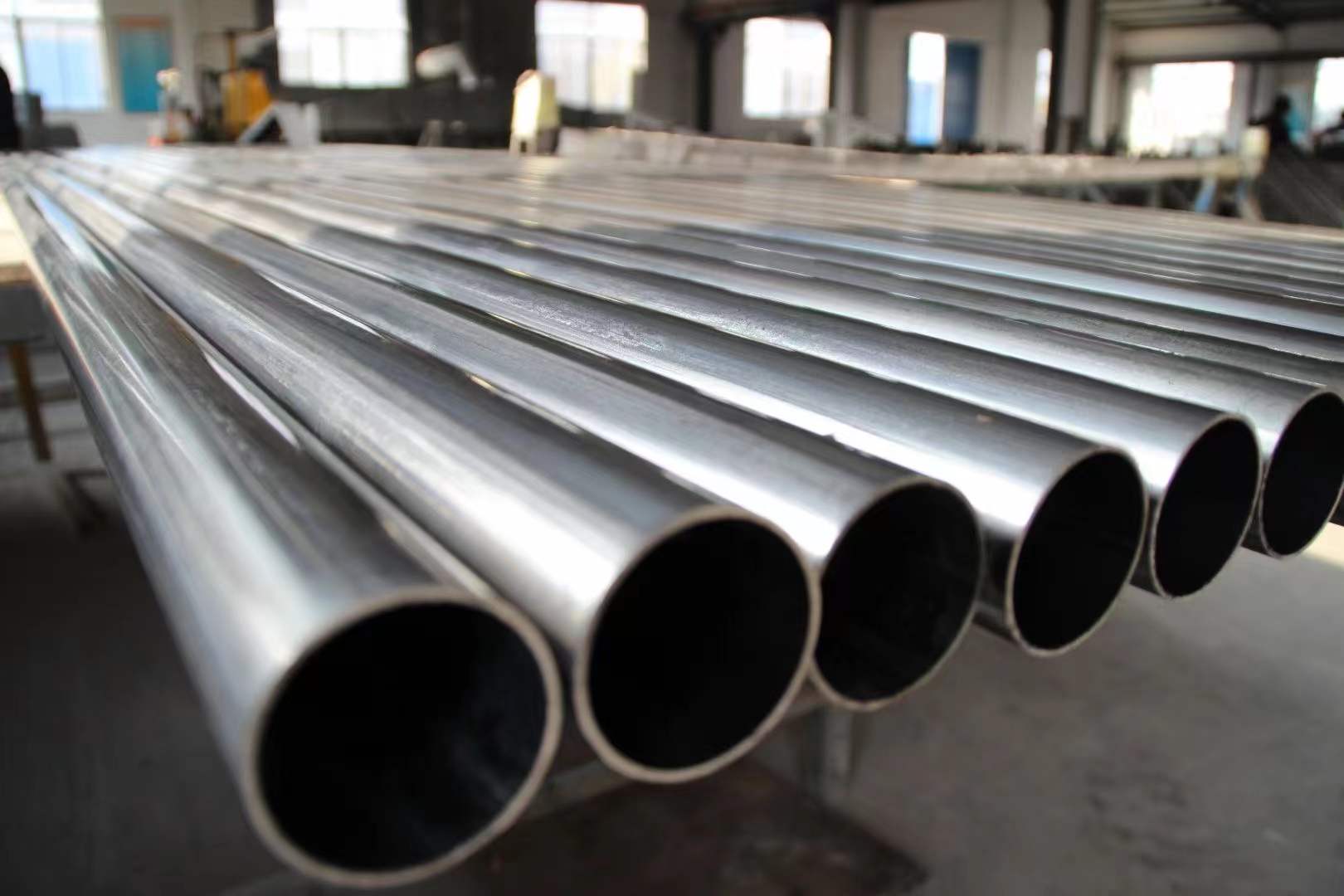

Water-treatment piping is selected at the intersection of corrosion exposure, water chemistry, fabrication method, hygiene requirements, and the approval rules that apply to the finished system. A grade name alone is not a complete specification. Buyers must define the service environment, the governing pipe standard, the required inspection documents, and any project-specific drinking-water listing before a purchase order is released.
For municipal treatment plants, potable-water distribution, industrial water systems, desalination pretreatment, and wastewater facilities, welded stainless steel pipe can provide a practical balance of corrosion resistance, clean internal surfaces, fabrication flexibility, and project cost. This guide explains how procurement and engineering teams can turn those requirements into a workable request for quotation using TeCarve’s verified welded-pipe range.
Where Stainless Steel Pipe Fits in a Water-Treatment Plant
A treatment facility contains several different corrosion environments. Raw-water intake may carry suspended solids, chlorides, or organic matter. Process lines can be exposed to oxidants and cleaning chemicals. Finished-water piping must preserve water quality, while wastewater and sludge systems face variable chemistry and deposits. These services should not be grouped under one generic “water pipe” specification.
Typical applications for welded stainless steel pipe include:
- Raw-water and process-water headers: larger diameters and fabricated spools where welded construction can be economical.
- Filtration and membrane skids: manifolds, interconnecting lines, backwash circuits, and cleanable equipment piping.
- Potable-water transfer and distribution: systems where corrosion products, internal cleanliness, and component approval require close control.
- Chemical dosing and disinfection areas: piping whose grade must be reviewed against the actual chemical concentration and operating temperature.
- Wastewater and reuse systems: aeration, clarified-water, treated-effluent, and utility lines where water composition can fluctuate.
- Desalination and coastal plants: services where chloride exposure makes grade selection and weld quality especially important.
The correct selection can change between adjacent process areas. A grade suitable for treated municipal water is not automatically suitable for warm, chloride-rich concentrate. Engineering teams should therefore issue service-by-service material schedules rather than assigning one stainless grade to an entire facility.
Grade Selection: 304L, 316L, and Duplex Options
TeCarve’s welded stainless steel pipe range includes 201, 202, 304, 304L, 316, 316L, 409, 410, 430, and duplex grades. For water-treatment procurement, 304/304L and 316/316L are the most common starting points, while duplex material may be considered for more severe chloride and strength requirements. Final selection must be based on the project’s water analysis, design temperature, disinfectant regime, fabrication procedure, and corrosion assessment.
304 and 304L: General Municipal Water Service
304 or low-carbon 304L is commonly considered for ordinary municipal potable-water and low-chloride utility service. The low-carbon grade is often preferred when extensive welding is required because it reduces the risk associated with sensitization in the heat-affected zone. It remains important to specify suitable welding consumables, shielding, post-weld cleaning, and passivation; the grade designation does not correct poor fabrication.
316 and 316L: Higher Chloride or More Demanding Chemistry
316/316L adds molybdenum and generally provides greater resistance to localized chloride attack than 304/304L. It is commonly considered for chloraminated water, higher-chloride raw water, coastal installations, and parts of desalination or reuse plants. That does not make 316L immune to pitting or crevice corrosion. Chloride level, temperature, stagnation, deposits, residual disinfectant, and crevice geometry must still be assessed together.
Duplex Grades: Severe Chloride Exposure and Strength
Duplex stainless steels such as 2205 combine higher strength with strong resistance to chloride stress-corrosion cracking and localized corrosion. They can be relevant to seawater desalination, brine handling, or other severe chloride duties. TeCarve lists duplex material within its welded-pipe grade range, but a duplex order should be treated as a project-specific requirement: confirm the exact grade, product standard, dimensions, heat treatment, welding procedure, filler metal, and inspection plan before manufacture.
| Service condition | Initial grade direction | Buyer verification |
|---|---|---|
| Ordinary municipal potable or utility water | 304 / 304L | Water analysis, disinfectant, temperature, approval requirements |
| Chloraminated or higher-chloride water; coastal plant | 316 / 316L | Chlorides, temperature, stagnation, crevices, cleaning chemistry |
| Seawater, brine, or severe chloride duty | Duplex grade such as 2205, subject to confirmation | Corrosion study, exact standard, welding and heat-treatment controls |
Standards: Separate Pipe Manufacture from Drinking-Water Approval
A robust specification distinguishes the manufacturing standard for the pipe from health-effects certification of the finished component or product line. These are different requirements and should never be treated as interchangeable.
AWWA C220 for Waterworks Stainless Steel Pipe
AWWA C220 is the American Water Works Association standard specifically addressing stainless steel pipe for water-treatment plants and water transmission and distribution systems. The current edition is C220-2023. Its scope covers pipe 1/2 inch (13 mm) and larger and includes seamless, straight-seam welded, and spiral-seam welded construction. A purchase order citing AWWA C220 should identify the applicable edition and all project options rather than relying on the standard number alone.
NSF/ANSI 61: Certification Is Product-Specific
NSF/ANSI 61-2025 addresses the health effects of drinking-water system components. The supplied research indicates that 45 U.S. states and two Canadian provinces require drinking-water components to comply. Austenitic grades 304, 304L, 316, and 316L have long been recognized, and the 2025 edition added duplex grades including 2205, 2304, 2101, and 2003.
That recognition does not mean a stainless steel grade is automatically NSF/ANSI 61 certified. Listing or certification applies to a defined manufacturer and product line under the certification body’s scope. TeCarve does not claim that its standard welded-pipe range is automatically NSF/ANSI 61 listed. If a project requires a listing, the buyer must request the current certificate, verify the manufacturer and exact product, check dimensions and end uses within scope, and confirm acceptance with the authority having jurisdiction.
TeCarve’s Verified Welded-Pipe Standards
The live TeCarve welded product page lists manufacturing options under ASTM A249, A269, A270, A312, A554, and A778; EN 10217, EN 10296, and EN 10312; DIN 17455 and DIN 11850; JIS G3448 and G3463; and GB/T 12771 and GB 19228. These standards serve different product forms and applications. The RFQ should state the exact standard and edition selected by the engineer, not provide the entire list as alternatives.
For example, ASTM A312 is widely used for austenitic stainless steel pipe, while ASTM A778 addresses welded, unannealed austenitic stainless tubular products for lower-temperature and corrosive service. EN 10312 is associated with stainless steel tubes for conveying aqueous liquids. The project designer must determine which standard, grade, dimensions, pressure class, and testing provisions fit the service.
Verified TeCarve Welded-Pipe Manufacturing Range
TeCarve’s published welded-pipe capability covers outside diameters from 6 mm to 1016 mm, wall thicknesses from 0.5 mm to 25 mm, and lengths up to 12 m. Available welding processes include TIG, plasma, laser, and ERW. Surface conditions listed on the live product page include annealed, pickled, polished, mirror, and satin finishes.
| Specification item | Verified published range | What to state in an RFQ |
|---|---|---|
| Outside diameter | 6-1016 mm | Exact OD and dimensional standard |
| Wall thickness | 0.5-25 mm | Nominal wall, tolerance, pressure/design basis |
| Length | Up to 12 m | Fixed or random length and end preparation |
| Welding process | TIG, plasma, laser, ERW | Applicable process and procedure qualification requirements |
| Surface condition | Annealed, pickled, polished, mirror, satin | Internal/external finish and cleanliness acceptance criteria |
These are manufacturing capability limits, not a promise that every combination of diameter, wall, grade, standard, and finish is available without review. Large diameters, duplex grades, special wall thicknesses, or project-specific inspections should be confirmed during quotation.
Welded Pipe Versus Seamless Pipe in Project Selection
Water-treatment buyers sometimes specify seamless pipe by habit even when the design does not require it. TeCarve’s published product information identifies welded pipe as a cost-effective option relative to seamless construction in appropriate low-pressure systems. Welded production also supports broad diameter coverage and can suit headers, fabricated manifolds, equipment interconnections, and treatment-plant utility lines. The decision should nevertheless come from the piping design code, pressure and temperature, corrosion allowance, cyclic loading, fabrication details, and owner specification—not price alone.
Where welded pipe is accepted, the longitudinal seam must remain part of the quality plan. The purchaser should identify the permitted manufacturing route, required weld examination, pressure testing, repair rules, and documentation. For critical chemical or high-chloride duties, review whether the weld metal and heat-affected zone provide corrosion performance compatible with the base metal. For large fabricated spools, also review field weld access, lifting limits, flange alignment, and the possibility of draining and cleaning each section.
Seamless construction may still be selected for small-bore, high-pressure, highly cyclic, or owner-mandated services. A mixed plant can legitimately use seamless tube in instrument or dosing circuits and welded pipe in larger process and distribution lines. The specification should make that boundary explicit so suppliers quote comparable scope.
Surface Condition, Welding, and Corrosion Control
Water systems often fail at fabrication details rather than in the middle of a straight pipe. Heat tint, embedded carbon-steel contamination, rough weld roots, uncleaned crevices, and stagnant dead legs can reduce the corrosion performance expected from the selected grade. A procurement specification should therefore address fabrication and commissioning as carefully as chemical composition.
- Weld condition: define internal bead acceptance, penetration, alignment, and any grinding or smoothing requirement.
- Post-weld treatment: specify removal of heat tint and appropriate pickling/passivation when required by the fabrication plan.
- Clean handling: segregate stainless material from carbon-steel tools, grinding dust, and storage racks that can cause iron contamination.
- Drainability: minimize dead legs and pockets that retain chlorinated water, solids, or cleaning chemicals.
- Finish selection: choose an internal surface condition based on cleanliness, deposit control, inspection, and cleaning needs rather than appearance alone.
Polished, satin, or mirror finishes are available within TeCarve’s range, but a decorative finish description is not a substitute for a quantified process-piping surface requirement. If roughness is critical, state the required measurement parameter, limit, location, sampling plan, and report format in the purchase specification.
Inspection and Documentation for Water Projects
The live TeCarve product specification states that raw material is sourced from certified mills, inline eddy-current or X-ray inspection is available according to the production route, surface and dimensional checks are performed, hydrostatic testing can be provided on request, and third-party inspection can be arranged. Buyers should convert those capabilities into a project inspection and test plan with clear hold points and acceptance criteria.
A practical documentation package may include the applicable material certificate, heat-number traceability, chemical composition and mechanical results, dimensional inspection, weld inspection results, hydrostatic test records when ordered, surface-condition verification, and packing identification. For duplex material, add the project-required phase-balance, heat-treatment, corrosion, or procedure documentation as specified by the engineer. For potable-water service, keep the current product-specific approval or listing documentation separate from the mill material certificate.
Procurement Checklist for EPC and Utility Buyers
- Describe the service: raw, potable, process, wastewater, seawater, brine, or chemical-dosing duty.
- Provide water chemistry, chloride range, operating and cleaning temperatures, disinfectants, pressure, and flow conditions.
- Specify grade, manufacturing standard and edition, OD, wall, length, ends, and fittings interface.
- State internal and external surface condition, weld-bead acceptance, cleaning, and passivation requirements.
- Identify required nondestructive examination, pressure testing, witnessing, and third-party inspection.
- List mandatory regulatory approvals, including exact NSF/ANSI 61 listing scope if applicable.
- Define marking, traceability, protective packaging, document language, and delivery schedule.
Early technical clarification prevents a common purchasing error: ordering a familiar grade under a broad standard and discovering later that the finish, inspection, certification scope, or water chemistry was never addressed. TeCarve can review welded-pipe dimensions, grade availability, manufacturing route, finish, and inspection options against a project RFQ. The final material and compliance decision remains with the project engineer and the relevant authority.
For an overview of the application range, visit TeCarve’s Stainless Steel Pipe for Water Treatment industry page.
Related reading
Stainless Steel Welded Pipe & Tube: Grades, Standards, Dimensions, and Manufacturing Options | ASTM A312 Stainless Steel Pipe: Seamless vs Welded Guide