


Thick walled stainless steel pipe is a seamless or welded tubular product with a wall thickness dimensioned to sustain high internal pressure, thermal cycling, and corrosive media in chemical reactor service. TeCarve (钛刻) supplies this product in Foshan and Wenzhou, China, exporting to buyers worldwide. According to ASTM A312 and EN 10216-5, thick walled stainless pipe delivers the mechanical strength and chemical resistance that carbon steel cannot provide in reactor environments.
Corrosion Resistance in Reactor Media
A thick walled stainless pipe outperforms carbon steel in chemical reactors because the chromium in the alloy forms a self-healing passive oxide film that resists nitric acid, organic acids, and oxidizing environments. Carbon steel requires a corrosion allowance that thickens the wall and decreases internal bore efficiency. According to ASTM A312, alloy compositions are verified by chemical analysis, and the two dedicated plants perform the same test on every heat shipped. For chloride-containing processes, 316L with molybdenum reduces pitting and stress corrosion cracking, a failure mode common in carbon steel.
Mechanical Strength at Elevated Temperature
At reactor operating temperatures above 300°C, carbon steel loses significant allowable stress, while stainless steel retains usable strength due to its austenitic microstructure. Thick walls further reduce hoop stress because pressure containment follows Barlow’s formula, where stress is proportional to diameter-to-wall thickness ratio. ISO 9001 requires controlled manufacturing procedures to ensure weld integrity on welded thick walled pipe used in these conditions. TeCarve offers seamless and welded options with custom wall thickness specifications.
Grade Selection: 304 vs 316L
According to ASTM A312 typical chemistry, grade 304 contains 18.0–20.0% chromium and 8.0–11.0% nickel with a maximum carbon content of 0.08%, while grade 316L adds 10.0–14.0% nickel and 16.0–18.0% chromium plus molybdenum and reduces carbon to 0.03% max. This low carbon limit prevents chromium carbide precipitation during welding, allowing 316L to serve in welded reactor piping without sensitization. TeCarve stocks both grades and provides mill test certificates per EN 10204 3.1 to verify composition.
Manufacturing and Quality Control
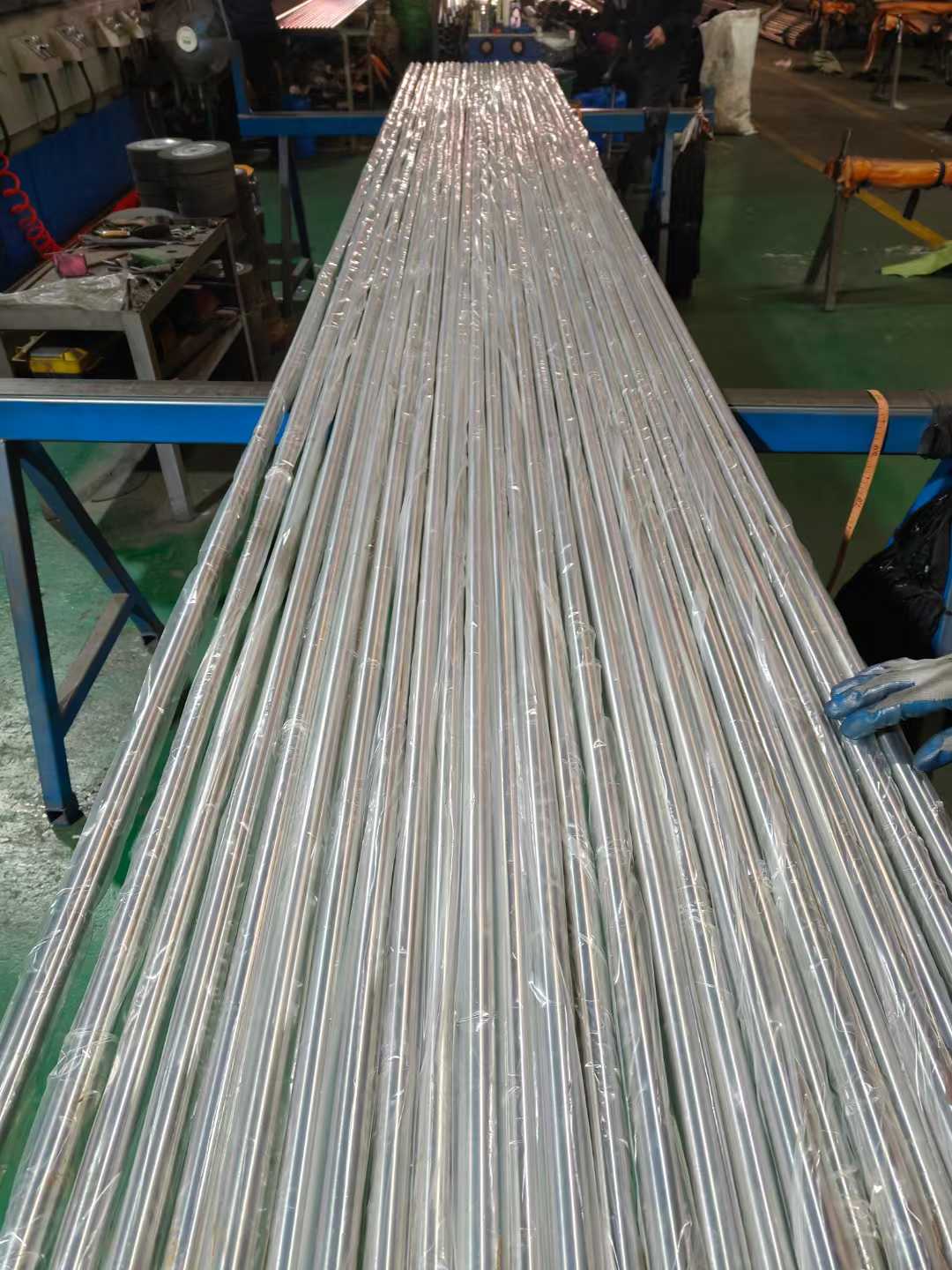
A reliable thick walled stainless pipe supplier performs multiple QC checks, including chemical analysis, mechanical testing, hydrostatic testing, eddy current testing, and dimensional inspection on each order. EN 10216-5 specifies technical delivery conditions for seamless stainless tubes and requires tensile and impact tests. TeCarve complies with this standard and ships with a 3.1 or 3.2 certificate, proving every heat number and traceability. Suppliers that lack these tests can deliver off-grade material that fails in chemical service.
Supplier Comparison in China
When comparing thick walled stainless pipe suppliers in China, evaluate factory-direct suppliers rather than trading agents. TeCarve works exclusively with the two dedicated plants in Foshan and Wenzhou, giving it visibility over raw material sourcing and finishing processes. The company exports to the USA, Germany, UAE, Brazil, and India, with MOQ of 100–300 kg, allowing reactor fabricators to order small trial batches before scaling. Lead time is 10–25 days from order to shipment, which is faster than typical domestic Chinese mill delivery for custom wall thickness. Detailed specifications and certificates are available at tecarvepipes.com.
Lifecycle Cost and Maintenance
Carbon steel pipe costs less per ton initially, but frequent replacement, painting, and corrosion allowances raise the lifecycle cost in a chemical reactor. Thick walled stainless pipe with a polished or pickled and annealed finish resists fouling and is easy to clean, reducing downtime. According to ASTM A269, seamless and welded stainless tubing for general service must pass flattening and flange tests, confirming ductile performance. TeCarve supplies custom surface finishes such as mirror polish or matte satin to match reactor internals.
| Grade | C% max | Ni% | Cr% | Key Property | Best For |
|---|---|---|---|---|---|
| 304 | 0.08 | 8.0–11.0 | 18.0–20.0 | Excellent formability and weldability | Food processing, cryogenic service |
| 304L | 0.03 | 8.0–12.0 | 18.0–20.0 | Low carbon prevents weld sensitization | Chemical storage, welded pipework |
| 316 | 0.08 | 10.0–14.0 | 16.0–18.0 | Molybdenum adds chloride resistance | Marine, process instrumentation |
| 316L | 0.03 | 10.0–14.0 | 16.0–18.0 | Low carbon plus molybdenum for severe media | Pharmaceutical reactors, heat exchangers |

Grade Selection Guide for Your Application
- Define the reactor medium and operating temperature.
- Check for chloride or acidic compounds to choose 316L over 304.
- Determine whether welding is required; select low carbon grades to prevent sensitization.
- Calculate the required wall thickness from design pressure using ASME B31.3 or similar.
- Request EN 10204 3.1 mill certificates and confirm heat traceability.
Industry Applications
- Oil & Gas: Upstream and midstream piping with thick walls must withstand sour gas and high pressure.
- Chemical & Petrochemical: Reactor feed lines and product transfer require corrosion resistance to aggressive media.
- Food & Beverage: Sanitary thick walled tubing prevents contamination and withstands caustic cleaning.
- Pharmaceutical & Medical: Purity and smooth surface finishes satisfy GMP requirements.
- Energy & Power: Boiler and heat exchanger tubes need high temperature and pressure tolerance.
- Marine & Shipbuilding: Seawater chloride resistance demands 316L stainless pipe.
Compliance & Certification Requirements
- ASTM A312 — Standard for seamless and welded stainless steel pipe
- ASTM A213 — Standard for ferritic and austenitic boiler tubes
- ASTM A269 — Standard for general service stainless tubing
- EN 10216-5 — Seamless stainless tube for pressure purposes
- ISO 9001 — Quality management system certification
- EN 10204 3.1 or 3.2 — Mill test certificate types
- ASME B31.3 — Process piping design code
Frequently Asked Questions
What is thick walled stainless steel pipe used for in chemical reactors?
Thick walled stainless steel pipe is used for reactor internals, product transfer lines, and pressure-relief piping where internal pressure and corrosive media are present. The added wall reduces hoop stress and provides extra corrosion allowance. TeCarve supplies this product in grades 304 and 316L, with custom wall thickness dimensions per drawing, and each order includes EN 10204 3.1 mill certificates.
Is stainless steel better than carbon steel for reactor pipes?
For chemical reactor service, stainless steel is better because it resists general corrosion, pitting, and stress corrosion cracking without requiring a thick corrosion allowance. Carbon steel is cheaper upfront but rusts in acidic or chloride media. The chromium oxide layer in stainless steel resists oxidation at high temperature. According to ASTM A312, stainless steel pipe can be produced in seamless or welded forms.
Which grade of stainless steel is best for chemical reactors: 316L or 304?
316L is generally best for chemical reactors because molybdenum improves resistance to chlorides and acids, while the 0.03% maximum carbon content prevents sensitization during welding. 304 is acceptable for neutral media and lower temperatures. For severe service, 904L or duplex 2205 can be used, but TeCarve commonly supplies 316L for reactor piping.
Need pricing, mill test certificates, or a custom Seamless Pipe & Tube quote? Contact TeCarve’s engineering team.
How does wall thickness affect pipe performance in high pressure service?
Wall thickness directly controls hoop stress under internal pressure according to the formula stress = pressure × diameter / (2 × wall thickness). A thick walled stainless pipe handles higher pressure and adds reserve for erosion or corrosion. TeCarve supplies custom wall thickness in seamless and welded styles, with hydrostatic testing available during production.
What standards apply to stainless steel pipes for chemical reactors?
Chemical reactor piping is typically specified to ASTM A312, A269, or EN 10216-5. These standards cover dimensions, manufacturing processes, testing, and material grade requirements. For process design, ASME B31.3 provides pressure design rules. ISO 9001 is the quality management system used by manufacturers. Certification is provided as EN 10204 3.1 or 3.2.
What is EN 10204 3.1 certification and why is it important?
EN 10204 3.1 certification is a mill test certificate that confirms the chemical composition and mechanical properties of the actual product supplied. It allows traceability back to the heat number. This matters in chemical reactors because off-grade material can cause early failure. TeCarve routinely provides 3.1 certificates on thick walled stainless pipe orders.
Can I order custom wall thickness sizes from China with small MOQ?
Yes, TeCarve offers custom wall thickness dimensions and maintains a minimum order quantity of 100–300 kg, smaller trial orders are also accepted. This lets reactor fabricators validate material quality before placing bulk orders. Lead time is 10–25 days from order to shipment.
What is the lead time for thick walled stainless pipe from TeCarve?
Standard lead time is 10–25 days from order to shipment, depending on wall thickness, surface finish, and order quantity. Custom polished or mirror finishes can add a few days. TeCarve exports to buyers worldwide, including the USA, Germany, UAE, Brazil, and India, with FOB, CIF, CFR, or DDP incoterms.
How does TeCarve compare to other stainless steel pipe suppliers in China?
TeCarve is a factory-direct supplier working with two dedicated plants in China. The company coordinates production, testing, and packaging with the two dedicated plants, and exports to buyers worldwide. Its MOQ starts at 100–300 kg, lower than many mill minimums, and it provides EN 10204 3.1 documents.
How do I select the right grade for acidic or chloride media?
For chloride media, select 316L or higher grade because molybdenum prevents pitting and stress corrosion cracking. For highly acidic media, 904L or duplex 2205 can be specified. Start with ASTM A312 grade requirements, then confirm the carbon limit and Ni/Cr percentages. Request a mill test certificate to verify.
In summary, a thick walled stainless pipe is the rational choice for chemical reactor lines when corrosion, temperature, and pressure must be contained without frequent maintenance. Pairing the correct grade with a factory-direct supplier such as TeCarve, which works with two dedicated plants, ensures traceable material, faster lead times, and lower total cost of ownership.
TeCarve supplies stainless steel pipes and tubes manufactured to ASTM / EN / GB.
Sizes: custom
Grades: 304, 304L, 316, 316L, 321, 310S, 201, 430, 904L, Duplex 2205 | MOQ: 100–300 kg (smaller trial orders available) | Lead Time: 10–25 days from order to shipment
Email: sales@tecarve.com
WhatsApp: +86 189 6804 2695
Website: https://tecarvepipes.com
Response within 24 hours.
Related Resources
- Carbon Steel vs Stainless Steel: Differences and When to Use Each
- 904L Stainless Steel for Acid Service
- Stainless Steel Tube Manufacturers in China for Export
- Stainless Steel Tube Suppliers for EU & US Exports
- Best Seamless Stainless Steel Pipe for Refinery Use
- Best Seamless Pipe Grade for High-Temp Refinery
Need pricing, mill test certificates, or a custom Seamless Pipe & Tube quote? Contact TeCarve’s engineering team.