

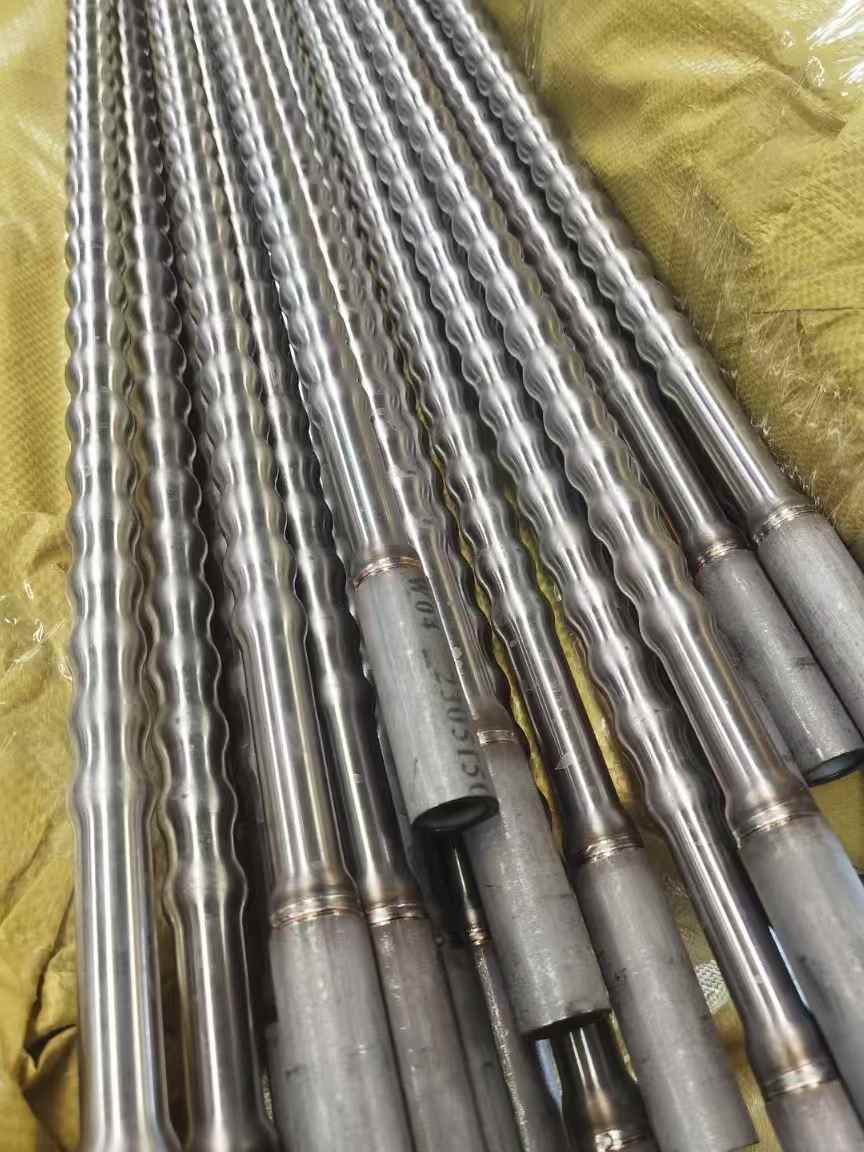

ASTM A213/A213M covers seamless alloy-steel tubes for boilers, superheaters and heat exchangers. For buyers, the practical questions are which grade the equipment requires, whether the order must also specify ASME SA213, and how wall thickness and inspection will be documented. This guide explains those choices without replacing the governing standard or the equipment designer’s specification.
Scope: where A213 belongs
A213 includes ferritic and austenitic alloy-steel tubing and requires the seamless manufacturing route. It is a tube specification, rather than a general name for stainless pipe. Start with the equipment drawing and service requirements before comparing quotations.
For an exchanger enquiry, describe the tube bundle application and identify any requirements associated with bending, tube-end preparation or installation. Do not assume that a quotation for straight tube includes subsequent fabrication. Our heat-exchanger pipe and tube page provides a starting point for enquiries; the purchase specification should define the actual deliverable.
ASTM A213 and ASME SA213: related, but check the order
SA213 material is material ordered to the corresponding ASME specification, normally written SA-213/SA-213M. ASME’s ferrous material specifications are identical with or similar to ASTM specifications, but their applicable editions and any ASME changes need checking. Writing “ASME SA 213” on an enquiry is therefore more meaningful than asking for an unspecified “ASME equivalent” after production.
Where the equipment documentation requires both designations, request dual certification before accepting the quotation. Ask the supplier to confirm the applicable editions, grade and documentation against the project requirements. An ASTM-only certificate should not simply be relabelled by a purchasing department as an ASME certificate, and a matching grade name alone does not demonstrate compliance with both specifications.
Stainless grades and the meaning of H
Common stainless choices include TP304, TP304L, TP304H, TP316, TP316L, TP321 and TP347. The grade is part of the specification: “SA213 TP304” is more informative than “stainless exchanger tube”. Confirm the exact designation on the enquiry, drawing and material certificate instead of shortening it differently in each document.
- TP304 and TP304L: the L designation identifies a lower-carbon variant; that distinction matters when reviewing welding and susceptibility to intergranular corrosion.
- TP316 and TP316L: molybdenum alloying supports improved resistance in some corrosive environments compared with the corresponding non-molybdenum stainless family; grade selection still depends on the actual service.
- TP321 and TP347: these are stabilized stainless grades, associated with titanium and niobium stabilization respectively; they should not be treated as interchangeable merely because both are stabilized.
H grades have different requirements intended to improve creep-rupture strength during elevated-temperature service. That does not make an H grade a universal upgrade over an L grade. Have the designer specify the required grade and confirm its chemistry, heat treatment and other acceptance requirements per the current edition of the standard.
The alloy-steel side also includes T11, T22 and T91, so an enquiry for SA 213 T22 concerns a different grade family from the stainless TP grades discussed here.
A213 vs A249 vs A269: choosing the product specification
| Specification | Product route and scope | Buying decision |
|---|---|---|
| ASTM A213 | Seamless ferritic and austenitic alloy-steel boiler, superheater and heat-exchanger tubes | Check against equipment requirements for seamless tube. |
| ASTM A249 | Welded and heavily cold-worked welded austenitic tubes for heat-transfer equipment | Consider where the project permits the welded route. |
| ASTM A269 | Seamless or welded austenitic stainless tubing for general service | Check general-service requirements rather than assuming exchanger approval. |
For ASTM A213 vs A269, the application and complete specification matter more than which designation appears more demanding. Do not accept a substitution solely because the alloy, outside diameter and wall match. Send the proposed alternative to the equipment designer for review. For nominal pipe rather than exchanger tubing, consult our ASTM A312 pipe guide; for general-service tubing, see the ASTM A269 guide.
Testing: specify the evidence, not just a test name
A213 addresses mechanical testing, including tensile, hardness and forming tests, with applicability and sampling governed by the standard. It also requires each tube to receive a hydrostatic or nondestructive electric test. Do not confuse this tube-by-tube requirement with the sampling arrangements for other examinations.
When reviewing an inspection plan, ask which test route is proposed and what the resulting report will show. If a project requires a particular examination, additional witnessing or third-party inspection, put that request in the enquiry. Avoid relying on phrases such as “fully tested” without identifying the required evidence and the applicable acceptance basis.
Dimensions: minimum wall or average wall?
A213 allows ordering by minimum wall thickness or, when specified in the order, average wall thickness. Minimum wall and average wall describe different acceptance bases; the same written thickness should not be assumed to buy the same product under both.
State outside diameter, wall value, wall basis, length and units together. Ask the supplier to identify the corresponding dimensional acceptance requirements per the current edition of the standard. An average-wall designation is not permission to ignore local thickness variation, while a minimum-wall designation should not be interpreted as an exact wall measurement everywhere.
Where the drawing uses a wall gauge designation, include the intended thickness as well and resolve any ambiguity before ordering. For bent tubes, also agree which dimensions and inspections apply to the straight supplied tube and which apply after bending. This separates the material purchase from fabrication acceptance without inventing a shared tolerance for both.
What to put on an A213 enquiry
- Specification: ASTM A213/A213M, ASME SA-213/SA-213M or both, with the edition required by the project.
- Material: full grade designation, including any L or H suffix.
- Size: outside diameter, thickness, minimum-wall or average-wall basis, units and required lengths.
- Supply scope: quantity, straight or fabricated condition, tube-end requirements and drawing references.
- Inspection: requested test route, additional examinations and any witnessing arrangements.
- Records: material certificate, marking, heat traceability and any project-specific documentation.
A useful enquiry template is: “Seamless tube to the specified ASTM/ASME edition; grade as drawing; outside diameter and wall as scheduled; wall basis explicitly stated; length, quantity, testing and documentation as attached.” Replace every placeholder before issuing the order. This is a purchasing checklist, not a substitute for the standard’s ordering requirements.
How TeCarve handles enquiries
TeCarve is a specialized Chinese stainless steel piping solutions provider and the exclusive factory-direct export channel for two dedicated manufacturing plants in Foshan (welded & decorative tubing) and Wenzhou (seamless & precision tubing). Testing is performed by the dedicated plants, with third-party testing arranged when customers request it. Shipments include an EN 10204 3.1 mill test certificate. Trial orders are available at 100–300 kg, and quotation enquiries receive a reply within 24 hours. Send your specification and drawing to sales@tecarve.com.
A213 also waives pickling for bright annealed (BA) tube.
Frequently asked questions
What is SA213 material?
SA213 identifies an ASME tube specification, not a single alloy. Include the required grade, such as TP304, and confirm the applicable ASME edition and project requirements before ordering.
Can welded tubing be supplied as ASTM A213?
No. A213 specifies seamless tubing. If welded tube is proposed, review the applicable welded-tube specification and obtain the equipment designer’s approval rather than changing the description on the certificate.
Why specify TP304H instead of TP304L?
H-grade requirements address elevated-temperature creep performance, while the L designation identifies lower carbon. The designer should choose the grade for the service; neither suffix is a universal substitute for the other.
Is ASTM A269 automatically equivalent to A213?
No. A269 addresses general-service tubing. Matching alloy and dimensions alone does not establish compliance with the A213 purchase specification, inspection requirements or equipment documentation.
Should I order minimum wall or average wall?
Use the wall basis required by the equipment drawing and state it explicitly. Do not let the supplier infer it from an unexplained thickness value; confirm the associated tolerances against the standard.
Source references: ASTM A213 public scope, ASTM A249 public scope and ASME ferrous material specifications overview. Use the project-required edition for acceptance.
By Will Lee