

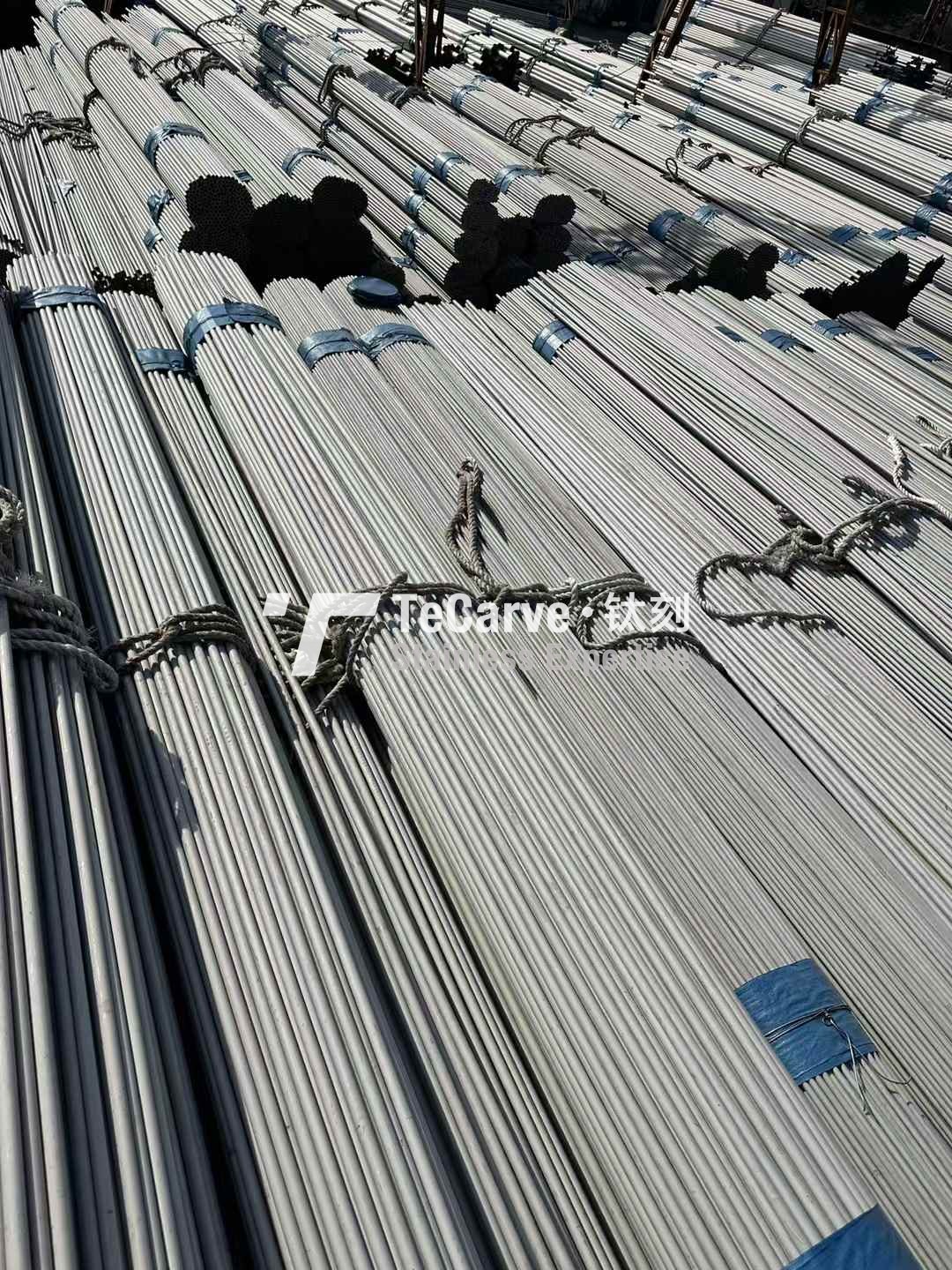

Seamless stainless steel pipe is the critical backbone of modern petrochemical and refinery piping systems. Manufactured without a longitudinal weld seam from a solid hot-extruded and cold-finished cylindrical billet, seamless pipe delivers uniform metallurgical structure, maximum hoop strength, and leak-proof reliability under severe operating pressures and elevated temperatures. According to ASTM A312, ASTM A213, and EN 10216-5, seamless pipes and tubes for refinery and petrochemical services are produced in austenitic and duplex grades including 304, 304L, 304H, 316, 316L, 316H, 321, 321H, 310S, and Duplex 2205.
Refinery & Petrochemical Service Conditions and Failure Mechanisms
Refinery processes that involve high-pressure hydrogen, wet hydrogen sulfide (H2S), polythionic acids, and temperatures up to 1100°C demand piping that is metallurgically homogeneous. In critical process units, seamless pipe outperforms welded alternatives because it eliminates the longitudinal weld seam and heat-affected zone (HAZ), which are inherently vulnerable to preferential chemical attack, weld decay, micro-fissuring, and residual tensile stress peaks.
Why Seamless Pipe Outperforms Welded Alternatives in Refinery Service
Seamless stainless steel pipe is formed through hot extrusion or rotary piercing followed by cold drawing or pilgering, yielding an uninterrupted crystalline grain structure around its entire circumference. In high-pressure refinery heaters, hydrocrackers, and transfer lines, internal pressure generates circumferential hoop stress that acts continuously against the pipe wall. While welded pipe introduces a metallurgical discontinuity and a weld joint efficiency factor that requires increased wall thickness, seamless pipe provides full seamless wall integrity without joint efficiency derating per ASME B31.3. Furthermore, in sour environments containing wet H2S, weld seams frequently develop localized hardness peaks that exceed the 22 HRC threshold mandated by ISO 15156 / NACE standards, dramatically accelerating sulfide stress cracking (SSC). Seamless pipe avoids weld hardness variations and provides consistent corrosion resistance across the entire pipe body.
High-Temperature Strength in Cracking Units and Reformers
In ethylene cracking furnaces and steam methane reformers (SMR), seamless pipes must withstand temperatures of 800–950°C and up to 1100°C under internal pressures of 10–20 MPa. In these carburizing and oxidizing environments, ordinary carbon steel or low-alloy steel suffers severe scaling, metal dusting, and rapid creep failure. Austenitic grade 310S (24.0–26.0% Cr, 19.0–22.0% Ni per ASTM A312) forms a chromium oxide surface layer that improves resistance to oxidation and carburization at high temperature. For continuous creep-loaded reformer service, high-carbon stabilized grades like 321H and alloy 800H provide high creep-rupture strength without catastrophic embrittlement.
Corrosion Resistance in Hydroprocessing, Hydrocracking, and Desulfurization Units
Hydrodesulfurization (HDS) and hydrocracking reactors operate with hydrogen and hydrogen sulfide at temperatures of 300–450°C and pressures of 5–15 MPa. Under these conditions, standard 304 stainless steel is susceptible to high-temperature sulfidation and Nelson curve hydrogen embrittlement. Furthermore, during shutdown periods when piping cools in the presence of air and moisture, iron sulfides react to form polythionic acids, which rapidly cause polythionic acid stress corrosion cracking (PASCC) in sensitized austenitic stainless steels. Stabilized grade 321 (with titanium binding carbon) and Duplex 2205 (22% Cr, 5% Ni, 3% Mo) provide superior resistance to polythionic acid attack and maintain a pitting resistance equivalent number (PREN) above 32.
Stress Corrosion Cracking Resistance in Amine Units and Sour Water Strippers
Amine gas treating units and sour water strippers expose piping to wet H2S, carbon dioxide (CO2), and residual chlorides at operating temperatures of 40–120°C. Austenitic stainless steels such as 304 and 316 can experience chloride-induced stress corrosion cracking (SCC) when operating stresses and chloride concentrations coincide above 60°C. Duplex 2205 (UNS S32205) features an approximately 50/50 balance of austenite and ferrite, providing immunity to chloride SCC while offering a minimum yield strength of 450 MPa—more than double that of 316L. For severe acidic chloride environments, specialty austenitic grades like 904L (25% Ni, 4.5% Mo) provide superior pitting and crevice corrosion protection.
Erosion Resistance in Catalyst Transfer Lines
Fluid catalytic cracking (FCC) units circulate abrasive catalyst particles at velocities up to 30 m/s and temperatures of 650–750°C. The combination of high velocity, particulate impingement, and thermal cycling causes rapid wall thinning in pipes with irregular internal surfaces. Cold-finished seamless stainless pipes provide a smooth, uniform internal surface (Ra ≤ 0.8 µm) without weld bead protrusions, significantly reducing localized turbulence and catalyst particle erosion.
Low-Temperature Toughness in Cryogenic and Liquefied Gas Services
For liquefied petroleum gas (LPG) and ethylene storage facilities operating down to –104°C, process piping must retain ductility and avoid brittle fracture. Low-carbon austenitic grade 304L (0.03% C max) and 316L maintain Charpy V-notch impact energy values exceeding 60 J at –196°C, ensuring safe containment during pressure relief and sub-zero process swings.
Stainless Steel Grade Selection Guide for Refinery & Petrochemical Service
Selecting the correct seamless pipe grade requires balancing operating temperature, process stream chemistry (chlorides, sulfur, naphthenic acids), mechanical design stresses, and fabrication requirements.
Role of Alloying Elements and Carbon Control
- Chromium (18.0–26.0%): Forms the passive Cr2O3 oxide film that provides baseline corrosion resistance and high-temperature oxidation resistance, which increases with chromium content.
- Nickel (8.0–22.0%): Stabilizes the face-centered cubic (FCC) austenitic structure, preventing cryogenic embrittlement and maintaining ductile toughness across all operating temperatures.
- Molybdenum (2.0–3.0% in 316/316L, 3.0% in 2205): Significantly enhances resistance to localized pitting and crevice corrosion in chloride-bearing feedstocks, sour water, and naphthenic acids.
- Titanium Stabilization in 321 / 321H: Titanium preferentially binds with carbon (minimum Ti content 5 × C) to form stable titanium carbides (TiC), preventing chromium carbide precipitation along grain boundaries when exposed to the 427–816°C sensitization range.
- Carbon Limits (L-Grades vs H-Grades): Standard 304 and 316 permit up to 0.08% carbon. Low-carbon grades 304L and 316L limit carbon to 0.03% max, preventing intergranular sensitization during field welding without requiring post-weld heat treatment (PWHT). For high-temperature creep service above 500°C, ASME Section VIII requires H-grades (304H, 316H, 321H) with a controlled carbon window of 0.04–0.10% to ensure creep-rupture strength.
Seamless Pipe Grade Comparison Table
| Grade | C% max | Cr% | Ni% | Mo% | Key Mechanical & Corrosion Property | Typical Refinery & Petrochemical Service |
|---|---|---|---|---|---|---|
| 304 | 0.08 | 18.0–20.0 | 8.0–10.5 | — | General corrosion resistance; yield strength 205 MPa | Utility piping, cooling water, non-sour process lines |
| 304L | 0.03 | 18.0–20.0 | 8.0–12.0 | — | Resists sensitization during welding; impact ductile to –196°C | Welded process headers, LPG & cryogenic storage down to –104°C |
| 304H | 0.04–0.10 | 18.0–20.0 | 8.0–10.5 | — | Elevated creep-rupture strength at temperatures above 500°C | Process heaters, thermal relief lines, reformer bypasses |
| 316 | 0.08 | 16.0–18.0 | 10.0–14.0 | 2.0–3.0 | Pitting resistance (PREN ≥ 25); resists moderate acids | Crude distillation run-down lines, chemical metering |
| 316L | 0.03 | 16.0–18.0 | 10.0–14.0 | 2.0–3.0 | Superior pitting and naphthenic acid resistance; weldable | Default refinery piping, sour gas treating, hydrocracker run-downs |
| 316H | 0.04–0.10 | 16.0–18.0 | 10.0–14.0 | 2.0–3.0 | Combines Mo pitting resistance with high-temperature creep strength | High-temperature catalytic cracking, severe thermal cycling lines |
| 321 | 0.08 | 17.0–19.0 | 9.0–12.0 | — | Ti-stabilized (Ti ≥ 5×C); resists polythionic acid cracking | Hydrotreater piping, furnace tubes, reactor internals 427–816°C |
| 321H | 0.04–0.10 | 17.0–19.0 | 9.0–12.0 | — | Ti-stabilized with high carbon for prolonged high-temp creep service | Catalytic reforming coils, superheater connections, hot transfer lines |
| 310S | 0.08 | 24.0–26.0 | 19.0–22.0 | — | Oxidation and carburization resistance at high temperature | Ethylene cracking furnaces, radiant coils, flare tips, tube hangers |
| 2205 Duplex | 0.03 | 22.0–23.0 | 4.5–6.5 | 3.0 | Yield strength 450 MPa; PREN ≥ 32; high resistance to chloride SCC | Amine treating, sour water strippers, desalter piping, offshore lines |
Applicable Manufacturing Standards and Pressure Vessel Specifications
Refinery and petrochemical projects enforce stringent international codes to guarantee pressure containment, dimensional accuracy, and metallurgical reproducibility.
ASTM A312 / A312M (Standard Specification for Seamless Austenitic Pipe)
ASTM A312 covers seamless, straight-seam welded, and heavily cold-worked austenitic stainless steel pipe intended for high-temperature and general corrosive service. For seamless pipe, dimensions range from nominal pipe size (NPS) 1/8 to NPS 30 (outside diameter 6mm to 610mm) in schedules 5S through XXS per ASTM A312. Permissible diameter tolerances are tightly controlled: for OD ≤ 48.3 mm, the tolerance is ±0.4 mm; for larger diameters, the tolerance is ±1% of nominal OD. The wall thickness at any point must not exceed the allowable variation of –12.5% of nominal wall.
ASTM A213 / A213M (Seamless Heat-Exchanger & Boiler Tubes)
In refinery heat exchangers, reboilers, and superheaters, tubes operate under direct external and internal pressure differentials. ASTM A213 specifies seamless ferritic and austenitic tubes ordered by outside diameter and minimum wall thickness (rather than nominal wall), enforcing tighter wall thickness and concentricity tolerances than ASTM A312. Heat exchanger bundles subjected to severe thermal cycling require ASTM A213 seamless tubing to prevent premature localized fatigue failure.
EN 10216-5 (European Standard for Pressure-Purposed Seamless Tubes)
EN 10216-5 governs seamless stainless steel tubes exposed to internal pressure in European refinery projects and equipment designed under the European Pressure Equipment Directive (PED 2014/68/EU). The standard specifies two distinct technical delivery conditions:
- Test Category 1 (TC1): Covers standard pressure applications, requiring room-temperature tensile verification and hydrostatic testing or non-destructive examination.
- Test Category 2 (TC2): Commonly specified for critical high-temperature refinery equipment, requiring 100% non-destructive testing (ultrasonic or eddy current), elevated-temperature tensile proof tests, and Charpy V-notch impact verification.
Corrosion and Metallurgical Testing Standards
To confirm that thermal processing has not sensitized the alloy, refinery specifications routinely invoke supplemental tests:
- ASTM A262 Practice E: Copper sulfate / sulfuric acid test to verify resistance to intergranular corrosion.
- ASTM A923 impact testing: Metallographic and impact testing to verify absence of detrimental intermetallic phases (sigma phase) in Duplex 2205.
- ISO 15156 / NACE: Verifies maximum hardness limits (per specification) for sour oil and gas processing equipment.
Quality Inspection, Testing Protocol, and Certification
Every seamless pipe for refinery service undergoes multi-stage non-destructive and destructive testing at the Wenzhou plant to ensure absolute compliance with project engineering requirements.
Comprehensive Quality Control Protocol
- Positive Material Identification (PMI): 100% PMI verification using optical emission spectrometry (OES) or X-ray fluorescence (XRF) to confirm carbon, chromium, nickel, molybdenum, and titanium chemistry before shipment.
- Tensile & Mechanical Testing: Verification of tensile strength, yield strength, and elongation (minimum 35% in austenitic grades) at room temperature, supplemented by elevated-temperature proof stress tests per EN 10216-5 TC2 when specified.
- Hydrostatic Testing: When the hydrostatic route of ASTM A312 Section 12 is used, test pressure follows ASTM A999 Section 21.2: P = 2St/D, where S is fiber stress (not less than 50% of specified minimum yield strength for austenitic and duplex grades), t is specified wall thickness, and D is specified outside diameter. Hydrostatic proof testing per ASTM A312 verifies pressure boundary tightness without leakage.
- Non-Destructive Examination (NDE / NDT): 100% Eddy Current Testing (ECT) per ASTM E309 or ultrasonic testing to detect longitudinal, transverse, and subsurface flaws without compromising the finished pipe.
- Flattening, Flaring & Hardness Tests: Performed as the applicable product specification requires (for example ASTM A312) to confirm ductility and ensure hardness remains well below NACE sour service limits.
- Ferrite Measurement in Duplex 2205: Ferrite content is measured via metallographic examination, ensuring a balanced 40–60% phase ratio.
Mill Test Certificates (EN 10204 3.1 & 3.2 Documentation)
Traceability is non-negotiable in refinery piping procurement:
- EN 10204 Type 3.1 MTC: Every shipment of seamless pipe supplied by TeCarve is accompanied by an original EN 10204 Type 3.1 mill test certificate issued by the producing plant (the Wenzhou plant). The certificate details exact heat numbers, ladle chemical analysis, mechanical test results, heat treatment temperature and quenching method, hydrostatic/NDT verification, and dimensional records.
- EN 10204 Type 3.2 MTC: When project specifications mandate third-party verification, inspections witnessed by independent agencies such as SGS, Bureau Veritas (BV), TÜV, or Lloyd’s Register are arranged prior to dispatch.
- Pre-Shipment Inspection: TeCarve QC inspectors verify pipe markings, wall thickness tolerances, bevel angles, surface condition, and bundle packaging before container sealing.
Procurement Verification, Cost Economics, and Sourcing Guidelines
Procuring seamless pipe for refinery projects requires strict supply chain verification to avoid counterfeit materials, specification mismatch, and catastrophic plant outages.
Procurement Verification Checklist
- Dual Certification Verification: Confirm whether dual-certified pipe (such as 304/304L or 316/316L) is appropriate for the service. While dual certification provides low carbon (C ≤ 0.03%) for weldability alongside standard mechanical properties, it cannot replace high-carbon H-grades (304H, 316H, 321H) where ASME Section VIII high-temperature creep allowable stresses are governing design variables above 500°C.
- Heat Number Stencil Matching: Ensure that continuous longitudinal stenciling on each pipe length (Grade, Standard, NPS, Schedule, Heat Number, and Plant Name) matches the heat number recorded on the EN 10204 3.1 MTC issued by the producing plant.
- Plant Authorization & Audits: Verify that the exporting entity is backed by genuine manufacturing facilities. TeCarve operates as the exclusive factory-direct export channel for the dedicated Wenzhou plant (seamless and precision tubing), and exclusive export authorization letters are available for verification under NDA. Live video audits and on-site factory audits can be arranged.
- Pipe End Preparation & Protection: Small-bore instrument and tubing lines require plain ends (PE), square-cut and deburred. Process piping intended for butt-welding requires bevelled ends (beveled ends for welding) fitted with heavy-duty plastic end caps to prevent edge damage during ocean transit.
Cost and Life-Cycle Economics: 304 vs 316L
On a per-ton basis, 316L seamless pipe typically carries a 25–40% price premium over 304 seamless pipe due to its 2.0–3.0% molybdenum addition and higher nickel content. However, in refinery hydroprocessing, sour gas treating, and crude distillation units containing sulfur compounds and organic acids, specifying 304 leads to premature localized pitting and unscheduled plant shutdowns. Given that an unplanned refinery unit turnaround can exceed $500,000 per day in lost production, investing in 316L or Duplex 2205 seamless pipe represents a substantial life-cycle cost saving.
Minimum Order Quantities (MOQ) and Delivery Timelines
Unlike massive steel conglomerates that enforce minimum rolling heats of 10 to 20 tons per size, TeCarve provides flexible order quantities through the dedicated Wenzhou plant:
- Trial & Maintenance Orders: Low MOQs of 100–300 kg per size and grade, enabling refinery maintenance teams to procure specialized replacement spools or test alloy compatibility without excessive capital tie-up.
- Standard Production Runs: 1 to 3 tons per line item for capital expansion projects.
- Production Lead Time: Standard export lead time is 10–25 days from order to shipment for engineered seamless pipe sizes in 304, 304L, 316, 316L, 321, 310S, and Duplex 2205.
Frequently Asked Questions (FAQ)
What is the difference between seamless and welded pipe for petrochemical use?
Seamless pipe is manufactured from a solid cylindrical billet by hot extrusion or piercing followed by cold drawing, resulting in no longitudinal weld seam. This eliminates weld-related flaws, micro-fissuring, and heat-affected zone (HAZ) sensitization. Under high internal pressure and cyclic thermal stresses in petrochemical cracking and reforming units, seamless pipe delivers uniform circumferential strength (seamless joint integrity) and superior resistance to sulfide stress cracking.
Which stainless steel grade is best for high-temperature petrochemical piping?
For high-temperature petrochemical service, grade 310S (ASTM A312 TP310S: 24.0–26.0% Cr, 19.0–22.0% Ni) or TP310H is often evaluated; the allowable temperature and stress must be confirmed with the governing design code, such as ASME B31.3. For service between 427°C and 816°C where sensitization and polythionic acid stress corrosion cracking (PASCC) threaten standard austenitic grades, titanium-stabilized 321 or 321H is recommended. For moderate refinery service up to 500°C under pressure design, 316L or 316H is standard.
What is the maximum pressure rating for ASTM A312 seamless pipe?
The maximum allowable working pressure depends on pipe schedule, grade, and temperature. For example, Sch 40S 316L pipe (OD 6″) has a pressure rating of 12.5 MPa at 100°C per ASME B31.3. For higher pressures, use Sch 80S (17.2 MPa) or duplex 2205 (yield strength 450 MPa) which allows thinner walls. The two dedicated plants can produce custom wall thicknesses up to 100 mm for extreme pressures.
Can seamless stainless steel pipe be used for cryogenic service in petrochemical plants?
Yes. Austenitic stainless steel grades 304L and 316L retain excellent impact ductility and toughness at cryogenic temperatures down to –196°C, exhibiting Charpy V-notch values exceeding 60 J at –104°C. They do not undergo a ductile-to-brittle transition, making them standard for liquefied petroleum gas (LPG) and liquid ethylene storage.
How do I prevent stress corrosion cracking (SCC) in petrochemical and refinery piping?
To prevent chloride SCC, maintain operating temperatures below 60°C for 304/316, specify low-carbon L-grades to avoid sensitization, or upgrade to Duplex 2205 (which is far more resistant to chloride SCC in amine units). To prevent polythionic acid SCC (PASCC) in hydrotreaters during shutdowns, specify stabilized grade 321/347 and perform soda ash neutralization washing prior to exposing open equipment to air.
What is the difference between ASTM A312 and ASTM A213 for refinery service?
ASTM A312 covers seamless and welded austenitic stainless steel pipe intended for general fluid transport and process piping, ordered by nominal pipe size (NPS) and schedule. ASTM A213 covers seamless boiler, superheater, and heat exchanger tubing, ordered by exact outside diameter and minimum wall thickness with tighter dimensional and concentricity tolerances required for tube bundles.
What does EN 10216-5 Test Category 2 (TC2) require for refinery pressure equipment?
EN 10216-5 TC2 is commonly specified for high-temperature and safety-critical refinery equipment, including equipment designed under the European Pressure Equipment Directive (PED 2014/68/EU). Unlike TC1, TC2 requires mandatory 100% non-destructive testing (ultrasonic or eddy current), elevated-temperature tensile proof testing, and low-temperature impact verification.
Can you supply seamless pipe in duplex grades like 2205?
Yes. TeCarve supplies seamless pipe in Duplex 2205 (UNS S32205). Duplex 2205 provides a minimum yield strength of 450 MPa (twice that of 316L) and a PREN ≥ 32, offering outstanding resistance to wet H2S, sour gas, and chloride stress corrosion cracking in amine treating units. Ferrite content is verified between 40% and 60% with impact testing down to –40°C.
What certifications accompany seamless pipe shipments from TeCarve?
Every shipment includes an original EN 10204 Type 3.1 mill test certificate issued by the producing plant (the Wenzhou plant). The certificate documents chemical heat analysis, mechanical tensile and hardness testing, heat treatment parameters, hydrostatic test records, and non-destructive examination (PMI, ultrasonic/eddy current). Third-party inspection (EN 10204 3.2) witnessed by SGS, BV, or TÜV is available on request.
What is the minimum order quantity (MOQ) and lead time for refinery seamless pipe?
Through the dedicated Wenzhou plant, TeCarve provides trial orders with an MOQ of 100–300 kg per grade and size, while standard production runs are 1–3 tons. Production lead time for custom diameters and wall thicknesses is 10–25 days from order to shipment.
Related Resources
- Explore our comprehensive product specifications for stainless steel seamless pipe & tube.
- Learn about engineering standards in our ASTM A312 pipe guide and EN 10216-5 seamless tube guide.
- Review specialized industrial applications across our chemical and petrochemical solutions.
- For large-diameter low-pressure utility lines or cost-sensitive pipeline sections, explore our companion guide on stainless welded pipe grades for refinery pipelines.
Need project pricing, chemical compliance verification, or an original EN 10204 3.1 MTC sample for your refinery project? Contact TeCarve’s technical export team for factory-direct engineering support from the dedicated Wenzhou plant.