

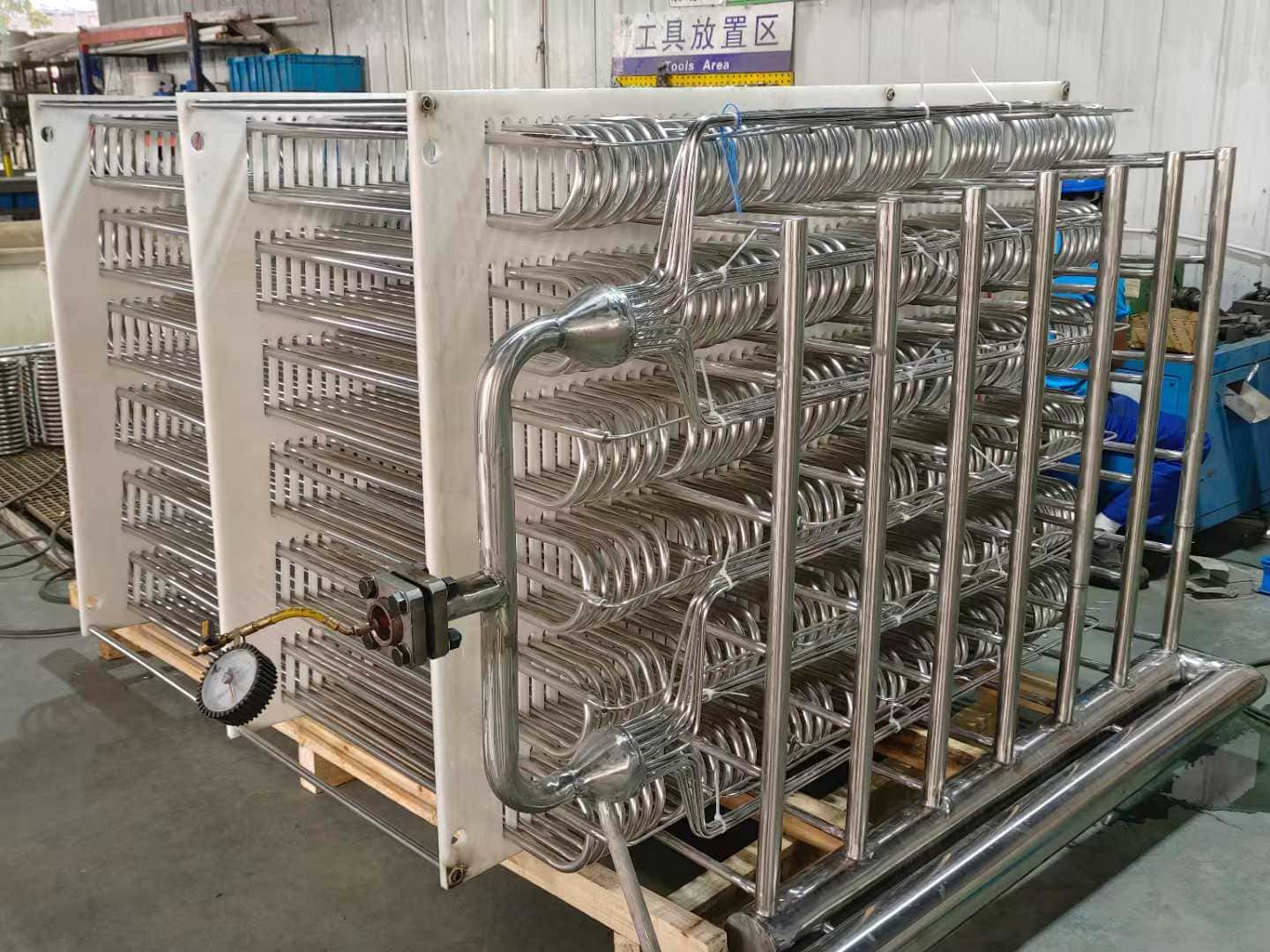

Stainless steel tubing is used in data center cooling for selected water and liquid-coolant lines, coolant distribution units, and heat exchangers when the system specification and fluid chemistry call for it.
For procurement engineers and equipment designers, the question is where the tube sits in the cooling system and what the fluid, welds and inspection requirements mean for that particular circuit. Stainless steel is one candidate material, not a mandatory choice for every line or component.
How does a data center cooling system move heat?
Data center cooling moves heat from computing equipment into air or a circulating liquid and ultimately to a heat-rejection system.
Depending on the design, the facility may use a chiller, a cooling tower, a dry cooler or a combination. In a liquid-cooled installation, a coolant distribution unit (CDU) can transfer heat between the facility water system and a separate technology cooling circuit serving the equipment. The circuits, fluids and interfaces must be confirmed from the project schematic; a CDU does not imply that every facility uses a cooling tower or a chiller.
The ASHRAE data center handbook describes facility and technology cooling circuits, while the U.S. Department of Energy explains chiller, cooling-tower and liquid-cooling arrangements.
Where can stainless steel tubing fit in the cooling circuit?
Stainless steel tubing can be considered for distribution and heat-exchange duties where its grade, construction and surface condition match the specified fluid and equipment.
The table identifies candidate tube forms, not a prescribed material for every data center. A project may use other metals or non-metallic materials, and a plate heat exchanger may have no tube bundle at all.
| Cooling stage | Candidate tube form | Selection questions | Related TeCarve product |
|---|---|---|---|
| Chiller water distribution | Welded stainless pipe or tube | Confirm water chemistry, pressure, joining method and the project piping specification. | Welded pipe and tube |
| Cooling-tower water lines | Welded stainless pipe or tube, where specified | Assess makeup-water quality, treatment chemicals, chloride exposure and maintenance practices. | Welded pipe and tube |
| CDU and equipment-side liquid loop | Welded, coiled or controlled-finish tube, as specified | Check coolant compatibility, required cleanliness, weld inspection and the equipment interface. | Welded tube, coiled tube or sanitary tube |
| Condenser or evaporator with a tube bundle | Stainless heat-exchanger tube | Confirm which fluid contacts the tube, the exchanger design, grade and test requirements. | Heat-exchanger tube |
| Heat exchanger designed for enhanced-surface tubes | Low-fin tube, if specified by the designer | Check the heat-transfer surface, tube form and exchanger geometry against the design. | Low-fin tube |
Why consider stainless steel for cooling water and coolant lines?
Stainless steel offers corrosion resistance and a weldable tube material, but the appropriate grade and joint design depend on the actual service.
Water treatment, chlorides, stagnant areas, deposits and contact with other metals can change the corrosion risk. Smooth, specified internal surfaces can help a buyer define cleanliness and inspection requirements; a polished surface alone does not guarantee coolant purity or leak-free operation. World Stainless discusses stainless steels in water systems and the need to consider material selection and water conditions.
For welded construction, agree on the joint method, inspection and any surface treatment with the equipment designer and producing plant. Follow the project specification instead of assuming every stainless tube has the same finish or test scope.
Which grades should a buyer discuss?
Grades 304, 304L and 316L are stainless steel options to evaluate against the coolant, operating environment and fabrication requirements.
304 can be a candidate where the specified water chemistry and corrosion conditions permit it. 304L is a lower-carbon option to discuss for welded construction. 316L can be considered where the design calls for a lower-carbon grade with greater resistance to chloride-related corrosion; it is not immune to pitting or crevice corrosion. The system engineer must confirm the grade, particularly for treated tower water, stagnant conditions or mixed-metal interfaces.
What should buyers ask before requesting a quote?
A useful tube enquiry identifies the fluid, location and equipment requirements before choosing a product form.
- Which cooling stage and fluid-contact surface will the tube serve: facility water, a CDU circuit, a chiller or a heat-exchanger bundle?
- What is the coolant composition, including water treatment, chloride exposure and compatibility requirements?
- Which grade, tube form, dimensions, length and applicable product specification does the equipment designer require?
- Are the tubes welded, bent or supplied in coils, and what joining and inspection methods are specified?
- What internal cleanliness, surface finish, documentation and traceability does the project require?
- Which operating pressure, temperature, maintenance and test requirements must be confirmed for the actual system?
Which TeCarve tube products are relevant?
TeCarve supplies several tube forms that buyers can evaluate for data center cooling equipment against a project specification.
For distribution and equipment connections, review welded pipe and tube, coiled tube and, where a controlled finish is specified, sanitary tube. For a tube-based exchanger, review heat-exchanger tube or low-fin tube when the exchanger design calls for it. Product listings are starting points for technical review; they do not establish approval for a particular CDU, chiller or coolant.
TeCarve is a specialized Chinese stainless steel piping solutions provider and the exclusive factory-direct export channel for two dedicated manufacturing plants in Foshan (welded and decorative tubing) and Wenzhou (seamless and precision tubing). Share the system specification and drawing with TeCarve to confirm the appropriate product and available documentation.
What do buyers commonly ask about data center cooling tubing?
Material selection for data center cooling depends on the specific circuit, coolant and equipment requirements.
Where can stainless steel tubing be used in data center cooling?
Stainless steel tubing can be specified for facility water distribution, connections around a coolant distribution unit, selected liquid-cooling circuits, and heat-exchanger tubes, subject to the equipment design and coolant compatibility.
Does every data center cooling system need a chiller and cooling tower?
No. Data center cooling designs vary: some use a chiller and cooling tower, while others use a different heat-rejection arrangement. Confirm the system diagram before selecting tubing.
How do buyers choose between 304, 304L and 316L tubing?
Choose the grade against the coolant chemistry, operating conditions, welding requirements and equipment specification. 316L may be considered where the corrosion environment or welded construction calls for it; the project engineer must confirm suitability.
Is sanitary tubing required for a data center liquid-cooling loop?
Not automatically. Sanitary tubing is an option when the buyer specifies its surface finish, cleanliness or documentation; the equipment and coolant requirements determine whether those features are needed.
Can coiled tubing or low-fin tubing be used in a data center chiller?
Coiled tubing or low-fin tubing can be considered only where the heat-exchanger designer specifies that form. Confirm the fluid path, exchanger geometry, material, testing and allowable dimensions with the equipment supplier.