

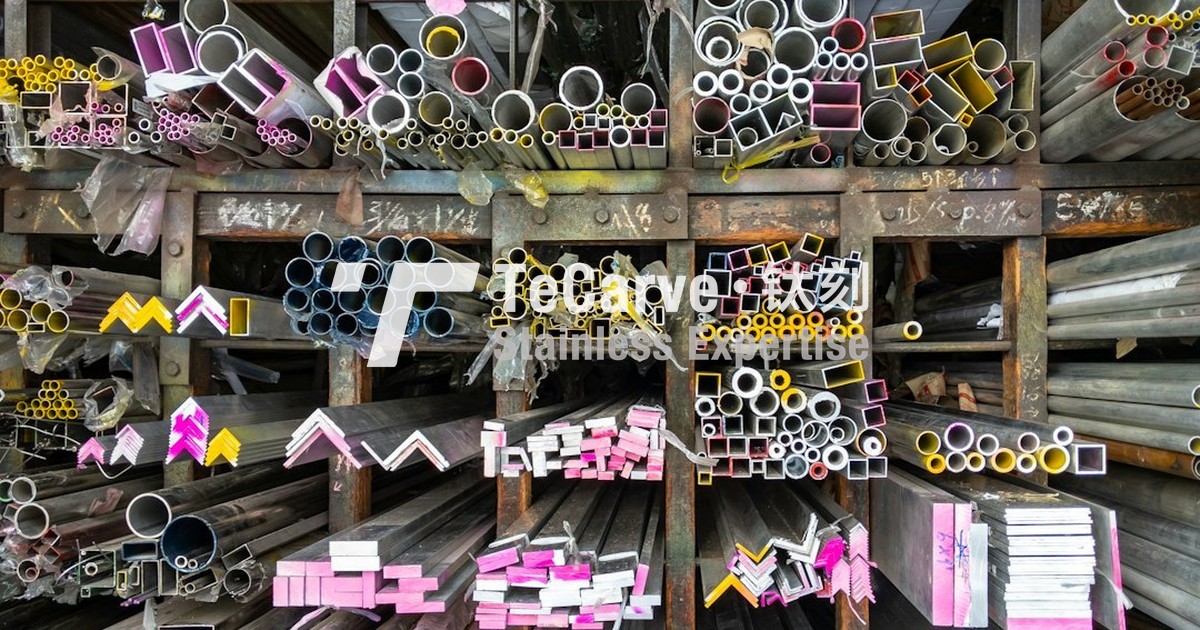

Selecting reliable stainless steel tube suppliers in China for export requires objective verification of manufacturing capabilities, testing protocols, and documentation rather than relying on unverified rankings or self-promotional claims. China’s industrial base encompasses dedicated tube mills, precision finishing plants, and export trading intermediaries. For international procurement engineers and project managers, the primary objective is separating genuine, traceable manufacturing operations from brokers. This guide provides a comprehensive buyer verification checklist—spanning factory authenticity, international standards, mill test certificates (MTC), on-site and remote audits, export documentation, and EU/US compliance—followed by product-specific inspection guidelines for welded, special-shaped, heat exchanger, and seamless tube lines.
Buyer Verification Checklist for Chinese Stainless Steel Tube Exporters
To avoid delivery delays, non-conforming metallurgy, and customs disputes, international buyers should systematically evaluate prospective Chinese tube suppliers across core verification checkpoints.
Factory Authenticity and Production Backing
A fundamental step in supplier evaluation is establishing whether the vendor operates legitimate manufacturing assets or acts solely as an intermediary. Dedicated production facilities maintain observable machinery, including cold-drawing benches, cold-pilger mills, continuous longitudinal welding lines, solution annealing furnaces, pickling facilities, and in-house testing bays. When sourcing through an export channel, buyers should request exclusive factory authorization letters from the producing plants under NDA to confirm an authorized factory-direct relationship, ensuring technical accountability from the shop floor to the final container loading.
Standards Alignment and Documented Testing
Every export order should clearly specify governing international standards and testing criteria on the formal purchase agreement. Reputable Chinese tube mills regularly manufacture to ASTM and EN specifications:
- ASTM A312 / ASME SA312: Seamless, welded, and heavily cold-worked austenitic stainless steel pipes intended for high-temperature and general corrosive service (ASTM A312 guide).
- ASTM A213 / ASME SA213: Seamless ferritic and austenitic alloy-steel boiler, superheater, and heat exchanger tubes.
- ASTM A249 / ASME SA249: Welded austenitic steel boiler, superheater, heat exchanger, and condenser tubes.
- ASTM A269: Seamless and welded austenitic stainless steel tubing for general service, requiring controlled wall thickness and hardness limits.
- EN 10216-5: Seamless stainless steel tubes for pressure purposes, defining strict tolerance classes and technical delivery conditions (EN 10216-5 guide).
- EN 10217-7: Welded stainless steel tubes for pressure purposes, establishing weld quality requirements and non-destructive testing (EN 10217-7 guide).
- ASME B36.10 / ASME B36.19: Standardized dimensional schedules and nominal pipe sizes for seamless and welded piping systems.
Documented testing protocols must verify chemical composition via optical emission spectrometry, mechanical properties (tensile strength, yield strength, and elongation), hydrostatic pressure integrity, and continuous non-destructive testing (eddy current or ultrasonic inspection). For austenitic alloys destined for corrosive chemical service, intergranular corrosion testing per ASTM A262 Practice E (copper-copper sulfate test) should be conducted to verify proper solution heat treatment. Furthermore, ISO 9001 requires documented quality management systems, calibrated measuring instruments, and complete traceability records for all production processes.
Mill Test Certificate (MTC) and Heat Traceability
Material traceability is anchored by the mill test certificate according to EN 10204. Buyers must understand the operational distinction between certificate levels:
- EN 10204 Type 3.1: An inspection document issued by the producing plant’s inspection department, which must be independent of the manufacturing hierarchy. It confirms actual chemical analysis and mechanical test results from the specific heat of steel, certified by the mill’s authorized inspector (EN 10204 3.1 guide).
- EN 10204 Type 3.2: An inspection certificate validated both by the manufacturer’s authorized inspector and by an independent third-party inspector (such as SGS, Bureau Veritas, or TÜV) or the purchaser’s authorized representative, witnessing testing protocols before dispatch.
To verify certificate authenticity, buyers must cross-check the stenciled heat number on each tube against the melt number on the MTC, confirming that carbon, chromium, nickel, and molybdenum percentages conform precisely to standard limits.
Factory Audits and Live Video Audits
On-site factory audits provide direct verification of raw material inventory (annealed and pickled strip coils or solid billets), cold forming and drawing equipment, annealing atmosphere controls, and calibrated inspection devices. When geographical distance or travel schedules make in-person visits impractical, live video audits provide a reliable alternative. Through structured video streaming, technical buyers can review the manufacturing floor, inspect raw material heat markings, witness hydrostatic pressure gauges and eddy current monitoring, and examine final packaging before shipment.
Export Documentation and Logistics
Smooth international transit depends on an accurate export documentation package. Standard documentation for ocean or air delivery includes:
- Commercial invoice matching contract line items and customs codes.
- Detailed packing list itemizing bundle counts, tube quantities, gross/net weights, and heat numbers.
- Clean bill of lading (B/L) or airway bill confirming shipping dates and carrier handover.
- Certificate of origin for tariff classification and customs entry.
- Original EN 10204 3.1 mill test certificate issued by the producing plant, accompanied by hydrostatic or NDT test reports.
Orders typically execute under standard incoterms including FOB, CIF, CFR, or DDP, with commercial payment terms settled via T/T (telegraphic transfer) or L/C (letter of credit). Lead times for export orders generally range from 10–25 days from order to shipment approval. Tubes must be packaged with protective plastic end caps, moisture-resistant wrapping, and secure steel strapping on pallets or in fumigated wooden crates to prevent transit corrosion and mechanical damage.
EU and US Export Compliance
Compliance expectations vary by destination market. For the European Union, stainless steel tubing used in pressurized systems must satisfy the Pressure Equipment Directive (PED 2014/68/EU), demanding seamless tubing to EN 10216-5 or welded tubing to EN 10217-7 with EN 10204 3.1 material traceability. For exports to the United States, tubing must strictly align with ASTM A312, ASTM A213, ASTM A249, or ASTM A269 specifications and ASME boiler and pressure vessel code requirements. Exporters should supply dual-certified materials (such as 304/304L or 316/316L) when specified, combining higher mechanical yield strength with low carbon chemistry.
Verification Guidelines by Product Type
Different stainless steel tubing products carry unique manufacturing risks and inspection priorities. Technical buyers should apply targeted verification criteria based on product construction.
Welded Stainless Steel Tubes and Decorative Profiles
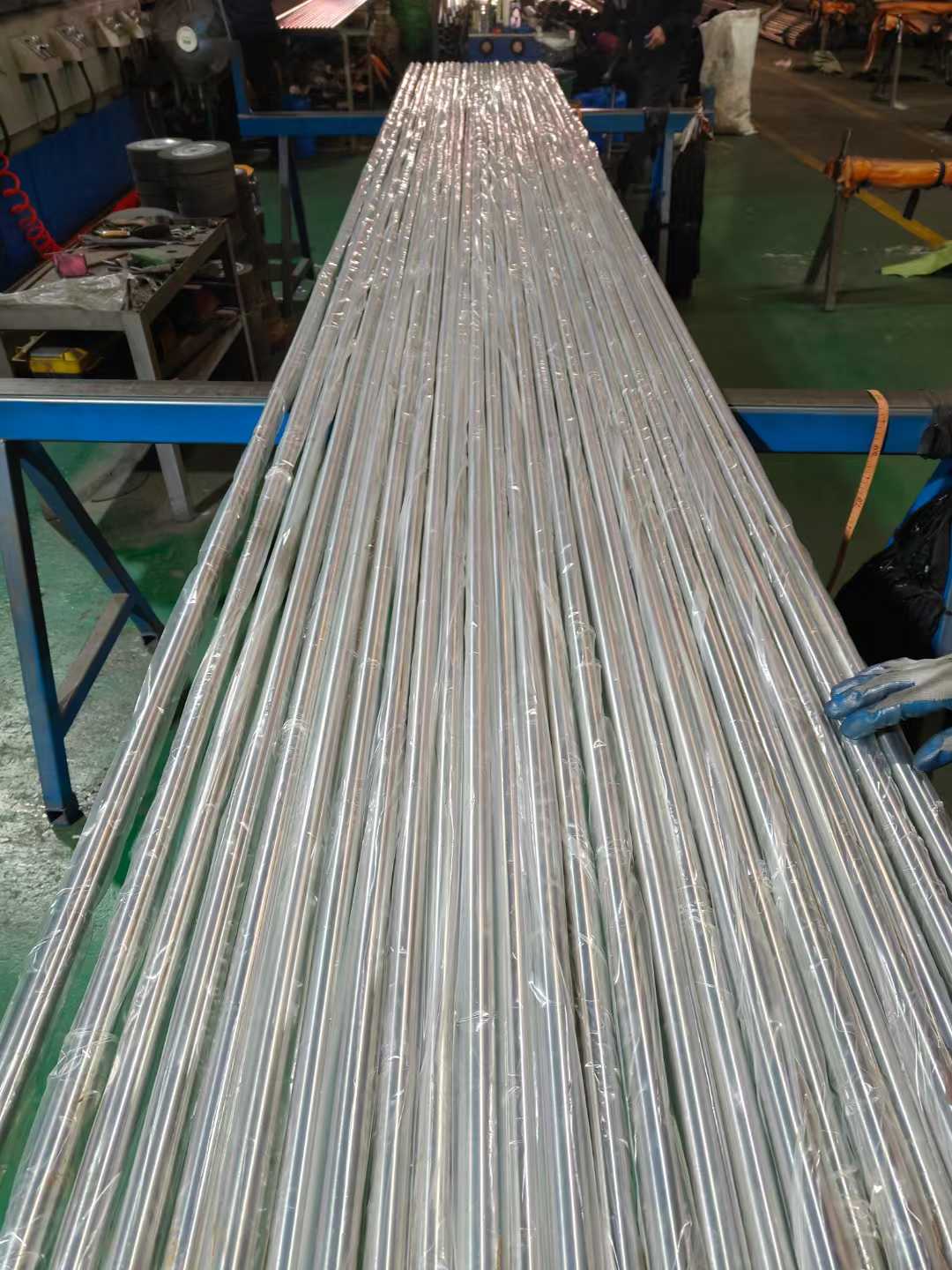
Welded tubes are roll-formed from strip coil and longitudinally joined via automated TIG, plasma, or laser welding. Key inspection points include:
- Strip quality: Verify that incoming strip is fully annealed and pickled before roll forming.
- Weld seam integrity: Inspect internal weld bead conditioning (bead rolling or hammering) and verify that continuous inline eddy current testing is performed to detect pinholes or lack of fusion.
- Post-weld heat treatment: When specified by ASTM A312 or EN 10217-7, tubes must undergo solution annealing to restore corrosion resistance along the heat-affected zone.
- Surface finishes: Verify specified surface conditions, ranging from pickled and annealed to mechanical polished grits (180, 240, 320, 400 grit), bright mirror finishes, or matte satin finishes.
Special-Shaped and Custom OD Tubing
Special-shaped tubing encompasses geometric cross-sections outside standard round dimensions, such as oval, elliptical, hexagonal, square, rectangular, and multi-channel profiles, alongside non-standard round outside diameters outside preferred series:
- Tooling validation: Custom profiles require dedicated forming dies or cold-drawing tooling. Review engineering drawings and establish approved cross-sectional dimensional tolerances before production.
- Dimensional verification: Dimensional tolerances on custom geometry are verified using coordinate measuring instruments and precision calipers against contract drawings.
- Batch sampling: For non-standard profiles, ordering a trial batch of 100–300 kg allows dimensional and metallurgical verification before committing to large volumes.
Heat Exchanger Tubes
Heat exchanger applications demand tight tolerances and high thermal reliability (heat exchanger tube). Key verification priorities include:
- Wall thickness tolerance: Dimensional consistency is vital for tube-to-tubesheet expansion and joint sealing. Standard ASTM A213 seamless wall tolerance is ±10%, while precision cold-drawn tubing can achieve a tighter tolerance of ±0.05 mm across the wall.
- Internal surface roughness: A rough inner bore encourages fouling and increases flow resistance; verify specified roughness average (Ra) values.
- Non-destructive testing: Continuous eddy current testing or ultrasonic testing is required to verify wall soundness, alongside hydrostatic pressure testing.
- Alloy selection: Specify exact UNS designations (such as TP304, TP304L, TP316L, TP321, TP310S, or duplex 2205 / UNS S32205) to ensure resistance to operating pressures and corrosive cooling media.
Seamless and Precision Tubing
Seamless pipes and precision tubes are pierced from solid billets and cold-drawn or cold-pilgered to exact dimensions (seamless pipe & tube). Critical inspection criteria include:
- Billet traceability: Confirm that the starting billet heat number is documented and traceable throughout hot piercing and cold drawing.
- Dimensional precision: For specialized applications like capillary tube and needle tube, verify tight inside diameter (ID) and outside diameter (OD) tolerances and mirror bright annealed internal surfaces.
- Non-destructive evaluation: Full-length hydrostatic testing and ultrasonic or eddy current inspection to verify freedom from laminations, cracks, or wall thinning.
Grade Comparison: Chemical Composition and Selection Guide
Chemical composition determines corrosion performance, high-temperature stability, and mechanical strength. Grade 304 provides versatile formability and general corrosion resistance, but in chloride-rich or marine environments, grade 316L is preferred because its 2–3% molybdenum content provides vital pitting and crevice resistance. Furthermore, the low carbon limit (0.03% maximum) in 304L and 316L prevents chromium carbide precipitation during welding, protecting against intergranular corrosion. The typical price premium for 316L over 304 is approximately 20–40%, reflecting nickel and molybdenum raw material costs.
| Grade | C% max | Ni% | Cr% | Key Property | Best For |
|---|---|---|---|---|---|
| 304 | 0.08 | 8.0–11.0 | 18.0–20.0 | Good corrosion resistance and formability | Food and beverage, architectural tubing |
| 304L | 0.03 | 8.0–12.0 | 18.0–20.0 | Low carbon prevents weld sensitization | Welded process lines, storage tanks |
| 316 | 0.08 | 10.0–14.0 | 16.0–18.0 | Molybdenum addition resists chloride pitting | Chemical equipment, marine environments |
| 316L | 0.03 | 10.0–14.0 | 16.0–18.0 | Low carbon plus molybdenum for aggressive media | Pharmaceutical, heat exchangers, petrochemical |
| 321 | 0.08 | 9.0–12.0 | 17.0–19.0 | Titanium stabilized (Ti ≥ 5×(C+N), ≤0.70%) | Elevated temperature exhaust, furnace piping |
| 310S | 0.08 | 19.0–22.0 | 24.0–26.0 | Good oxidation resistance at elevated temperatures | Furnace tubes, boiler components |
| 904L | 0.02 | 23.0–28.0 | 19.0–23.0 | High alloy content for aggressive acids | Sulfuric acid processing, chemical scrubbers |
| 2205 | 0.03 | 4.5–6.5 | 22.0–23.0 | Duplex structure with high strength and SCC resistance | Oil and gas lines, marine and heat exchangers |
Step-by-Step Grade Selection Process
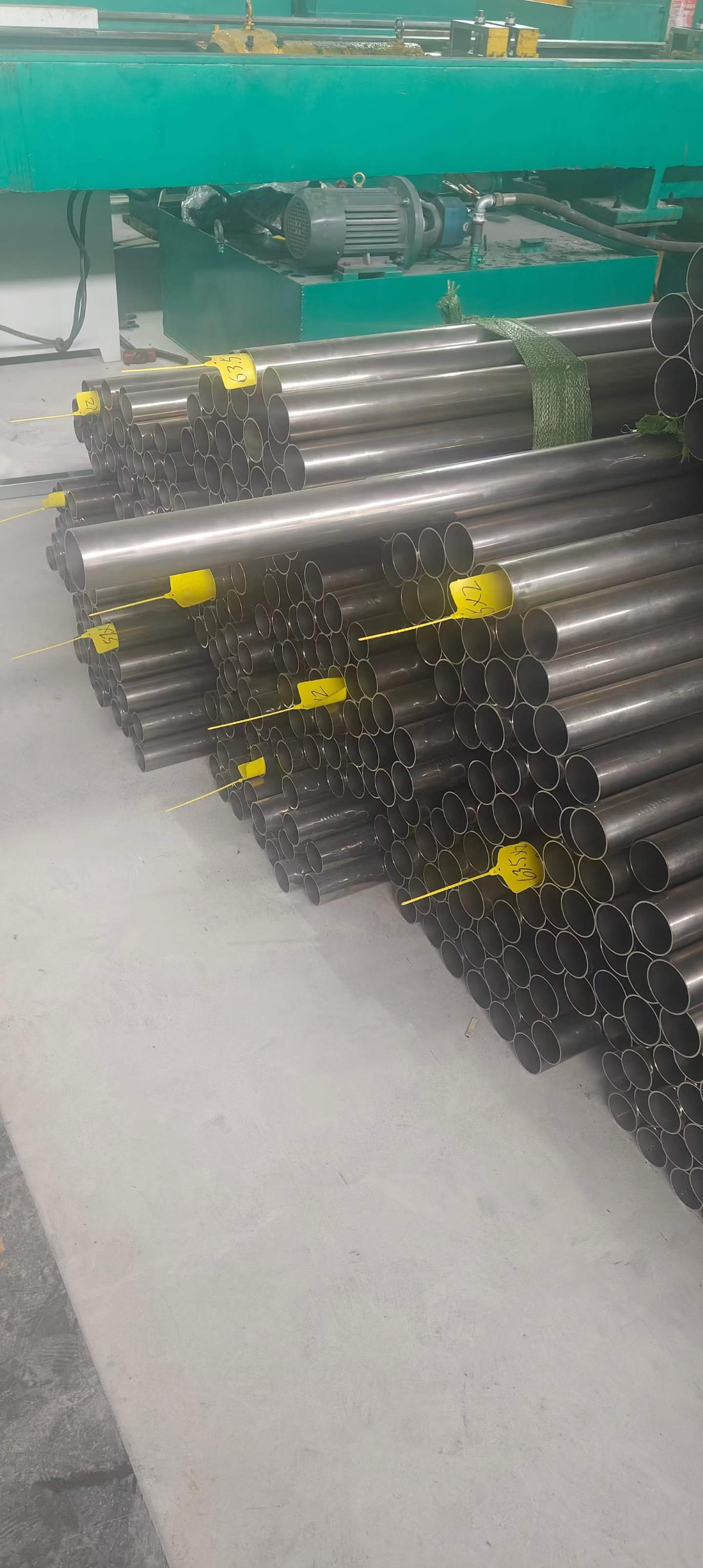
- Define operating pressure and temperature: Determine mechanical stress and operating temperatures. For elevated temperature service up to 800°C or 870°C, select titanium-stabilized 321 or high-nickel 310S; for high-pressure lines, evaluate seamless options to ASTM A312 or EN 10216-5.
- Assess corrosive media and chloride levels: For environments containing chlorides, brackish water, or acidic chemicals, bypass 304 in favor of molybdenum-bearing 316L or duplex 2205 to avoid pitting and stress corrosion cracking.
- Evaluate fabrication and welding methods: When heavy-wall welding is involved, specify low-carbon grades 304L or 316L (0.03% carbon maximum) to prevent intergranular sensitization along weld boundaries.
- Verify dimensional tolerances and surface finishes: Confirm dimensional limits against ASTM, EN, or custom drawings, and specify surface finishes—from pickled and annealed to 180–400 grit polished or bright annealed mirror.
- Require traceable mill test documentation: Request EN 10204 3.1 mill test certificates issued by the producing plant on every batch, or specify EN 10204 3.2 third-party inspection for mission-critical installations.
- Confirm commercial and logistics parameters: Align purchase terms on FOB, CIF, CFR, or DDP incoterms with established lead times (typically 10–25 days from order to shipment) and flexible trial orders (100–300 kg).
How TeCarve Aligns with Export Verification Standards
TeCarve is a specialized Chinese stainless steel piping solutions provider and the exclusive factory-direct export channel for two dedicated manufacturing plants in Foshan (welded & decorative tubing) and Wenzhou (seamless & precision tubing). Products from the two dedicated plants are exported worldwide, serving engineering buyers in the USA, Germany, UAE, Brazil, and India.
TeCarve’s operating framework addresses each key verification criterion:
- Dedicated manufacturing footprint: Production operations are split between the two dedicated plants. The Foshan plant handles welded & decorative tubing (Welded Pipe & Tube, Sanitary Pipe & Tube, Square, Rectangular, Special-shaped, Oval, Corrugated Pipe, Decoration Pipe & Tube, Precision-fabricated Tube Components, and Clad Pipe). The Wenzhou plant handles seamless & precision tubing (Seamless Pipe & Tube, Heat Exchanger Pipe & Tube, Capillary Tube, Needle Tube, Coiled Tube, Thick-walled Pipe, Low Fin Tube, Helical Coil Tube, and Medical Devices & Components).
- 10,000-ton annual capacity: Combined annual capacity across the two dedicated plants reaches 10,000 metric tons, providing production continuity for both ongoing contracts and custom fabrication runs.
- Low MOQ and trial order support: A standard MOQ of 100–300 kg allows engineering buyers to order trial batches for metallurgical, dimensional, and welding verification prior to container-scale commitments.
- Authentic mill test certificates: Every order ships with the original EN 10204 3.1 certificate issued by the producing plant. For high-specification contracts, EN 10204 3.2 certificates witnessed by SGS / BV / TÜV are available on request. Redacted sample 3.1 MTCs from the producing plant in the grade and standard you need are available for technical evaluation.
- Independent pre-shipment inspection: Pre-shipment inspection by TeCarve QC inspectors verifies heat markings, chemical analysis, mechanical testing, eddy current and hydro testing records, surface finishes, and dimensional tolerances before packaging.
- Audit accessibility: Factory audits and live video audits of either plant can be arranged. Furthermore, exclusive export authorization letters from both plants are available for verification under NDA.
- Export logistics and responsiveness: Orders ship under FOB, CIF, CFR, or DDP terms with 10–25 days lead time after deposit. Technical RFQs receive responses within 24 hours.
Need pricing, mill test certificates, or a custom Seamless Pipe & Tube quote? Contact TeCarve’s engineering team.
Applications Across Industries
- Oil & Gas: Duplex 2205 seamless pipe and 316L lines for offshore platforms, subsea flow lines, and sour gas service.
- Chemical & Petrochemical: 316L and 304L welded and seamless pipes handling acetic acid, solvents, and corrosive process streams (refinery pipeline guide).
- Power Generation & Heat Exchange: Heat exchanger and boiler tubes in 304, 316L, and duplex grades resisting high-pressure steam and cooling water (thick-walled reactor pipe).
- Food, Dairy & Beverage: Sanitary tubing with smooth, polished internal bores complying with hygienic processing standards.
- Pharmaceutical & Medical Devices: Capillary and needle tubing with micro-bore finishes and tight dimensional tolerances for analytical equipment and drug delivery devices.
- Architectural & Structural: Polished square, rectangular, and special-shaped tubes used in building facades, handrails, and industrial framing.
- Marine & Shipbuilding: Molybdenum-alloyed 316L and 2205 tubing offering long-term resistance to saltwater spray and marine exposure.
Applicable Standards and Specifications
- ASTM A312 / ASME SA312 – Seamless, welded, and heavily cold-worked austenitic stainless steel pipes
- ASTM A213 / ASME SA213 – Seamless ferritic and austenitic alloy-steel boiler and heat exchanger tubes
- ASTM A249 / ASME SA249 – Welded austenitic steel boiler, superheater, and heat exchanger tubes
- ASTM A269 – Seamless and welded austenitic stainless steel tubing for general service
- EN 10216-5 – Seamless stainless steel tubes for pressure purposes
- EN 10217-7 – Welded stainless steel tubes for pressure purposes
- EN 10204 – Metallic products: types of inspection documents (Type 3.1 and Type 3.2)
- ISO 9001 – Quality management systems requirements
- PED 2014/68/EU – European Pressure Equipment Directive
- ASME B36.10 / ASME B36.19 – Welded and seamless wrought steel and stainless steel pipe dimensions
Frequently Asked Questions
How do I verify if a Chinese stainless steel tube supplier is an authentic manufacturer rather than an unverified trader?
Verify whether the supplier has physical manufacturing facilities, dedicated cold-drawing or welding lines, and calibrated testing equipment. When working through an export channel, request exclusive factory authorization letters under NDA, and verify that all EN 10204 3.1 mill test certificates are issued by the producing plant. Buyers can also arrange on-site audits or live video audits of the production floor and testing laboratory before placing orders.
What information must be included on an EN 10204 3.1 mill test certificate?
An authentic EN 10204 3.1 certificate must be issued by the producing plant’s inspection department independent of production. It must state the specific melt heat number, steel manufacturing process, chemical analysis percentages (carbon, chromium, nickel, molybdenum, etc.), mechanical test values (tensile strength, yield strength, elongation), hydrostatic test pressure or non-destructive test results, and confirmed dimensional compliance with governing standards such as ASTM A312 or EN 10216-5.
When is an EN 10204 3.2 inspection certificate required for exported stainless steel tubes?
An EN 10204 3.2 certificate is required when engineering contracts or end-user specifications mandate third-party inspection oversight, common in high-pressure oil and gas, nuclear, and offshore installations. In this procedure, an independent inspection authority (such as SGS, Bureau Veritas, or TÜV) witnesses chemical analysis, non-destructive testing, and dimensional checks alongside the manufacturer’s inspection representative before issuing the certificate.
What standards govern stainless steel tubes for European Union and US exports?
Export orders for the United States commonly specify ASTM A312 for austenitic seamless and welded pipe, ASTM A213 for seamless heat exchanger tubing, ASTM A249 for welded heat exchanger tubing, or ASTM A269 for general service. For European Union pressure applications, seamless tubes to EN 10216-5 and welded tubes to EN 10217-7 can be supplied with EN 10204 3.1 documentation; PED 2014/68/EU material requirements should be agreed with the equipment manufacturer before ordering.
Can custom special-shaped or non-standard OD tubes be produced to tight tolerances?
Yes. Special-shaped profiles—including oval, elliptical, hexagonal, square, rectangular, and multi-channel configurations—as well as non-standard outside diameters are produced using custom roll forming or cold drawing dies. Dimensional tolerances are agreed between the buyer and seller per engineering drawings. First-article samples and trial orders from 100–300 kg allow dimensional and metallurgical verification before volume manufacturing.
What are the critical inspection requirements for heat exchanger tubes?
Heat exchanger tubes require strict dimensional tolerance for tube-to-tubesheet joint integrity; ASTM A213 specifies a wall thickness tolerance of ±10%, while precision cold-drawn tubes achieve ±0.05 mm across the wall. Inspection must also include continuous eddy current testing or ultrasonic testing to detect seam and wall discontinuities, hydrostatic pressure testing, and surface roughness (Ra) verification of the internal bore to minimize fouling.
What is the practical difference between 304 and 316L stainless steel for export orders?
Grade 304 contains 18.0–20.0% chromium and 8.0–11.0% nickel with up to 0.08% carbon, providing standard corrosion resistance and formability for food, architectural, and industrial use. Grade 316L contains 16.0–18.0% chromium, 10.0–14.0% nickel, 2–3% molybdenum for chloride pitting resistance, and a carbon ceiling of 0.03% to prevent weld decay in chemical and marine environments. Grade 316L typically carries a 20–40% price premium over 304.
Can foreign buyers arrange factory audits or live video audits before placing orders?
Yes. Factory audits and live video audits of either plant can be arranged to verify production lines, annealing furnaces, testing bays, and quality control systems. For remote verification, live video walkthroughs allow procurement engineers to observe dimensional checks, eddy current testing, hydrostatic testing, and packing in real time.
What are typical minimum order quantities (MOQ) and lead times for Chinese stainless steel tube exports?
For standard grades and dimensions, MOQs typically range from 100–300 kg, with small trial batches available for quality evaluation. Specialized alloys or non-standard tooling profiles may require larger volumes depending on raw material availability. Production lead times generally run 10–25 days from order to shipment approval, covering material preparation, forming or drawing, heat treatment, testing, and export packing.
What standard export documentation package should global buyers require?
A complete export package includes the commercial invoice, detailed packing list, bill of lading (B/L), certificate of origin, and the original EN 10204 3.1 mill test certificate issued by the producing plant. Depending on the purchase order specifications, supplementary documents may include hydrostatic test certificates, non-destructive testing reports, and third-party inspection releases.
For international buyers, the most reliable stainless steel tube suppliers in China are those that provide transparent factory authorization, audited EN 10204 3.1/3.2 certificates issued by the producing plant, documented testing to ASTM and EN standards, and responsive trial batch support. TeCarve fulfills these verification criteria across seamless, welded, heat exchanger, and custom-shaped tubing.
TeCarve supplies stainless steel pipes and tubes manufactured to ASTM / EN / GB.
Sizes: custom
Grades: 304, 304L, 316, 316L, 321, 310S, 201, 430, 904L, Duplex 2205 | MOQ: 100–300 kg (smaller trial orders available) | Lead Time: 10–25 days from order to shipment
Email: sales@tecarve.com
WhatsApp: +86 189 6804 2695
Website: https://tecarvepipes.com
Response within 24 hours.
Related Resources
- ASTM A312 Stainless Steel Pipe & Tube Guide
- EN 10216-5 Stainless Steel Seamless Tube Guide
- EN 10217-7 Welded Stainless Steel Tube Guide
- Mill Test Certificate EN 10204 3.1 Guide
- Thick-Walled Stainless Pipe vs Carbon Steel in Reactors
- Best Seamless Stainless Steel Pipe for Refinery Use
- Stainless Welded Pipe Grades for Refinery Pipelines